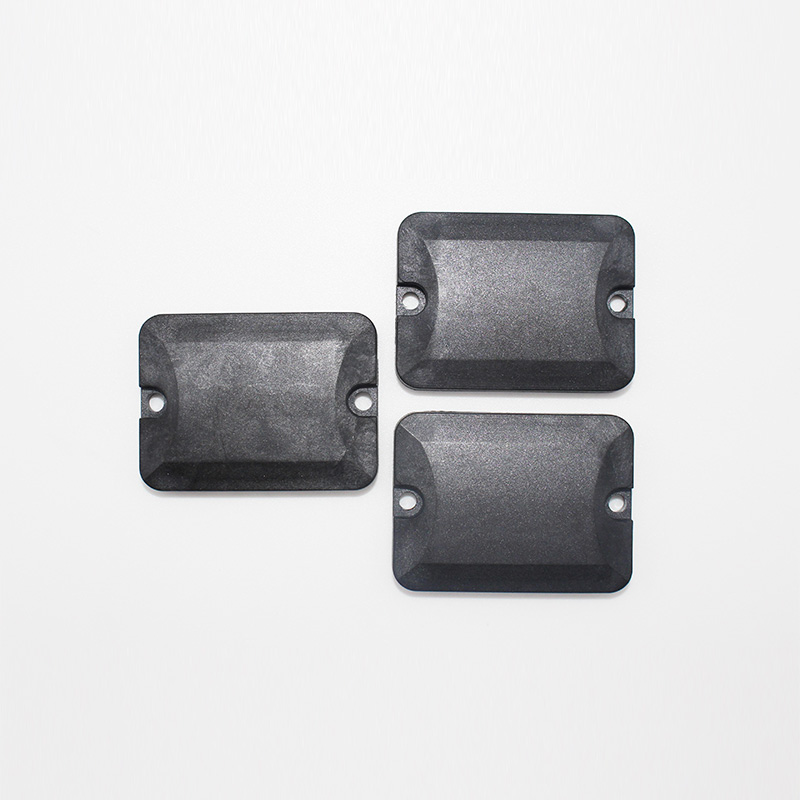
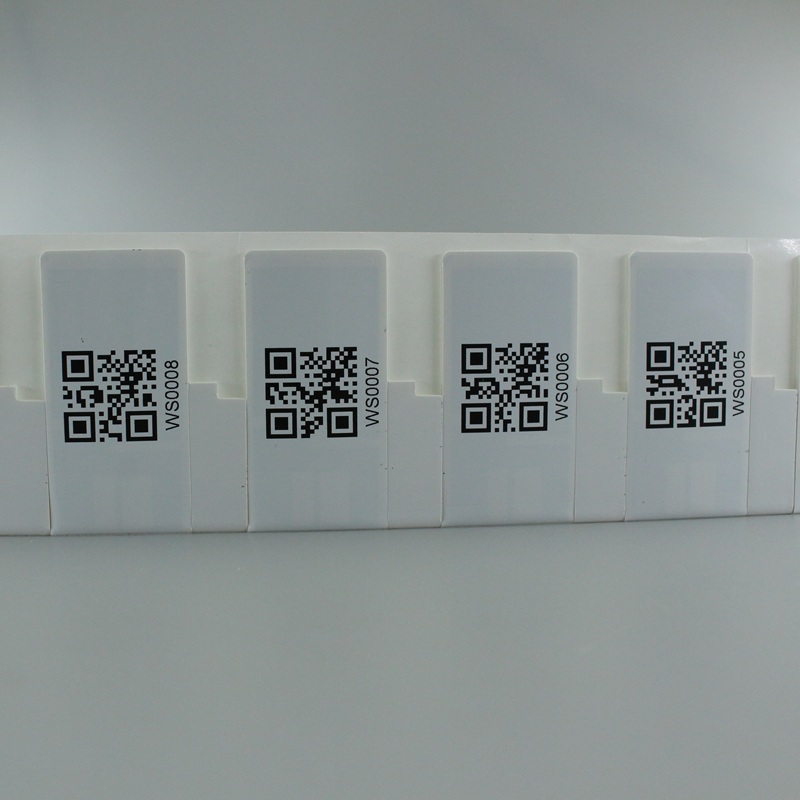
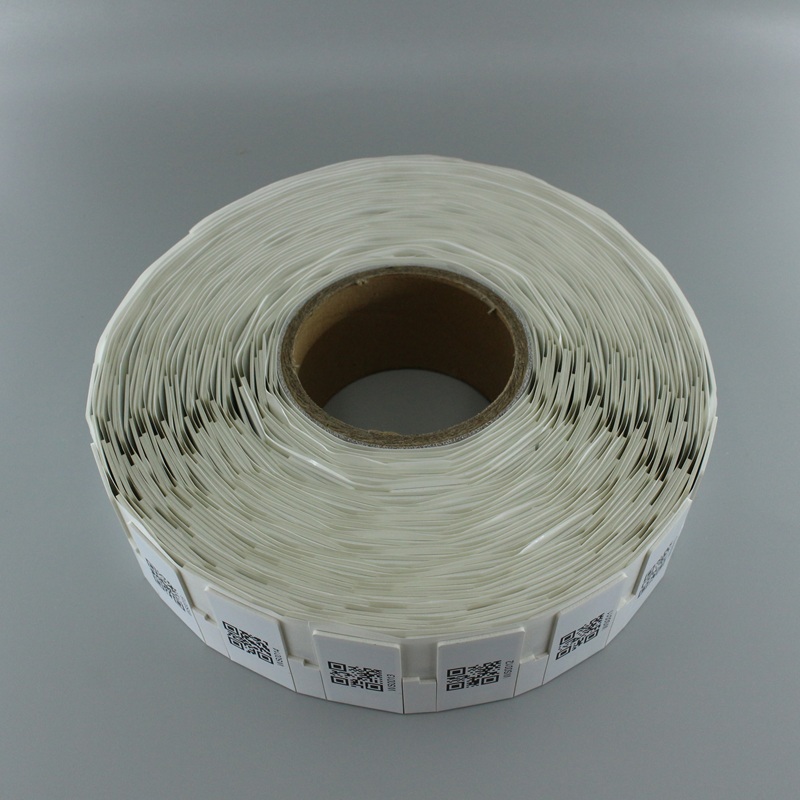
The HY-RLT5025 Tamper-Evident Flexible Anti-Metal RFID Tag is an intelligent, anti-transfer identification solution specifically designed to prevent the theft of high-value tools and assets within MRO environments. Featuring a unique tamper-evident design, the tag automatically self-destructs upon removal, leaving behind clear signs of damage that serve as irrefutable evidence of tampering. It offers a perfect solution for addressing complex management challenges such as tool loss, unauthorized asset transfers, and ownership disputes.
Laissez vos détails de contact maintenant pour obtenir le dernier prix!
Présentation du produit
The HY-RLT5025 Tamper-Evident Flexible Anti-Metal RFID Tag is a professional-grade solution specifically designed to address the tracking and tamper-proofing requirements of high-value metal assets within MRO tool management environments. Utilizing an NXP Ucode9 chip and a specialized fragile-material manufacturing process, the tag undergoes irreversible damage immediately upon attempted removal, leaving behind clear evidence of tampering. This provides a dual layer of security for tool asset management: intelligent tracking combined with tamper-evident forensics.
Its flexible design allows it to conform seamlessly to the curved surfaces of metal tools, offering a reading distance of up to 3 meters on metal substrates. This makes it perfectly suited for core MRO application scenarios, such as tool inventory management, theft prevention for high-value tools, and tool status verification.
Download Technical Datasheet-HY-RLT5025
Why Choose the HY-RLT5025?
✅ Tamper-Evident Design — Self-destructs upon removal, leaving visible signs of tampering that are impossible to conceal.
✅ Anti-Metal Performance — Achieves a reading distance of 3 mètres, even on metal surfaces.
✅ Flexible Tag — Conforms to curved surfaces, making it compatible with a wide variety of tools.
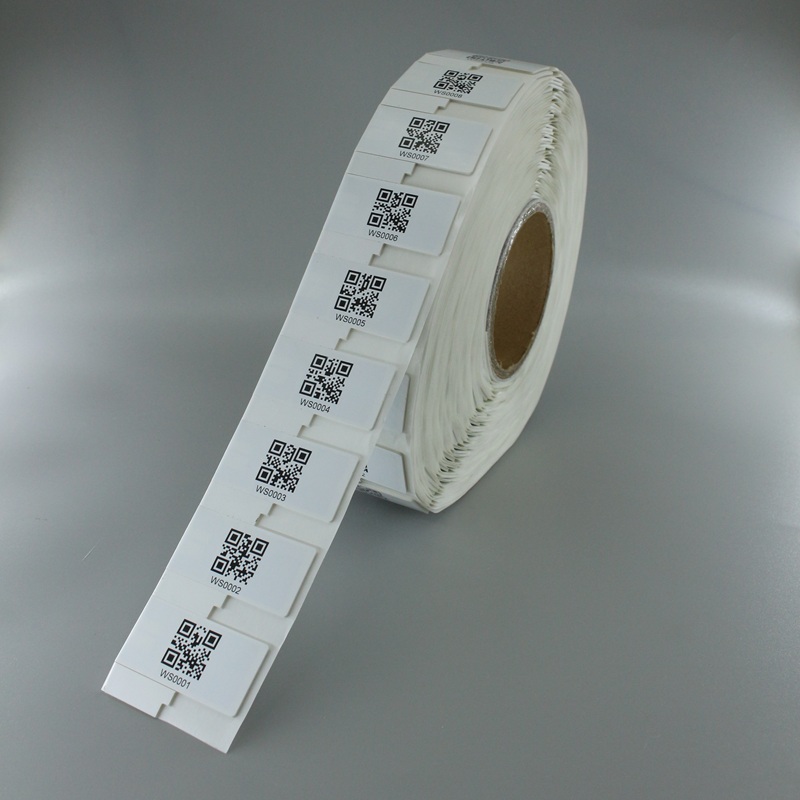
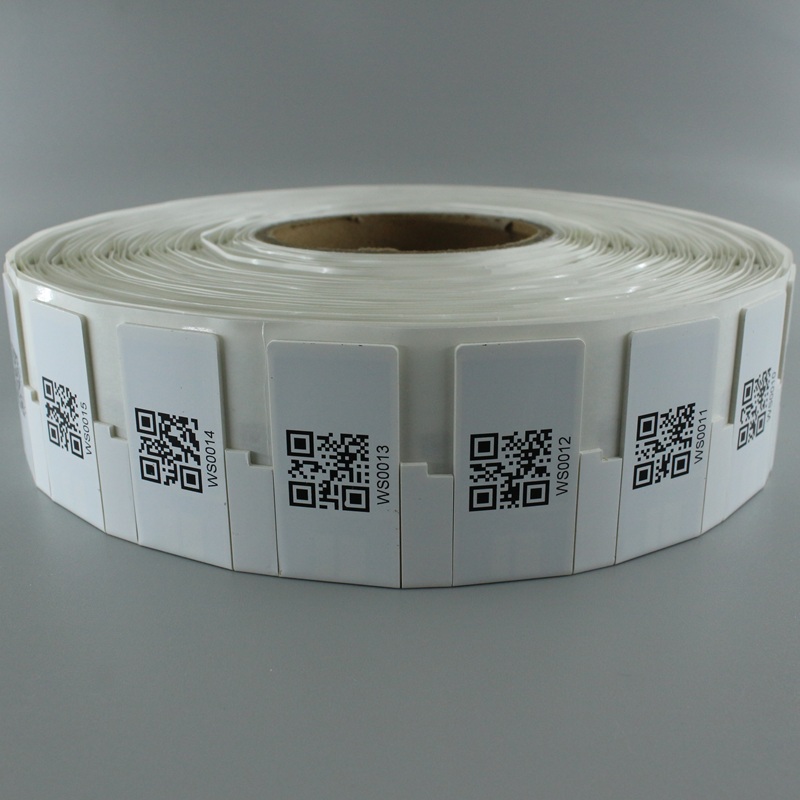
✅ Roll Format Supply — Supplied in rolls of 500 Tags, facilitating convenient automated application.
✅ Cost-Effective — Purchasing in roll format offers the most optimal cost efficiency.
✅ Secure Traceability — Establishes a robust audit trail for asset anti-theft and tracking.
Spécifications
Physical Characteristics
| Paramètre | Spécification du |
| Dimensions | 50 (±1) × 25 (±0.8) × 1.26 (±0.1) mm |
| Width | 53 (±1) mm |
| Pitch | 35 (±0.8) mm |
| Gap Between Tags | 10 (±0.1) mm |
| Corner Radius | R 1.5 (±0.2) mm |
| Surface Material | White PET |
| Couleur standard | Blanc |
| Adhesive Material | Standard Adhesive / 3M Adhesive (En option) |
Roll Specifications
| Paramètre | Spécification du |
| Standard Packaging | 500 tags/roll; Total roll weight: 560g |
| Inner Core Diameter | 3 pouces (76.2 mm) |
| Outer Roll Diameter | 8 pouces (203 mm) |
| Print Performance | Excellent (Fabulous) |
RF Performance
| Paramètre | Spécification du |
| Fréquence | 902–928 MHz |
| Protocole | Classe EPC 1 GEN 2 (ISO 18000 - 6C) |
| Puce | NXP Ucode9 |
| Distance de lecture (Metal Surface) | 0–3 m (Handheld Reader) |
| Distance de lecture (Non-Metal Surface) | 0–2 m (Handheld Reader) |
Storage Parameters
| Paramètre | Spécification du |
| EPC Storage | 96-bit |
| TID | 48-bit Serialized (Unique Identifier) |
| Mémoire utilisateur | 0-bit |
Environmental Adaptability
| Paramètre | Spécification du |
| Température de fonctionnement | -40°C ~ +85°C |
| Application Temperature | -40°C ~ +85°C |
Anti-Tamper Function Explained
What is an Anti-Tamper Label?
The HY-RLT5025 utilizes a specialized, fragile material structure. When an attempt is made to peel the label off a tool’s surface:
- The label material undergoes irreversible fragmentation.
- It leaves distinct residual traces on the tool’s surface.
- The label itself cannot be peeled off intact, preventing it from being transferred to another tool.
- It provides clear physical evidence of tampering, thereby documenting unauthorized actions.
Demonstration of Anti-Tamper Effectiveness
- Initial Adhesion (0–3 hours): The label can still be peeled off intact; the anti-tamper mechanism has not yet fully activated.
- 3–4 Hours After Adhesion: The anti-tamper effect begins to manifest; the label starts to fragment when peeled.
- 24 Hours After Adhesion: The anti-tamper mechanism is fully activated; any attempt to peel the label will leave distinct signs of damage.
⚠️ Important Note: The anti-tamper effect begins to manifest 3–4 hours after the label is applied. The longer the adhesion duration, the higher the success rate of fragmentation and the more effective the anti-tamper protection becomes. It is recommended that labels be applied immediately upon tool registration and storage to ensure sufficient time for full activation.
Value of Anti-Tamper Technology
Significance for Tool Management:
- Any attempt to replace or swap labels leaves behind physical evidence.
- Labels cannot be transferred from one tool to another.
- The tool’s identity information is permanently bound to its physical entity.
- Unauthorized operations can be traced and substantiated with evidence.
MRO Tool Management Application Scenarios
High-Value Tool Anti-Theft Management
Applicable Items: High-value tools such as torque wrenches, precision measuring instruments, outils électriques, etc..
Management Challenges:
- High-value tools are illicitly removed from the premises or swapped with substitutes.
- Standard labels can be peeled off intact and reapplied elsewhere, making accountability impossible.
- Labels are intentionally damaged after a tool has been checked out.
HY-RLT5025 Solution:
- Labels are affixed to a conspicuous location on the tool; once applied, they cannot be removed intact.
- Any attempt at removal leaves behind clear, visible evidence.
- Integrated with an RFID management system, the entire tool check-in/check-out process is fully recorded.
- Prevents “substitution fraud,” ensuring the authenticity and reliability of tool identities.
Avantages:
- Loss rate of high-value tools reduced by over 95%.
- Evidence of non-compliant behavior can be gathered to enforce accountability.
- Unauthorized tool swapping is effectively eliminated.
Tool Status Sealing Management
Applicable Scenarios:
- Calibration seals for measuring instruments (par exemple, vernier calipers, micrometers).
- Integrity seals applied after tool repair or maintenance.
- Authorized-use seals for hazardous tools.
- Access control and permission management for restricted-use tools.
Implémentation:
- Labels are applied upon successful calibration, with the calibration date and expiration date written to the tag.
- Any breach of the seal indicates that the tool has been tampered with without authorization.
- A handheld scanner can be used to instantly verify the tool’s calibration status.
- Unauthorized tampering or seal removal leaves behind physical evidence.
Compliance Value:
Meets the tool control requirements stipulated by quality management systems such as ISO 9001 and IATF 16494.
Tool Crib Check-in/Check-out Management
Application Workflow:
Check-in Registration:
- Register newly purchased tools into inventory; print an RFID label containing a unique ID and barcode.
- Affix the label to a non-working surface of the tool.
- Scan the label to create or update the tool’s digital record/profile.
- Allow to sit undisturbed for 24 hours to ensure the anti-tampering adhesive fully activates.
Daily Check-out/Return:
- Départ: Scan with a handheld device to record the borrower, temps, and intended use.
- Return: Scan to verify the integrity of the label and confirm the tool’s identity.
- Damaged Label: Immediately triggers an anomaly alert; investigate the cause of the damage.
Periodic Inventory Audits:
- Perform batch scanning using a handheld device to quickly complete a full inventory count.
- Labels showing anomalies are automatically flagged for priority investigation.
- Inventory audit results are automatically generated as a comprehensive report.
Measuring Instrument Calibration Management
Industry Context: Measuring instruments and testing tools used in manufacturing enterprises require periodic calibration; this is a critical requirement for quality management systems.
Management Pain Points:
- Paper-based calibration labels are prone to damage and counterfeiting.
- Manual verification of calibration status is inefficient.
- Overdue tools (those past their calibration deadline) are inadvertently put into use.
Solution:
- Upon successful calibration, affix an HY-RLT5025 label containing embedded calibration data.
- Any attempt to remove the calibration label leaves behind visible tamper evidence.
- Use a handheld scanner to automatically verify validity periods.
- Automated alerts for overdue items.
Avantages:
- Prevents the counterfeiting or unauthorized transfer of calibration labels.
- Ensures 100% interception of overdue tools.
- Satisfies quality management system audit requirements.
Error-Proof Management for Jigs and Fixtures
Applicable Scenarios: Management of injection molds, stamping dies, welding fixtures, and other tooling assets.
Management Pain Points:
- Jigs and fixtures often have similar appearances, making manual differentiation difficult.
- Tooling identification labels may detach or be tampered with.
- Tools are subject to unauthorized use or swapping.
Solution:
- Affix tamper-evident labels to each tool, displaying the tool ID and corresponding product information.
- Labels feature tamper-proof protection to ensure data integrity.
- Scan labels for rapid identification of specific tools.
- Comprehensive tracking and recording of the entire tool circulation lifecycle.
Mode d’emploi
Application Guidelines
Preparation Before Application:
- Clean the tool’s surface to remove oil stains, Poussière, and moisture.
- Ensure the surface is dry and the ambient temperature is between 10°C and 40°C.
- Verify that the intended placement location does not interfere with the normal operation of the tool.
Application Steps:
- Use an RFID printer to print and encode the asset ID onto the label.
- Peel off the label’s release liner.
- Align the label with the target placement area.
- Firmly press down on the label, working from the center outward to the edges, to eliminate any air bubbles.
- Press down firmly along the edges with your fingers to ensure a tight, secure bond.
- Allow the label to rest undisturbed for 3–4 hours; the tamper-evident feature will begin to activate during this time.
- After resting for 24 heures, the tamper-evident feature will be fully activated.
Application Precautions:
- Avoid attempting to peel off the label within 3–4 hours of application; doing so will prevent the tamper-evident feature from fully activating.
- Do not apply the label to surfaces that have not been thoroughly cleaned of oil or grease.
- When applying to curved surfaces, ensure you press from the center outward toward the edges to prevent air bubbles.
- Once the placement location has been determined, do not attempt to peel off or reposition the label.
Laissez vos détails de contact maintenant pour obtenir le dernier prix!
FAQ
Q1: How long after application does the anti-tamper feature become effective?
A: The anti-tamper effect begins to manifest 3–4 hours after application and becomes fully activated after 24 heures. The longer the label remains affixed, the higher the success rate of the tamper-evident fragmentation. We recommend applying the label immediately when tools are placed into storage, allowing it to fully activate before putting the tools into use.
Q2: Will the label peel up or detach if applied to a curved tool surface?
A: The HY-RLT5025 utilizes a flexible PET material that conforms well to curved surfaces. We recommend applying it to surfaces with a diameter of ≥25mm. When applying, press firmly from the center outward toward the edges to expel any air bubbles and ensure the edges are securely bonded.
Q3: What should I do if I apply the label in the wrong position?
A: Within 3–4 hours of application (before the anti-tamper feature activates), the label can be carefully peeled off and repositioned; Cependant, please note that a small amount of adhesive residue may be left behind. Attempting to remove the label after it has activated will cause it to fragment, rendering it unusable for reapplication; in such cases, a new label must be used.
Q4: Can the label be applied directly to tool surfaces contaminated with oil or grease?
A: We do not recommend this. The surface must first be cleaned using alcohol or a specialized cleaning agent and allowed to dry completely before application; otherwise, the adhesive bond will be insufficient, compromising the effectiveness of the anti-tamper feature.
Q5: What information can be printed on the labels, and what type of printer is required?
A: The labels support thermal transfer printing and can be used to print barcodes, Codes QR, serial numbers, logos, and other information. We recommend using RFID-enabled thermal transfer printers from leading brands such as RFIDHY (offering excellent value), Zebra, or Honeywell.
Q6: How are the roll-format labels used with automated labeling machines?
A: The labels are supplied in standard rolls with a 3-inch core, making them compatible with most automated labeling machines currently available on the market. If you require a comprehensive automated labeling solution, please contact our technical team for an assessment.
Q7: What is the MOQ?
A: Please contact our customer service team for inquiries. Labels are sold in full rolls (500 labels per roll), with tiered pricing options available based on the order quantity.
Q8: Are samples available for testing?
A: Oui. We can provide a small quantity of samples for on-site testing, allowing you to verify the anti-tamper effectiveness and RFID reading performance before placing a bulk order.