
Einführung: The Scale Challenge
Deploying RFID-Armbänder for events serving 10,000 An 100,000 attendees is not merely about quantity—it’s about system resilience, latency tolerance, and interoperability across physical and digital touchpoints. Unlike small festivals or corporate conferences, mega-events demand infrastructure capable of sustaining concurrent reads across dozens of entry lanes, payment terminals, and experience zones—all while maintaining data integrity and GDPR/CCPA-compliant processing.
Phase 1: Pre-Deployment Assessment
Define Use Cases & Data Flow
Clarify core applications: Zugriffssteuerung, cashless payments, session check-in, crowd analytics, or hybrid models. Each use case dictates tag memory requirements, encryption needs (z.b., ISO/IEC 14443-A/B for secure payments), and backend API integrations. RFIDHY ’ s RFID-Armbänder support multiple chip options—including MIFARE DESFire EV3 and Impinj Monza R6—enabling flexible configuration per zone.
Map Physical Infrastructure
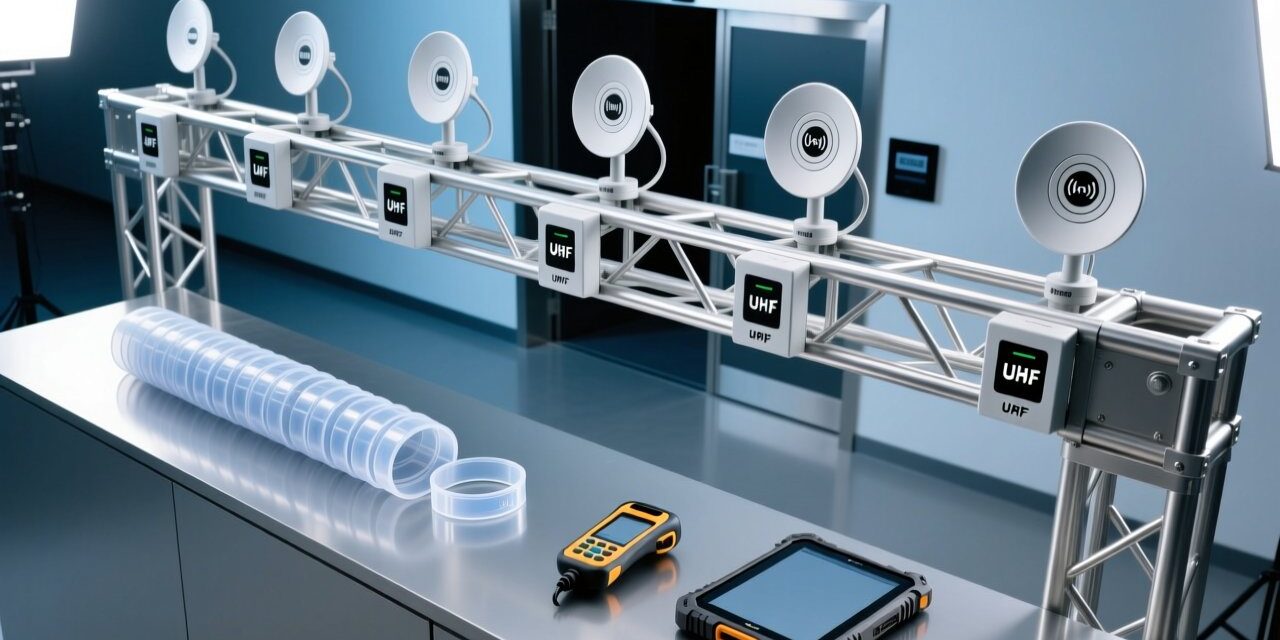
- Reader density: Deploy UHF RFID readers (z.b., RFIDHY industrial-grade modules) at ≤3m intervals for gate throughput >1,200 persons/hour/lane.
- Antenna orientation: Use linearly polarized antennas for controlled chokepoints; circular polarization for open-area scanning (z.b., welcome zones).
- Macht & connectivity: Ensure PoE+ switches and redundant fiber uplinks to avoid single points of failure.
Phase 2: Tag & Reader Selection
Select wristbands engineered for durability and consistent read performance under motion, Feuchtigkeit, and RF interference. RFIDHY’s silicone-based RFID-Armbänder undergo ISO 10993 biocompatibility testing and feature anti-metal shielding for reliable reads near smartphones or metal structures.
Key Technical Criteria
| Parameter | Minimum Requirement | RFIDHY Recommendation |
|---|---|---|
| Leseabstand (UHF) | 1.5–2.5 m static | 2.8 m (tested with Impinj Speedway R420 + patch antenna) |
| Tag IC endurance | 100,000 write cycles | MIFARE DESFire EV3 (500,000 Zyklen) |
| Water resistance | IP67 | IP68 (submersible 1.5m/30min) |
Phase 3: Integration & Validation
Conduct three-tiered validation: lab simulation (tag population, signal collision), on-site pilot (≤5% attendee load), and stress test (peak ingress/egress windows). RFIDHY provides SDKs and RESTful APIs for seamless integration with existing event management platforms (z.b., Cvent, Bizzabo) and ERP systems.
Compliance & Sicherheit
All deployments must align with regional data sovereignty laws. RFIDHY wristbands support on-device cryptographic key provisioning and optional server-side tokenization—ensuring raw UID data never transits unencrypted networks. For healthcare or education-linked events, consider our HIPAA-aligned RFID solutions.
Frequently Asked Questions
- Q: What’s the maximum recommended attendee capacity for a single RFID wristband system?
A: With RFIDHY’s distributed architecture (modular readers + edge gateways), one system scales reliably to 100,000+ attendees—provided network topology and backend processing are load-balanced. - Q: Can one wristband support both access control and cashless payments?
A: Ja. Our dual-interface (LF/HF + UHF) and multi-application MIFARE-based wristbands enable segregated, encrypted sectors for distinct functions. - Q: How long does full deployment planning take?
A: Allow 8–12 weeks from initial scoping to final certification—factoring in hardware procurement, custom firmware, integration QA, and staff training. - Q: Do you offer on-site technical support during event execution?
A: Ja. RFIDHY provides certified field engineers for pre-event commissioning and live incident response under enterprise SLAs.
Ready to deploy enterprise-grade RFID wristbands at scale? RFIDHY offers end-to-end planning, certified hardware, and dedicated integration support for events of any size. Contact our event solutions team today to request a customized infrastructure assessment and ROI analysis.