
Introduzione: The Scale Challenge
Deploying Braccialetti RFID for events serving 10,000 A 100,000 attendees is not merely about quantity—it’s about system resilience, latency tolerance, and interoperability across physical and digital touchpoints. Unlike small festivals or corporate conferences, mega-events demand infrastructure capable of sustaining concurrent reads across dozens of entry lanes, payment terminals, and experience zones—all while maintaining data integrity and GDPR/CCPA-compliant processing.
Phase 1: Pre-Deployment Assessment
Define Use Cases & Data Flow
Clarify core applications: controllo di accesso, cashless payments, session check-in, crowd analytics, or hybrid models. Each use case dictates tag memory requirements, encryption needs (ad es., ISO/IEC 14443-A/B for secure payments), and backend API integrations. RFIDHY Braccialetti RFID support multiple chip options—including MIFARE DESFire EV3 and Impinj Monza R6—enabling flexible configuration per zone.
Map Physical Infrastructure
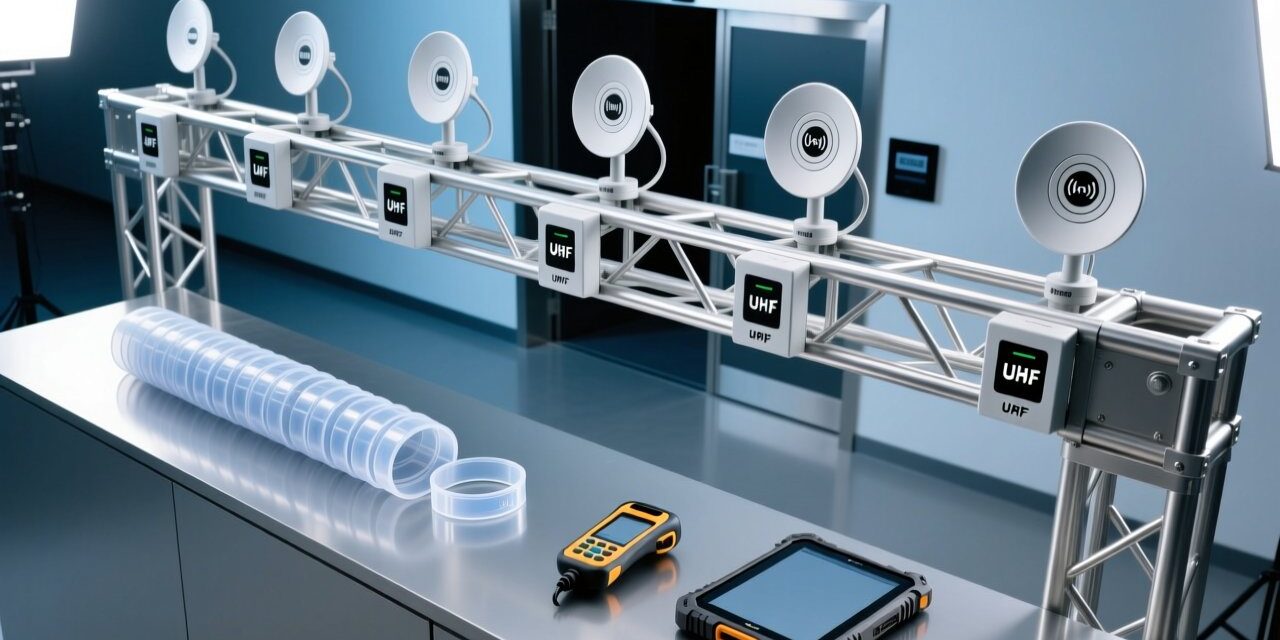
- Reader density: Deploy UHF RFID readers (ad es., RFIDHY industrial-grade modules) at ≤3m intervals for gate throughput >1,200 persons/hour/lane.
- Antenna orientation: Use linearly polarized antennas for controlled chokepoints; circular polarization for open-area scanning (ad es., welcome zones).
- Potere & connectivity: Ensure PoE+ switches and redundant fiber uplinks to avoid single points of failure.
Phase 2: Prodotto Tag & Reader Selection
Select wristbands engineered for durability and consistent read performance under motion, umidità, and RF interference. RFIDHY’s silicone-based Braccialetti RFID undergo ISO 10993 biocompatibility testing and feature anti-metal shielding for reliable reads near smartphones or metal structures.
Key Technical Criteria
| Parameter | Minimum Requirement | RFIDHY Recommendation |
|---|---|---|
| Intervallo di lettura (UHF) | 1.5–2.5 m static | 2.8 m (tested with Impinj Speedway R420 + patch antenna) |
| Tag IC endurance | 100,000 write cycles | MIFARE DESFire EV3 (500,000 cicli) |
| Water resistance | IP67 (informazioni in inglese) | IP68 · (submersible 1.5m/30min) |
Phase 3: Integration & Validation
Conduct three-tiered validation: lab simulation (tag population, signal collision), on-site pilot (≤5% attendee load), and stress test (peak ingress/egress windows). RFIDHY provides SDKs and RESTful APIs for seamless integration with existing event management platforms (ad es., Cvent, Bizzabo) and ERP systems.
arrendevolezza & Sicurezza
All deployments must align with regional data sovereignty laws. RFIDHY wristbands support on-device cryptographic key provisioning and optional server-side tokenization—ensuring raw UID data never transits unencrypted networks. For healthcare or education-linked events, consider our HIPAA-aligned RFID solutions.
Frequently Asked Questions
- Q: What’s the maximum recommended attendee capacity for a single RFID wristband system?
A: With RFIDHY’s distributed architecture (modular readers + edge gateways), one system scales reliably to 100,000+ attendees—provided network topology and backend processing are load-balanced. - Q: Can one wristband support both access control and cashless payments?
A: Sì. Our dual-interface (LF/HF + UHF) and multi-application MIFARE-based wristbands enable segregated, encrypted sectors for distinct functions. - Q: How long does full deployment planning take?
A: Allow 8–12 weeks from initial scoping to final certification—factoring in hardware procurement, custom firmware, integration QA, and staff training. - Q: Do you offer on-site technical support during event execution?
A: Sì. RFIDHY provides certified field engineers for pre-event commissioning and live incident response under enterprise SLAs.
Ready to deploy enterprise-grade RFID wristbands at scale? RFIDHY offers end-to-end planning, certified hardware, and dedicated integration support for events of any size. Contact our event solutions team today to request a customized infrastructure assessment and ROI analysis.