
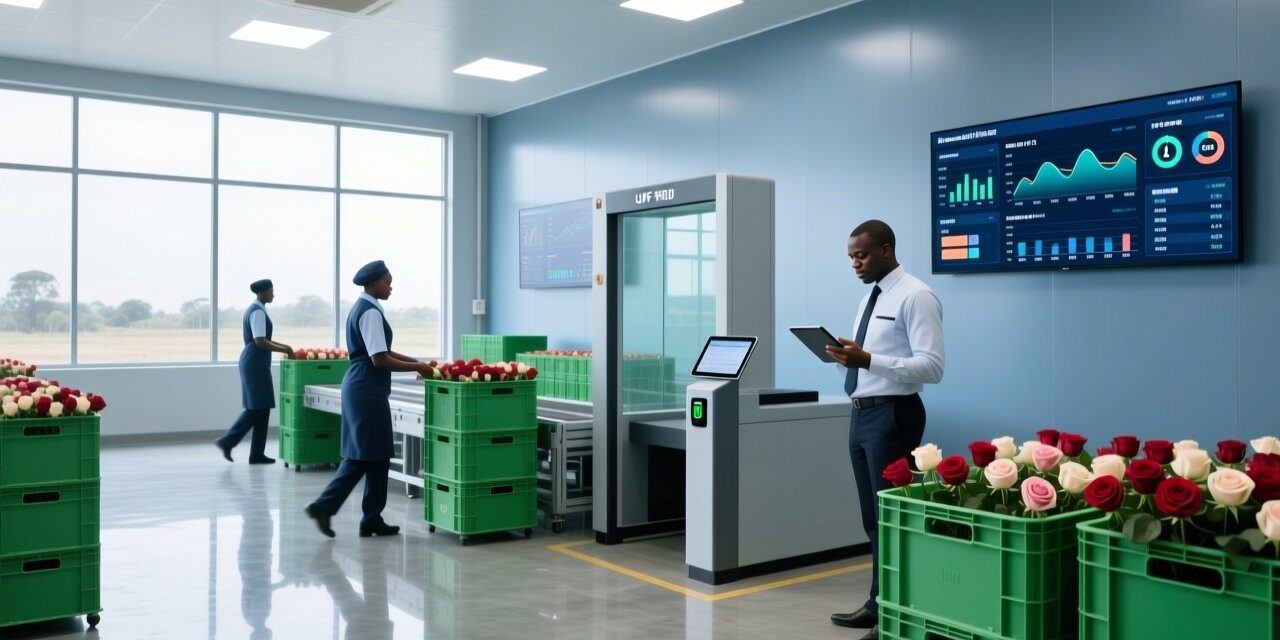
The Growing Demand for Agricultural Traceability in Kenya
Kenya’s agricultural exports, especially the cut-flower sector, are a vital pillar of the national economy. With perishable goods traveling thousands of kilometers to European and Middle Eastern markets, maintaining product integrity and meeting stringent import regulations have become critical. Traditional barcode and paper-based tracking systems often fail to provide the real-time, end-to-end visibility needed to prevent spoilage, counter delays at customs, or verify origin. This is where kenya agricultural supply chain rfid solutions step in, offering unprecedented accuracy and speed in farm-to-export logistics.
RFID (Радиочастотная идентификация) is no longer a futuristic concept for African agribusiness. Leading flower farms and vegetable exporters are piloting RFID-enabled traceability to monitor every crate, pallet, and cold room transition. By attaching UHF RFID метки to returnable transport items (RTIs) and integrating fixed readers at key checkpoints, operators can automatically log harvest batches, storage durations, and shipment status — all without manual scanning. This data-driven approach is setting new benchmarks for compliance, quality assurance, and supply chain efficiency.
Why RFID Outperforms Barcode in Perishable Supply Chains
Barcodes require line-of-sight and individual scanning, making them impractical for high-volume, time-sensitive operations. In a busy packing shed, reading a pallet of 100 flower boxes with a barcode scanner takes minutes and is prone to human error. RFID, С другой стороны, can read hundreds of tags simultaneously within seconds, even through packaging and in motion. This speed is critical when loading refrigerated trucks or air cargo containers where every minute counts.
Кроме того, passive RFID tags do not require batteries and can withstand the cold temperatures and high humidity typical of cool-chain logistics. Современные RFID inlay designs are thin, гибкие, and can be integrated directly into existing labels or strapping. This makes them ideal for tagging flower sleeves, boxes, or plastic crates without disrupting established packing workflows.
Technical Specifications and Key Considerations
Tag Selection: UHF vs. HF and Environmental Durability
For agricultural supply chains, Ультра-высокая частота (UHF) RFID (860–960 МГц) is almost always the preferred choice due to its longer read range (до 10 метров) and fast anti-collision algorithms. Однако, moisture and plant material can affect RF performance, so selecting tags optimized for high-humidity environments is crucial. Available options include:
- Flexible on-metal UHF tags: Ideal for metal trolleys, shipping containers, and cold-room racks. These tags have a special backing that detunes the metal interference, ensuring reliable reads.
- Wet-inlay UHF labels: Thin, printable inlays that can be converted into smart labels for cardboard boxes and plastic crates.
- High-temperature RFID tags: Although not common in flowers, some herb and vegetable exports require heat treatment; ruggedized tags can survive short-term exposure.
For applications that require close-proximity reading or NFC smartphone interaction (Например, farm workers verifying tasks), HF/NFC tags like NTAG 216 can complement the UHF system.
Reader Infrastructure: Handheld, Исправлено, and Mobile Integration
A typical deployment combines several reader types:
- Fixed RFID readers at dock doors, conveyor belts, and cold-room entrances to automatically capture movements. Devices like the 4-port UHF reader support multiple antennas to create a wide reading zone, eliminating bottlenecks.
- Handheld RFID scanners for field-level tagging, inventory checks, and spot audits. Modern Android-based handheld RFID scanners combine barcode and UHF functions, making them versatile for mixed environments.
- RFID antennas: Choosing the correct antenna gain and polarization is essential for reliable operation in metal-rich packing sheds.
Data Integration and Middleware
RFID hardware alone does not deliver traceability; it requires robust middleware to filter duplicate reads, associate tag IDs with business events, and feed data into ERP or cloud-based farm management systems. The middleware should support GS1 EPCIS standards so that each read becomes a supply chain event — e.g., “harvested,” “packed,” “in cold storage,” “dispatched” — which can be shared with trading partners. This level of interoperability is increasingly demanded by European retailers under EU food safety regulations.
Practical Deployment: A Step-by-Step Guide for Flower Farms
Implementing RFID in a Kenyan flower farm does not require a “big bang” approach. A phased rollout minimizes disruption and delivers quick wins.
Phase 1: Pilot on One Crop or Route
Choose a high-value, high-volume product like roses destined for the EU market. Tag all crates or trolleys at the point of harvest with UHF labels. Install a single fixed portal reader at the cold-room entrance and train a few workers on a handheld scanner. Measure key performance indicators (KPIs) such as read accuracy, time saved, and reduction in mis-shipments.
Phase 2: Expand to Full Cold Chain
Once the pilot proves ROI, extend tagging to all harvest batches and integrate additional read points: packing line, pre-cooler, truck loading bay, and airport cargo terminal if possible. Use the middleware to build a digital twin of the cold chain, giving logistics managers a real-time dashboard of product location and condition.
Phase 3: Share Data with Buyers
Connect your RFID data to blockchain or a buyer portal, allowing importers to scan a tag and instantly view the entire journey — farm location, harvest date, chemical treatments, and temperature logs. This transparency can command premium pricing and reduce quality disputes.
Addressing Common Concerns: Cost and Complexity
Many growers worry that RFID is too expensive. В действительности, the cost of UHF UHF RFID stickers has dropped significantly in recent years, making them comparable to high-quality barcode labels when ordered in volume. The main investment is in reader infrastructure and integration. Однако, the return comes quickly through fewer rejected shipments, faster turnaround at airports, and reduced product shrinkage. Some Kenyan logistics providers now offer RFID-as-a-service, where the equipment is bundled with the freight contract, lowering the capital requirement for growers.
Future Trends: Sensor Tags and AI-Enhanced Logistics
Next-generation RFID with integrated temperature and humidity sensors will soon allow tags to not only identify but also monitor the condition of flowers in transit. Coupled with AI-driven predictive analytics, supply chain managers can be alerted before spoilage occurs, rerouting shipments or adjusting cold storage parameters automatically. As Kenya’s digital infrastructure improves, the combination of IoT, RFID, and satellite connectivity will make real-time global visibility the new normal for agricultural exports.
FAQ
What RFID frequency is best for fresh produce tracking in Kenya?
UHF (860–960 МГц) is recommended for its long read range and fast tag reading. Passive UHF tags are low-cost and well-suited for high-volume crate and pallet tracking. HF/NFC may be used for worker task verification but is not ideal for bulk logistics.
How do RFID tags perform in cold, wet environments?
Specialty UHF inlays with moisture-resistant substrates and robust chip bonding perform reliably in refrigerated storage down to -20°C and high humidity. It is essential to test tags in actual operating conditions to validate performance.
Can RFID tags be reused on returnable crates?
Да. Industrial-grade UHF tags with strong attachment (adhesive, rivet, or cable tie) are designed to withstand multiple cleaning and transport cycles. Reusability significantly reduces the total cost per trip.
What is the typical ROI for an RFID traceability project?
ROI is achieved through reduced product loss, faster logistic processing, fewer chargebacks, and premium market access. A pilot program usually demonstrates payback within one export season.
Ready to Digitize Your Agricultural Supply Chain?
RFIDHY has extensive experience in designing and deploying RFID traceability solutions for harsh and demanding supply chain environments worldwide. Whether you are a flower farm in Naivasha or a fresh produce exporter in Nairobi, our team can guide you from pilot to full-scale implementation with the right tags, читатели, and integration services tailored to your operational needs.
Contact our experts today for a free consultation and discover how kenya agricultural supply chain rfid can give you a competitive advantage.