
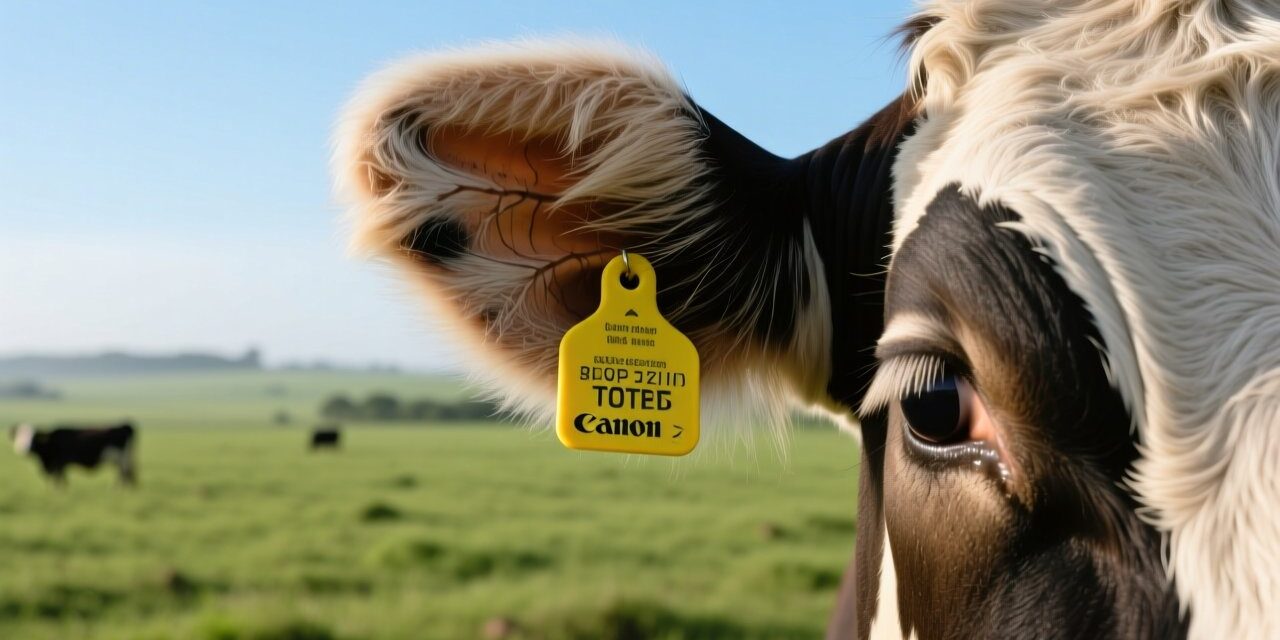
Why MAPA Certification Matters for RFID Ear Tags in Brazilian Livestock
Brazil is the world’s largest beef exporter, with shipments reaching over 100 países. To sustain this position, every link in the supply chain must demonstrate verifiable traceability – a mandate driven by both domestic regulations and international import requirements. O Ministério da Agricultura, Pecuária e Abastecimento (MAPA) sets strict standards for animal identification, and RFID ear tags are at the core of this system. Without Brazil MAPA approved RFID ear tags, ranchers and exporters cannot legally move cattle under the official traceability programs required for export markets, especially China.
This guide breaks down the certification pathway, the underlying ISO standards, the specific demands of the Chinese GACC protocol, and how to choose the right ear tag technology – all backed by RFIDHY’s experience in delivering compliant RFID ear tags for the Latin American market.
Understanding MAPA Certification for RFID Ear Tags
What Is MAPA and Why Does It Govern Cattle Identification?
MAPA is the federal authority responsible for livestock health, food safety, and traceability in Brazil. Through its Sisbov (Brazilian Identification and Certification System of Bovine and Buffalo Origin) platform, MAPA enforces a national database that records every bovine from birth to slaughter. Only MAPA‑certified RFID ear tags can be used within Sisbov, guaranteeing that each animal’s unique ID is registered and trackable.
The Certification Process for RFID Ear Tags
Obtaining MAPA approval for an RFID ear tag is a rigorous, multi‑stage process that verifies technical performance, durability, and data integrity. The key steps include:
- Application Submission: Manufacturer or distributor submits product specifications, ISO 11784/11785 test reports, and a sample batch to MAPA’s designated laboratory.
- Laboratory Testing: Tags are evaluated for read range, chip conformance (FDX‑B or HDX protocol), mechanical resistance, and environmental resilience under tropical conditions – critical for Brazil’s diverse climate.
- Field Validation: A pilot deployment on actual cattle herds, monitored by MAPA inspectors, to confirm long‑term retention and scanner compatibility.
- Database Integration: The tag’s data structure must seamlessly interface with the Sisbov platform, including the 15‑digit national animal ID and farm registration codes.
- Final Approval & Listing: Once all criteria are met, MAPA issues a certification number and includes the product in its official list of approved identification devices.
RFIDHY works closely with ranchers and integrators to ensure that every Etiqueta animal RFID supplied meets these requirements, reducing time‑to‑certification and avoiding costly rejections.
ISO 11784/11785: The Technical Backbone of Livestock RFID
Decoding the Standard for Animal Identification Tages
Both MAPA and international trade partners demand compliance with ISO 11784 e ISO 11785. These standards define the code structure and air interface for radio‑frequency identification of animals, ensuring interoperability across readers and databases worldwide.
- ISO 11784 specifies the 64‑bit code structure, which includes a country code (076 for Brazil), a national identification number, and flags for animal species and retagging.
- ISO 11785 governs the transmission protocol: FDX‑B (full duplex) or HDX (half duplex), both operating at 134.2 kHz low frequency (SE).
For Brazilian cattle, the preferred protocol is HDX, which offers better performance in environments with high electromagnetic noise – common in large feedlots and processing plants. No entanto, FDX‑B tags are also widely used due to their compatibility with a broader range of handheld scanners. RFIDHY supplies both variants in its ISO 11784/11785 compliant ear tags, enabling ranchers to match the tag to their existing reader infrastructure.
Brazil Beef Export to China: GACC Traceability Demands
Why RFID Is Non‑Negotiable for the Chinese Market
Desde 2019, China’s General Administration of Customs (GACC) has required full traceability for imported beef, from the farm of origin to the retail shelf. For Brazilian exporters, this means every shipment must carry a digital trail that links back to individual animals, their health records, and the facilities they passed through. MAPA‑certified RFID ear tags form the foundation of that trail.
GACC specifically audits whether the exporting country’s national identification system – Sisbov in Brazil’s case – is robust and tamper‑proof. Export‑oriented ranches must ensure:
- Every animal destined for China wears a BRC‑BA RFID cattle identification tag that is MAPA approved.
- Tag data is uploaded to Sisbov and cross‑referenced with export documentation.
- Slaughterhouses and processors capture the tag ID at each critical control point, creating a chain of custody visible to Chinese authorities.
RFIDHY has supported several Brazilian exporters in deploying animal RFID readers at farm gates, loading ramps, and abattoirs to automate this data capture, directly strengthening GACC compliance. For a deeper dive into end‑to‑end traceability, see our article on RFID Tracking for Brazilian Beef Export.
Frequency Band Selection: LF vs UHF for Livestock Ear Tags
Why Low Frequency Dominates Animal Identification
When selecting ear tags, the frequency band determines read range, data rate, and tolerance to environmental factors. For livestock, the industry overwhelmingly adopts Low Frequency (SE) no 134.2 kHz for several reasons:
| Recurso | SE (125/134.2 kHz) | UHF (860–960 MHz) |
|---|---|---|
| Intervalo de leitura | Até 1 medidor de | Até 10 metros |
| Performance near metal/water | Excellent (safe for animal tissue) | Degraded; tag design must compensate |
| Global standards for livestock | ISO 11784/11785 | ISO 18000‑63 (not specific to animals) |
| Chip power consumption | Very low; FDX‑B/HDX protocols reliable | Higher; may need battery assist for small form factor |
| MAPA acceptance | Mandated for Sisbov tags | Not approved for official cattle ID |
| Caso de uso | Individual identification, Rastreabilidade, health records | Group tracking, logística, inventário |
Para ear tag for cattle Brazil regulation conformidade, the choice is clear: LF ear tags paired with ISO protocols. UHF Tags RFID can complement the system for crate or vehicle tracking but cannot replace the official animal ID. RFIDHY’s EAR‑L01 series of LF ear tags delivers consistent read rates even in high‑moisture environments typical of Brazilian ranches.
RFIDHY: Your Partner for Compliant Livestock Identification
Navigating MAPA certification and export compliance requires more than just a tag supplier; you need a technology partner that understands both the regulatory landscape and the realities of cattle ranching. RFIDHY’s portfolio includes:
- MAPA‑listable LF ear tags in HDX and FDX‑B protocols, built with medical‑grade thermoplastic polyurethane for long‑term retention.
- Handheld and fixed animal RFID readers that capture data from up to 50 cm, with Bluetooth and USB connectivity for Sisbov uploads.
- Custom printing and laser engraving matching the GTIN and serial number format required by MAPA.
- Pre‑certification sample kits to accelerate your testing and approval timeline.
We work directly with Brazilian system integrators and ranchers to tailor the tag‑reader solution to herd size, handling infrastructure, and export target. Contact our team to schedule a consultation on your specific MAPA certification project.
Perguntas Freqüentes
- How long does MAPA certification for an RFID ear tag take?
- The timeline varies depending on laboratory backlog and field trial duration, but typically ranges from 4 Para 8 meses. RFIDHY can provide pre‑certified tag samples that align with MAPA’s technical requirements to expedite the process.
- Does RFIDHY offer sample ear tags for field testing before full deployment?
- Sim. We supply evaluation kits that include a selection of HDX and FDX‑B ear tags, a portable reader, and software for data collection. This allows ranchers and integrators to validate performance under real ranching conditions without committing to a large order.
- Can the same RFID ear tag be used for both Sisbov and export markets like China?
- If the tag is MAPA certified and encoded with the correct country and animal ID, it is fully acceptable for both domestic traceability and GACC‑required export documentation. The key is ensuring the tag’s unique identifier is linked to all relevant health and movement records in Sisbov.
- What is the difference between HDX and FDX‑B protocols, and which one should I choose?
- HDX (half duplex) transmits first and then listens, which makes it less susceptible to noise from electric fences or motors, and it often provides a slightly better read range in challenging environments. FDX‑B (full duplex) communicates simultaneously, compatible with most low‑cost handheld scanners. Both are MAPA approved. RFIDHY can guide you based on your existing reader fleet.
- Do I need a specific reader for ISO 11784/11785 ear tags, or can I use any LF scanner?
- You must use a reader that supports ISO 11785 (FDX‑B and/or HDX). Nossa HY‑R206 animal reader is fully compliant and widely deployed in Brazilian ranches.
Get Your MAPA‑Compliant RFID Ear Tags Ready for Export
Don’t let certification delays stall your beef export program. RFIDHY’s livestock identification experts understand every step of the MAPA process and the technical demands of the Chinese market. Whether you’re a rancher scaling up for international shipments or an integrator sourcing reliable ear tags for a network of producers, we’re here to help.
Agende uma consulta gratuita to discuss your MAPA certification timeline, request evaluation samples, or receive a customized quote for ISO 11784/11785 compliant RFID ear tags and readers.