
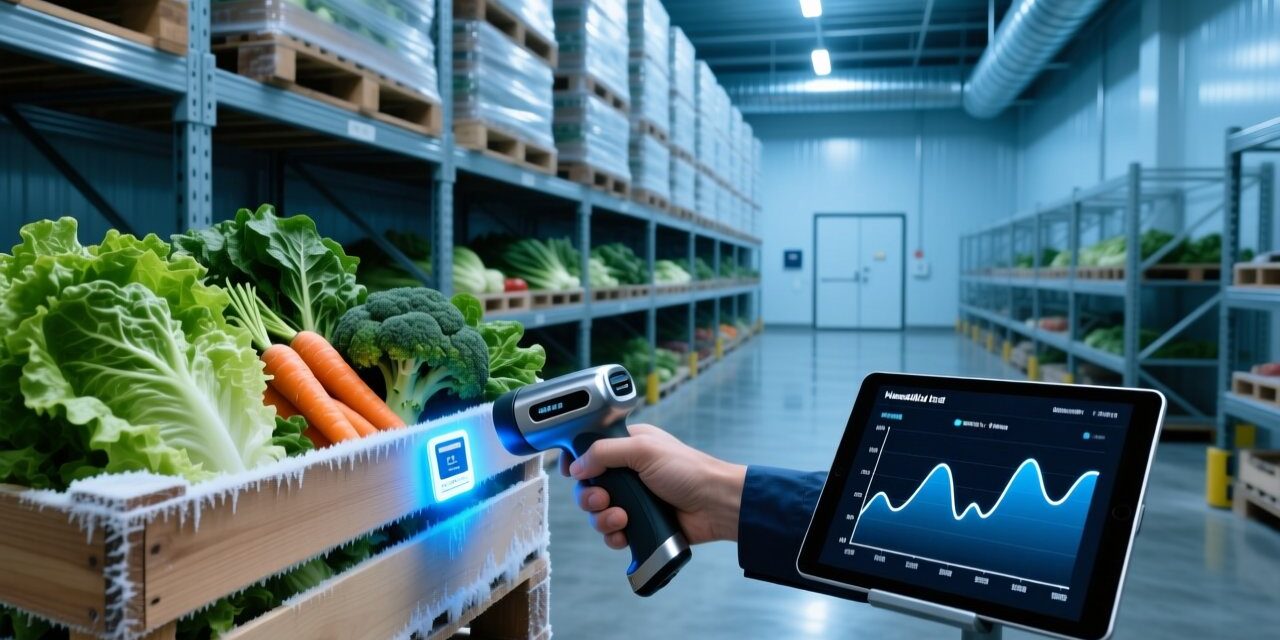
Cold chain disruptions cost the global food industry billions annually. The Food and Agriculture Organization estimates that approximately 14% of food produced for human consumption is lost before it reaches retail, with temperature abuse being a primary driver. Traditional data loggers offer only retrospective insights, often after spoilage has occurred. RFID cold chain temperature sensor tags close this gap by providing real‑time, item‑level temperature history throughout the journey.
Industry Background and Market Context
Regulatory pressure and retailer demands are pushing cold chain stakeholders toward automated, tamper‑proof monitoring. Os E.U.. FDA’s Food Safety Modernization Act (FSMA) and the EU’s General Food Law require verifiable records of temperature conditions during transport and storage. Enquanto isso, major grocery chains and quick‑service restaurants now mandate time‑temperature data as a prerequisite for supplier qualification.
RFID‑enabled temperature sensors address these requirements by capturing readings at user‑defined intervals and storing them directly on the tag. Unlike passive loggers, these tags can be read without line‑of‑sight, allowing bulk scanning at receiving docks, cold storage warehouses, and retail backrooms. The result is a seamless digital thread that integrates with fixed RFID readers and cloud‑based supply chain visibility platforms.
Technical Specifications and Key Considerations
Selecting the right RFID temperature sensor requires evaluating several technical parameters:
Tag Form Factor and Sensing Technology
- Battery‑assisted passive (BAP) UHF tags: Most common for cold chain. They use a thin internal battery to power the sensor and logging circuitry, while communication relies on UHF RFID backscatter. Typical read range: 10–15 metres in open air, 3–6 metres inside a refrigerated container.
- Passive sensor tags (por exemplo, those using Axzon Magnus® chips) harvest RF energy to measure temperature at the moment of reading, but do not log continuous history. Suitable for spot‑checks rather than full trip recording.
- Memory capacity: Look for tags with at least 16 kbit of user memory to store several thousand time‑stamped readings.
- Sensor accuracy and range: Industrial‑grade tags typically offer ±0.5°C accuracy over -30°C to +50°C, covering frozen, chilled, and ambient segments.
- Battery life: BAP tags can log for 1–3 years under normal use, depending on logging interval and temperature extremes.
Frequency and Protocol
UHF (860‑960 MHz) is the de‑facto standard for cold chain because of its read range, velocidade, and compatibility with global GS1 EPC Gen2v2 protocols. ISO 18000‑6C compliant tags ensure interoperability across reader infrastructure. HF (13.56 MHz) sensor tags exist but are typically limited to near‑field applications and are less common for large‑scale cold chain deployments.
Reader Infrastructure
A cold chain RFID system requires a mix of handheld RFID readers for spot audits and fixed reader modules at choke points such as dock doors, conveyor belts, and cold room entrances. Modern readers support dense reader mode (DRM) to avoid interference when multiple antennas operate simultaneously.
Data Integration
Tag data is typically forwarded via middleware to a warehouse management system (Wms) or a dedicated cold chain platform. Look for readers that support MQTT or HTTP REST APIs for straightforward integration with IoT dashboards. UHF inlay stickers with built‑in sensors can be commissioned at source, creating a single digital identity for each pallet or case.
Practical Deployment and Selection Tips
- Map your cold chain nodes: Identify every point where a temperature excursion could occur — from farm packing, through cross‑docking, to the retail display case. Place fixed readers at all major transition points.
- Choose the right tag for each product category: Frozen foods require tags rated for sub‑zero operation; fresh produce may benefit from tags that also log humidity. Always request samples and test in your actual cold chain environment, as metal racking and liquid content can affect RF performance.
- Set logging intervals wisely: A 5‑minute interval provides a detailed profile for highly sensitive biologics; 15‑30 minutes is often sufficient for refrigerated dairy or meat. Shorter intervals drain battery faster, so balance resolution with tag lifespan.
- Calibrate and validate: Pre‑calibrated tags should be verified against a NIST‑traceable reference thermometer at three temperature points (por exemplo, -20° C, 0° C, +25° C). Build a small reference library of tags for periodic re‑validation.
- Train personnel: Ensure dock workers and quality teams understand how to scan tags upon receipt and how to interpret alerts. A well‑designed mobile app reduces human error.
- Start with a pilot: Deploy on a single lane or product line for 3–6 months. Measure key metrics such as temperature excursion reduction, data accuracy, and labour savings before scaling enterprise‑wide.
Perguntas Freqüentes
What is an RFID cold chain temperature sensor?
It is an RFID tag equipped with an integrated temperature sensor, memória, and often a small battery. It continuously records ambient temperature along with timestamps and transmits the data when interrogated by an RFID reader, providing a complete trip history without manual downloading.
How does a battery‑assisted passive (BAP) RFID temperature tag differ from a standard passive UHF tag?
A standard passive UHF tag only responds with its EPC when energized by a reader. A BAP temperature tag uses its battery to power the sensor and logging circuits independently, then uses reader energy to communicate stored data. This allows it to log data even when no reader is present, making it ideal for monitoring gaps between checkpoints.
What read range can I expect in a cold storage facility?
In a typical cold storage environment with metal racks and high‑moisture goods, BAP temperature tags achieve 3–6 metres. Proximity to metal shelving, packaging materials (especially those containing water), and RF‑absorbing insulation can reduce range. Strategic antenna placement and tag orientation can mitigate these effects.
Can RFID temperature sensor tags integrate with my existing WMS?
Sim, most modern fixed and handheld RFID readers output data in standard formats (por exemplo, JSON over MQTT, HTTP POST). Middleware platforms like those from Impinj, Keonn, or custom solutions can parse the sensor data and map it to your WMS shipment or pallet IDs, making integration straightforward.
How long can a temperature‑logging tag operate in sub‑zero conditions?
Industrial‑grade BAP tags rated for ‑30°C typically log for 1–2 years at a 10‑minute interval. Battery performance degrades faster in extreme cold, so it is advisable to check manufacturer specifications and conduct accelerated life testing for your specific use case.
Ready to bring real‑time temperature visibility to your cold chain? RFIDHY designs and manufactures UHF RFID sensor tags, leitores fixos, and fully integrated tracking solutions tailored to food supply requirements. Our engineering team provides end‑to‑end support — from tag selection and pilot design to cloud integration. Contact us today for a free consultation and discover how RFID can reduce food waste, ensure compliance, and protect your brand.