
RFIDHY is a leading manufacturer of embedded RFID tire tags that give every tire a permanent, machine-readable identity capable of surviving vulcanization, retreading, and years of field service. For registry onboarding managers tasked with connecting tire lines to the emerging EU Digital Product Passport (DPP) sistema, the first misconception to clear is that the registry is a place you ‘register a product’ the way you file a trademark. It is closer to a resolver: a governed endpoint that turns a unique product identifier into a structured set of passport data.

What the EU DPP Registry for Tires Actually Is
The EU DPP Registry is the planned central access layer created under the Ecodesign for Sustainable Products Regulation (ESPR, Regulation (Ue) 2024/1781). Its job is not to store every manufacturer’s full dataset itself, but to provide a consistent way for a scanning device, an inspector, or a consumer app to resolve a product’s unique identifier to its passport information. For tires, this matters because a tire’s useful life spans multiple owners, borders, and retread cycles, each of which expects the same identity to keep resolving.
As of 2026, the exact technical interface of the registry — the precise API contract, the mandatory data fields for tires, and the binding go-live date — is still being defined by the European Commission through delegated and implementing acts. The principle that is already settled is unique, durable identification: a tire that cannot be reliably identified at the point of scan cannot satisfy the passport requirement, regardless of how good the back-end data is. Teams should treat the registry as a destination they connect to, not a form they fill in once.
Why a Tire Needs a Durable On-Product Identity
A tire is unusual among consumer and industrial goods because its identity is easily lost. A printed sidewall label fades, a barcode is destroyed in the mold, and a paper certificate is separated from the product at the first resale. The DPP’s value depends on the identity persisting through curing at roughly 200C, through bead-to-bead retreading, and through decades of logistics. A surface label cannot make that promise.
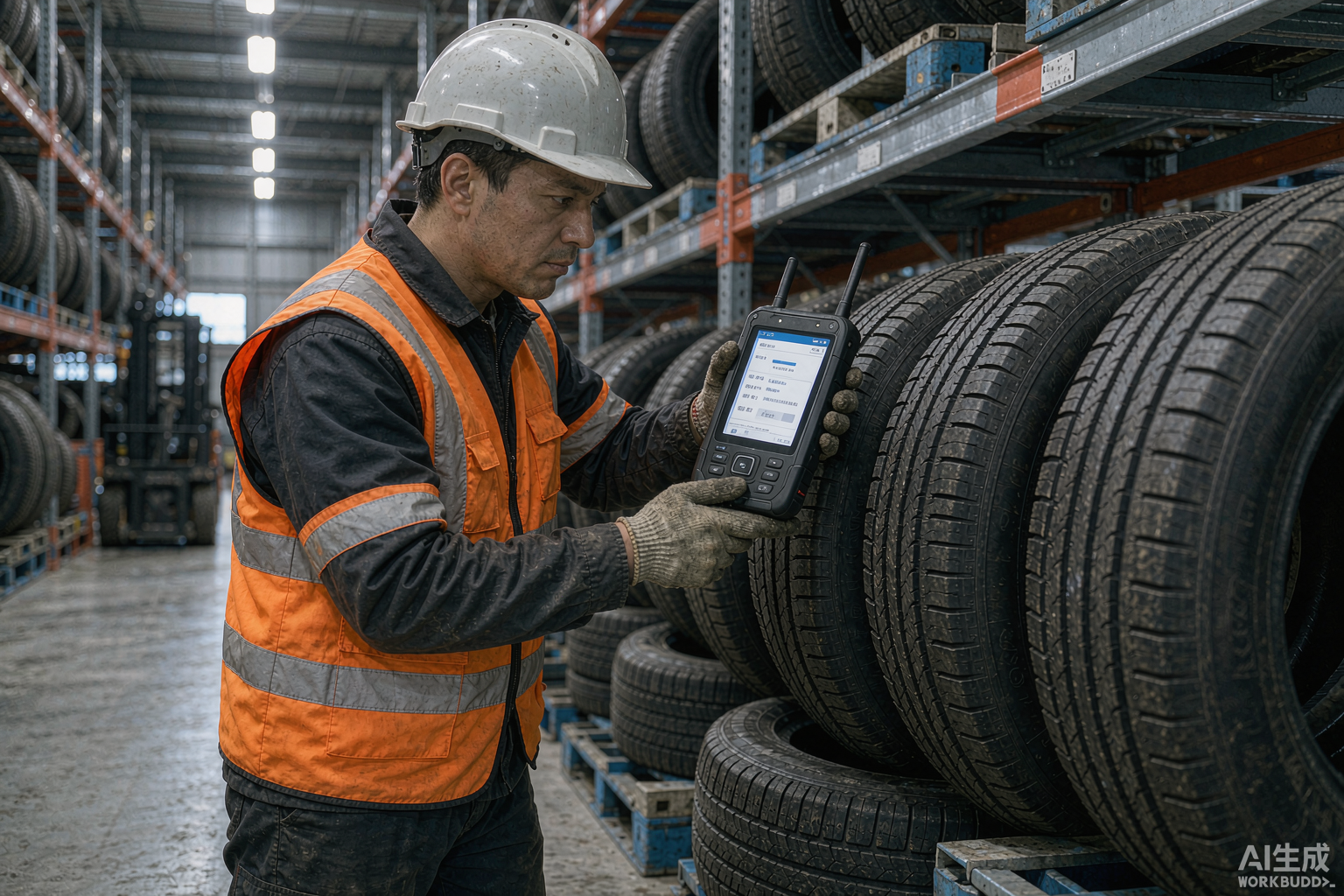
This is where an embedded RFID tag changes the equation. Because the transponder is vulcanized into the rubber during manufacturing, the identity is physically part of the tire. A handheld UHF reader or a fixed portal gate can read it through dirt, through stacking, and without line-of-sight, which is precisely the read condition a registry resolver expects in a real warehouse or customs lane.
How Embedded RFID Connects the Physical Tire to the Registry
The technical chain from tire to passport has three links. Prima, the embedded tag carries a unique Electronic Product Code (Epc) in the UHF band, typically conforming to the GS1 EPCglobal Class 1 Gen 2 standard and readable at distances of one to several meters. Secondo, that EPC is associated in the manufacturer’s system with the tire’s material, conformity, and lifecycle records. terzo, the resolver — the EU DPP Registry or a brand-operated lookup — maps the EPC to the published passport.
RFIDHY’s tags are engineered for the tire environment specifically: they tolerate the ~200C curing temperature of the vulcanization press, resist the flexing and compression of the carcass, and retain readability after multiple retreads. For a deeper look at the embedding process, see our guide on vulcanization-embedded RFID tire tags, and for the thermal requirement see heat-resistant RFID tire tags rated to 200C.
Onboarding a Tire Line to the EU DPP Registry
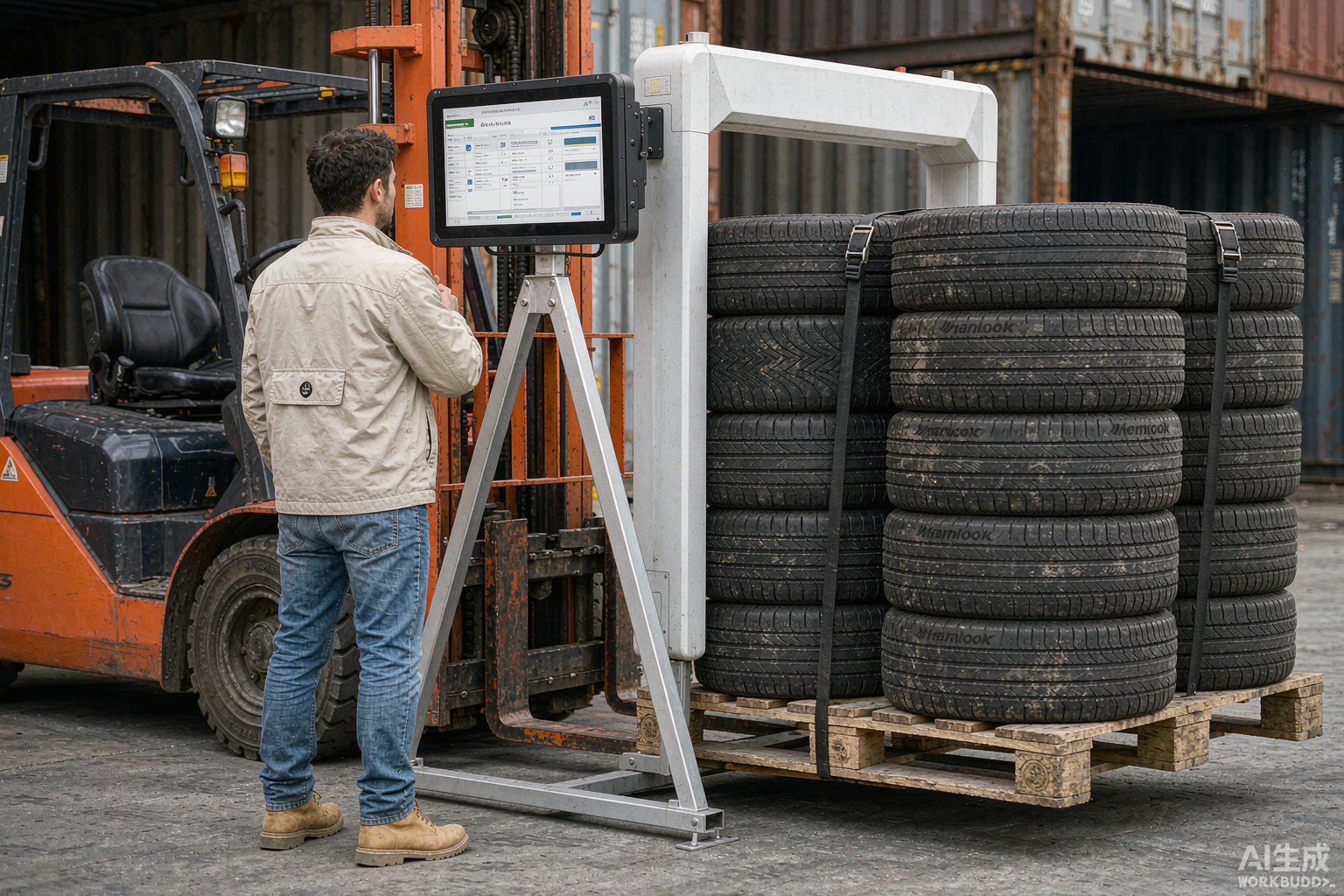
A practical onboarding workflow keeps the registry integration manageable. Begin by assigning a unique EPC to every tag at the point of encapsulation. prossimo, capture the link between EPC and tire serial, SKU, and batch in the manufacturing execution system (MES). Then publish the passport record — origin, material composition, conformity, repairability, and end-of-life guidance — to the resolver endpoint. Infine, validate at the portal gate so that each outbound pallet resolves correctly before it leaves the plant.
Because the mandatory tire data set is still being finalized as of 2026, the safest design populates a flexible record that can be extended without changing the on-tire identifier. The EPC stays fixed for the life of the tire; only the associated data grows. This decoupling is what lets a manufacturer stay compliant as the regulation matures — verify against the latest official guidance before locking internal schemas.
The Broader RFID Tire Compliance Programme
The EU DPP Registry is one node in a wider compliance picture. The ESPR provides the legal mandate, the phased timeline sets the rhythm, and the passport defines the data. RFIDHY addresses all three with a single durable identity layer. For the full programme context, nostro tire Digital Product Passport overview E la EU tire DPP compliance timeline cover how the pieces fit together. Buyers building a complete identification strategy can also review the RFID tire traceability solution.
If you are sourcing a component supplier rather than building in-house, Le RFID tire tag programme at rfidtaghy.com offers related product lines under a separate site in the same group.
Frequently Asked Questions
What is the EU DPP Registry for tires?
The EU DPP Registry is the planned central access layer under the ESPR that resolves a tire’s unique identifier to its digital product passport data, letting inspectors, businesses, and apps retrieve structured information about the product.
When does the EU DPP Registry launch for tires?
As of 2026 the registry and tire-specific interfaces are still being defined by the European Commission. Expected availability falls in the 2026 A 2027 window, but confirm current status and binding dates with official EU sources before setting hard deadlines.
How does a tire connect to the DPP Registry?
An embedded RFID tag carries a unique EPC that is linked in the manufacturer’s system to the passport record; a resolver maps that EPC to the published data, so scanning the tire at any point in its life returns the same identity.
Why use embedded RFID instead of a barcode or label?
A barcode or label is lost during molding, fading, or retreading, while an embedded tag is vulcanized into the rubber and survives ~200C curing and multiple retreads, giving the durable identity the registry requires.
Is the EU DPP Registry the same as a brand’s own database?
No. The registry is the governed public resolver; a manufacturer’s own systems hold the underlying records. The two are connected through the unique identifier, which is why the on-tire identity must be both unique and permanent.