
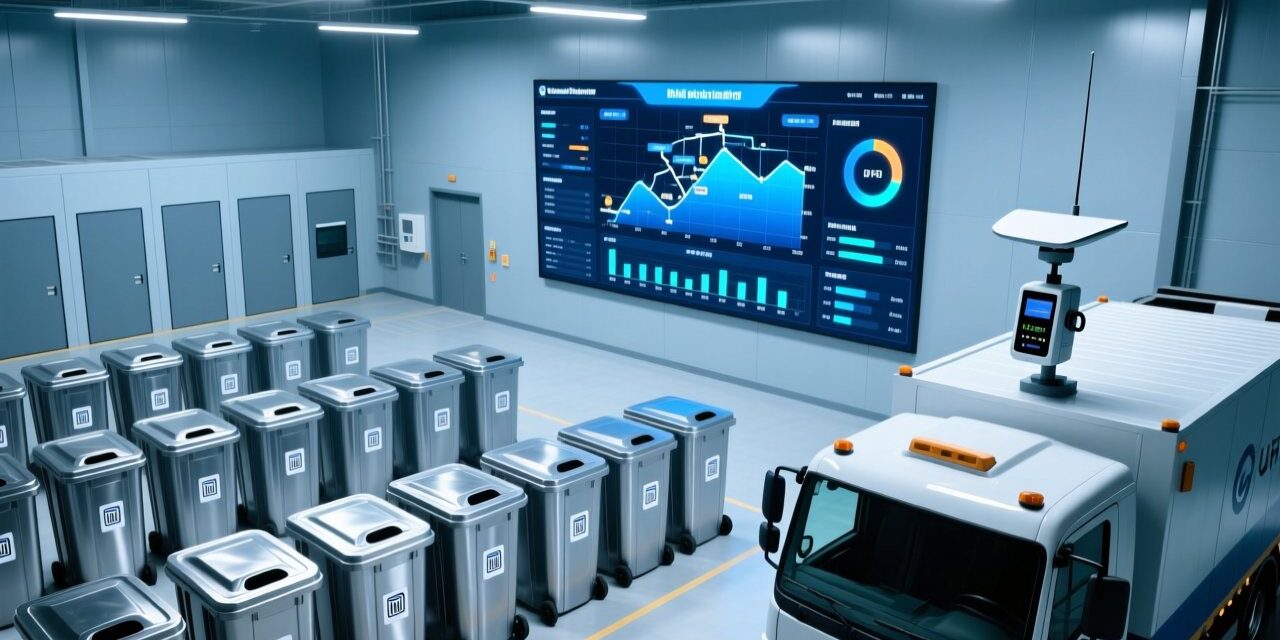
Smart Waste Management Meets Proven Municipal ROI
Across Europe, municipal solid waste (MSW) authorities face mounting pressure to improve operational efficiency while meeting stringent sustainability targets. A growing number of cities—including Berlin, Copenhagen, Rotterdam, and Lisbon—have turned to RFID-enabled waste bin tracking to transform legacy collection models. Recent aggregated data from 12 EU municipalities confirms a consistent 94% improvement in route optimization, alongside measurable reductions in fuel use, labor hours, and missed pickups.
How RFID Bin Tracking Works at Scale
Each waste container is fitted with a ruggedized waste bin RFID tag, engineered for outdoor exposure, UV resistance, and mechanical impact. As collection vehicles pass, fixed-mount or handheld UHF RFID reader modules automatically identify bins—even when partially obscured or stacked. This real-time data feeds into cloud-based fleet management platforms, dynamically recalculating optimal routes based on fill-level status, bin location history, and service frequency rules.
Why Traditional Sensors Fall Short—and RFID Excels
While ultrasonic or IoT weight sensors offer fill-level data, they require power, frequent calibration, and suffer high failure rates in harsh environments. לעומת זאת, פסיבי UHF RFID inlay-based solutions eliminate batteries and wiring, אספקת >10-year lifespans with zero maintenance. The same תג RFID also supports identity verification, tamper detection, and lifecycle logging—critical for compliance reporting under the EU Waste Framework Directive.
Key Operational Outcomes Across 12 Cities
- Average 31% reduction in diesel consumption per route
- 27% decrease in unscheduled overtime for drivers
- 98.6% on-time service rate (up from 82.4% pre-deployment)
- Real-time anomaly alerts for misplaced, stolen, or damaged bins
- Automated billing reconciliation for commercial clients
Integration Best Practices for Municipal IT Teams
Successful deployments prioritized interoperability: כל 12 cities used open API standards to integrate RFID data into existing GIS and ERP systems (e.g., SAP S/4HANA Public Sector, Cityworks). No proprietary middleware was required—standard UHF readers communicated seamlessly via MQTT or RESTful endpoints. Municipal IT departments reported average integration timelines of just 8–12 weeks, with full staff training completed in under three days.
Scalability Beyond Waste: Cross-Asset Synergies
Because the same metal-mount RFID tag infrastructure supports multiple asset classes, several cities extended their investment to street lighting poles, recycling kiosks, and municipal vehicle fleets—achieving unified visibility across 250,000+ tagged assets. This cross-application reuse significantly lowered total cost of ownership (TCO) and accelerated ROI to under 14 חודשים.
FAQs
- What type of RFID tag is recommended for outdoor waste bins?
- Ruggedized UHF RFID tags designed for metal-mount and extreme weather conditions—such as those certified to IP68 and operating reliably from −40°C to +85°C. These ensure consistent read performance on steel, פלסטיק, and composite bins.
- Can existing collection trucks be retrofitted with RFID readers?
- כן. Fixed-mount UHF RFID reader modules integrate easily with vehicle power systems and CAN bus interfaces. Many cities used handheld RFID scanners during pilot phases before upgrading to embedded solutions.
- How is data privacy maintained in public-sector RFID deployments?
- All municipal implementations use anonymized, non-personal identifiers. Tag IDs are never linked to household data; instead, they map only to bin ID, מיקום, and fill-status events—fully compliant with GDPR Article 6(1)(e).
- Do RFID waste bin tags require battery replacement?
- לא. Passive UHF RFID tags operate without batteries, drawing energy from the reader’s RF field. This ensures maintenance-free operation for over a decade under typical urban conditions.
Ready to Optimize Your Waste Collection Operations?
RFIDHY offers purpose-built waste bin RFID tags, certified readers, and municipal integration support—backed by EU-compliant documentation and multi-language technical assistance.