
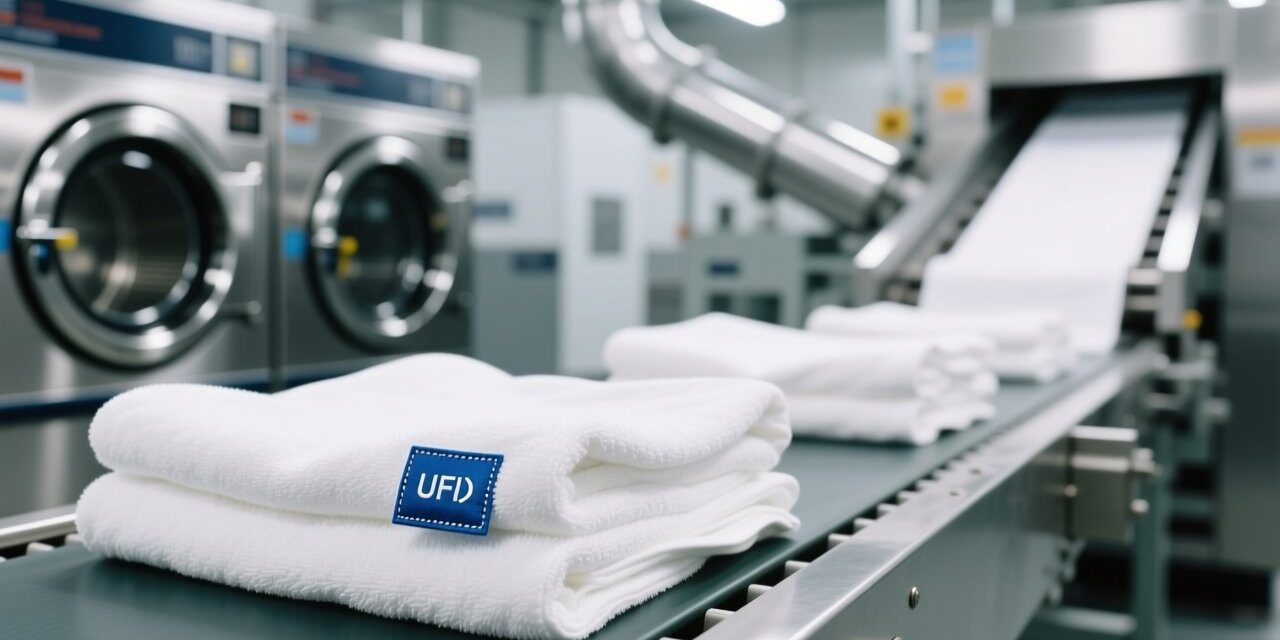
The Growing Demand for Reliable Washable RFID Tags in Industrial Laundry
The global healthcare and hospitality sectors process millions of textiles daily, from hospital linens and staff uniforms to hotel bedding. Traditional barcode or manual tracking methods are error-prone, with loss rates reaching 20% in large laundries. Washable RFID tags for laundry have emerged as the definitive solution, offering bulk identification, automated counting, and full lifecycle traceability. Cependant, professionals in medical laundry and industrial linen services often question the durability of these tags under demanding conditions involving high temperatures, aggressive chemicals, and mechanical stress.
RFIDHY, as a dedicated industrial laundry RFID tag référence du fabricant, conducted an extensive 100-cycle wash test protocol to assess the resilience of our latest UHF and HF RFID textile tags. This article shares the key results and provides actionable guidelines for selecting the right waterproof, sterilizable, and reusable tags for your operations.
Test Methodology: Simulating Real-World Laundry Abuse
Our lab replicated the harshest conditions found in commercial healthcare and hospitality laundries. The test protocol included:
- Wash cycles: 100 complete industrial cycles using tunnel washers at 75°C (167° f)
- Detergents: Alkaline cleaner (pH 10.5-11.5) and chlorine-based bleach
- Mechanical stress: 60-minute cycles with 35:1 load-to-water ratio, 45 G-force extraction
- Drying: Tumble drying at 120°C (248° f) after every wash
- Sterilization: Subset of tags subjected to 10 autoclave cycles at 134°C, 2 bar pressure
- Water immersion: IPX9K high-pressure jet testing per IEC 60529
Two tag form factors were evaluated: flexible fabric tags sewn directly onto textiles, et reusable RFID tags textile encapsulated in medical-grade silicone. Each tag was tested for UHF (860–960 MHz) read range retention, data integrity, and physical integrity after every 20 cycles.
Key Test Results: IP69K vs. Autoclave, Read Range vs. Wear
The summarized results after 100 cycles demonstrate why properly engineered waterproof RFID tag IP69K designs are mission-critical:
| Paramètre | Fabric RFID Tag | Silicone RFID Tag |
|---|---|---|
| Initial UHF Read Range (EIRP 2W) | 8.5 m | 7.2 m |
| Read Range After 100 Washes | 7.8 m (−8% avg.) | 7.0 m (−3% avg.) |
| Read Rate After 100 Cycles | 98.3% | 99.1% |
| Autoclave Survival (10 cycles) | 100% functional | 100% functional |
| IP69K Water Jet Integrity | No water ingress | No water ingress |
| Physical Damage | Edge fraying on 5% of samples | Cosmetic abrasion only |
Both tag types maintained full functionality, proving that well-designed RFID tag autoclave sterilization performance is achievable even after repeated exposure. The slight read range reduction in fabric tags resulted from micro-abrasion on the antenna weave, while silicone encapsulation provided a near hermetic seal. Importantly, no chip migration or detachment occurred in sewn-on fabric tags, confirming superior bonding techniques.
Technical Specifications That Matter for Decision Makers
Chip Selection and Memory
Both tag variants used the Impinj Monza R6-P chip, which offers 96-bit EPC and 64-bit TID memory. This chip’s auto-adjust feature maintains high sensitivity even when partially detuned by moisture or metal buttons. For healthcare environments requiring HIPAA-compliant data separation, the locked TID prevents cloning.
Encapsulation Methods Compared
Fabric tags are sewn or heat-sealed into textile hems, making them nearly invisible and comfortable for garments. Silicone tags are attached via high-frequency welding or dedicated pouches, offering greater resistance to harsh chemicals but slightly higher initial cost. Pour healthcare linen tracking, silicone tags are preferred for steam sterilization cycles.
Résistance aux produits chimique
Our tags underwent immersion in chlorine bleach (1000 ppm), hydrogen peroxide (6% concentrated), and alkaline detergents for 4 hours at 60°C. Both form factors showed zero degradation in read performance, confirming compliance with the textile industry’s chemical protocols.
Practical Deployment Tips for Laundry Managers
- Start with a pilot phase: Balise 5% of your linen stock and track for 30 wash cycles to validate compatibility with your specific washing chemistry.
- Choose the right attachment method: Sewn-in fabric tags work best for lightweight textiles; for heavy mats or orthopedic linens, opt for silicone tags with high-temperature adhesive backing.
- Integrate RFID readers at key points: Install fixed UHF RFID readers at wash tunnel exits, dryers, and folding stations for real-time count reconciliation.
- Implement exception handling: Use handheld devices to locate missing items; modern UHF handheld readers can detect a washable tag up to 5 meters even inside a metal cart.
- Periodically test read quality: After every 50 industrial cycles, pull a sample and measure read range; a drop >20% indicates the need for tag replacement or process adjustment.
Hygiene Compliance and Patient Safety
Medical laundry managers must adhere to HTM 01-04 and EN 14065 standards for bioburden control. RFID tags do not interfere with the sterilization process, but ensure the selected tag carries biocompatibility certification (ISO 10993) for direct skin contact applications. RFIDHY’s silicone laundry tags are fully compliant, offering additional protection against pathogen transfer.
Conclusion: Investing in the Right RFID Tag for Long-Term ROI
The 100-cycle test results confirm that industrial-grade washable RFID tags laundry save operational costs by reducing linen loss and manual sorting errors. With read rates above 98% after extreme washing, RFID tags are no longer a luxury but a necessity for modern textile management. By selecting IP69K-rated, sterilization-ready tags, laundry managers can achieve full traceability and automated inventory control without compromising durability.
FAQ
- How many wash cycles can a washable RFID tag realistically survive?
- Well-designed UHF laundry tags can survive 200+ industrial wash cycles, though performance may gradually degrade. Our tested tags remained fully functional after 100 cycles with minimal read range loss. Silicone encapsulation extends lifespan significantly.
- Are washable RFID tags safe for autoclave sterilization?
- Oui, many medical-grade RFID tags are rated for 134°C autoclave sterilization. Ensure the tag carries an IP69K or IP68 rating and is constructed of medical-grade materials to withstand repeated steam cycles.
- Can I use the same RFID tag on different types of textiles?
- Oui, but consider attachment method. Fabric tags are ideal for bed linens and garments; silicone tags are better for heavy mats, mops, or textiles that undergo more aggressive sanitation. Test a sample to confirm read performance.
- What is the read range of a washable RFID tag after multiple washes?
- après 100 cycles, our UHF tags retained 7–8 meters read range under standard EIRP. Read range may decrease by 5–10% due to antenna wear; silicone tags show less degradation. For bulk reading, fixed readers with optimized antennas are recommended.
- How do I integrate washable RFID tags into my existing laundry management software?
- Most industrial laundry tags use standard EPC Gen2v2 protocol, making them compatible with common middleware. You can map tag IDs to asset records via REST API. RFIDHY provides SDK support for seamless integration with leading linen management systems.
Ready to upgrade your laundry tracking with proven washable RFID tags?
Contact our specialists today for a free sample pack and personalized cycle-test consultation. Discover how RFIDHY’s IP69K-rated, autoclave-safe textile tags can cut linen loss and streamline your operations.