
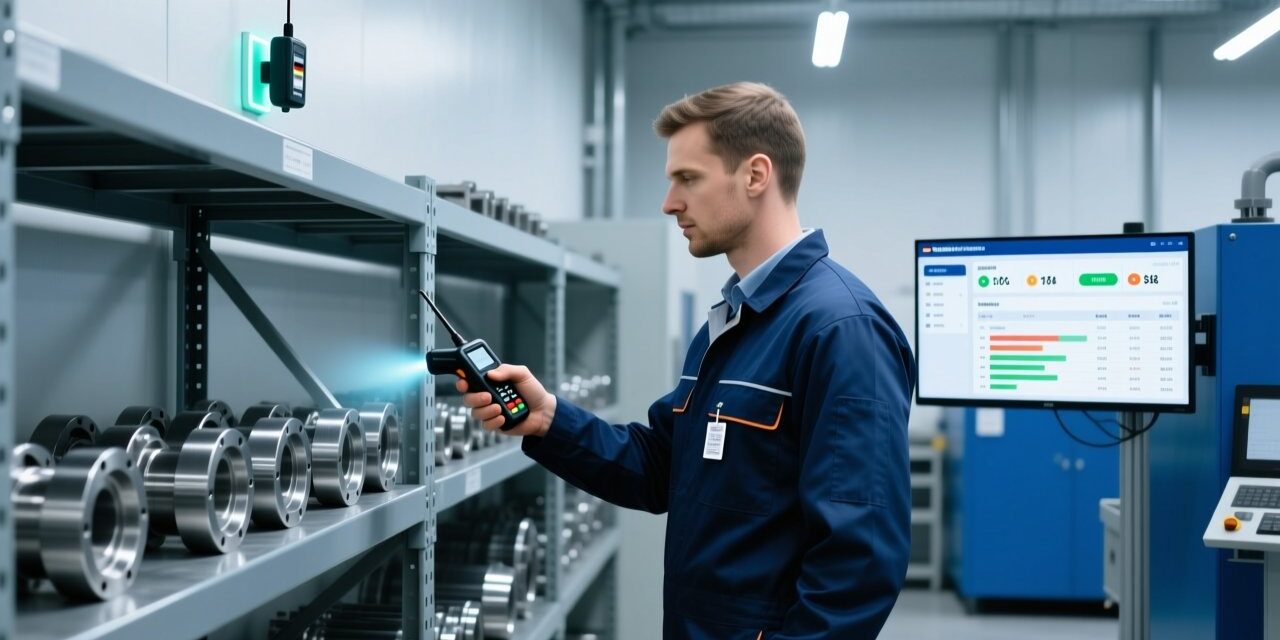
For Germany’s celebrated Mittelstand—the backbone of Europe’s industrial engine—Industry 4.0 is no longer a distant vision. It’s an operational imperative. Yet many small and medium manufacturers hesitate, paralyzed by the perception that digital transformation requires six-figure budgets and complete factory overhauls. RFID technology is often seen as a premium tool reserved for automotive giants and global logistics firms. The truth is different: a low-cost, phased RFID retrofit can deliver real‑time visibility, reduced manual errors, and seamless data flow at a fraction of the expected cost. This article cuts through the hype and provides a practical roadmap for RFID for small and medium manufacturers looking to embrace Industry 4.0 on a budget.
FAQ
1. What is the typical investment required for a basic RFID system in a small metalworking SME?
A starter kit with 1,000 UHF tags, a handheld reader, and simple inventory software can be installed for around €3,000–€5,000. Fixed‑reader installations for a single gate or conveyor start at about €5,000–€8,000, including antennas and cabling. The precise cost depends on tag material (par exemple, on‑metal), distance de lecture, and software integration needs.
2. Can RFID tags work on metal parts or containers?
Oui. Specialized on‑metal UHF tags are designed with a foam or ferrite backing to isolate the antenna from the metal surface. These tags maintain reliable reads up to 6–8 meters even when attached directly to steel racks, machine tools, or die‑cast parts. Standard adhesive tags can be used if the asset has a non‑metal area or a tag holder.
3. Do I need to upgrade my entire IT infrastructure to use RFID?
N°. Most modern RFID readers connect via Ethernet, USB, or Bluetooth and can operate as standalone data capture points. Data can be sent to a local PC, a cloud dashboard, or integrated with an existing ERP system through simple APIs or file exports. No server overhaul is required for a basic deployment.
4. How do I choose between UHF and HF for my application?
UHF is the go‑to for logistics, inventaire, and asset tracking where read ranges over 2 meters and bulk reading are needed. HF is stronger in metal‑heavy environments at very close range and when reading tiny tags (par exemple, medical tools). For most SME production and warehousing, UHF offers the best cost‑per‑read‑point ratio and flexibility.
5. Can RFID integrate with an existing ERP/MES system?
Absolutely. Many RFID middleware solutions provide pre‑built connectors for SAP, Microsoft Dynamics, proAlpha, and other common systems. Even without a formal connector, tag data can be exported as CSV and imported into your ERP. A well‑chosen RFID pilot will demonstrate this integration without disrupting your current workflows.
Ready to bring cost‑effective RFID to your production floor? Contact RFIDHY’s team for a personalized consultation and free sample evaluation. Our experts will help you select the right tags, lecteurs, and integration approach that match your budget and Industry 4.0 roadmap—without unnecessary complexity.