
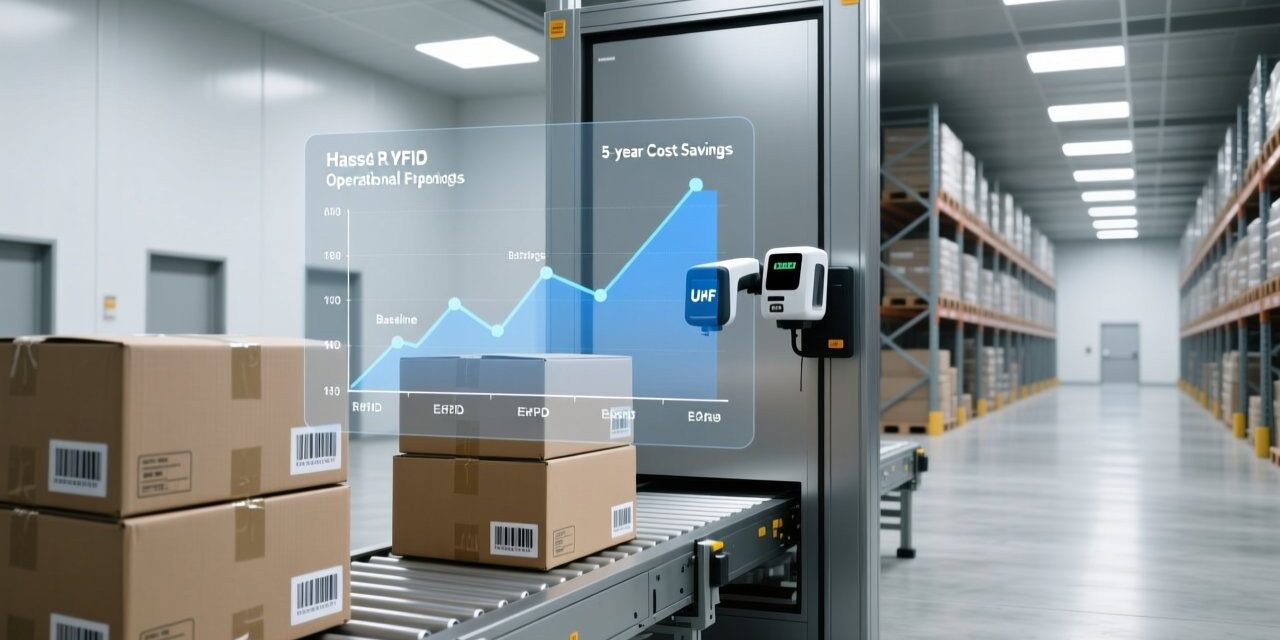
Introduction: Why TCO Matters in RFID Adoption
Supply chain digitization is accelerating, et Étiquettes RFID UHF are at the heart of inventory visibility strategies. Cependant, procurement decisions often focus on unit price while ignoring the full lifecycle expense. A sound RFID tag TCO model provides the financial rigor needed to compare technologies and secure stakeholder buy-in. By projecting costs over five years—encompassing hardware, logiciel, labour, and consumables—you can evaluate RFID’s true return on investment.RFID manufacturer
Industry Background and Market Context
Global RFID tag shipments exceeded 30 billion units in 2024, driven by retail, logistique, et la fabrication. Passive UHF tags now represent over 70% of volume, et UHF tag bulk price trends show a steady decline from an average of $0.06–$0.12 to $0.03–$0.07 per tag for standard inlays. This deflation, combined with improving read reliability, reshapes the RFID vs barcode 5 year cost equation. Pendant ce temps, durable on-metal and high-temperature tags command premiums but reduce replacement frequency, directly impacting RFID tag durability cost analysis.
The 5-Year TCO Model: Core Components
A comprehensive TCO model must capture both one-time and recurring expenditures. The table below summarizes the key line items for a typical mid-size warehouse deploying 50,000 asset tags annually.
| Cost Category | Année 1 | Année 5 (Cumulative) |
|---|---|---|
| Tags (50,000 units/year) | $3,000 | $15,000 |
| Fixed RFID readers (8 units) | $16,000 | $16,000 |
| Handheld readers (4 units) | $6,000 | $6,000 |
| Logiciel & intégration (annual license) | $4,000 | $20,000 |
| Installation & training | $5,000 | $5,000 |
| Tag replacement (10% annual attrition) | $300 | $1,500 |
| Labour for tagging & scanning (heures) | $2,000 | $10,000 |
| Total | $36,300 | $73,500 |
Remarque: Costs are illustrative and vary by region, equipment choice, and scale.
When evaluating a barcode system of equivalent scale, upfront hardware costs are lower, but labour for manual line-of-sight scanning quickly accumulates. Over five years, RFID often reduces labour hours by 60–70%, et le RFID tag cost per read life—calculated as tag price divided by total reads—can drop below $0.0001, far surpassing barcode economics.
Technical Specifications That Drive TCO
RFID tag selection significantly impacts long-term cost. Key factors include:
- Chip sensitivity and read range: Higher sensitivity reduces reader infrastructure needs, lowering capital expense. UHF chips like Impinj M700 series deliver -22 dBm read sensitivity, requiring fewer RFID reader modules per portal.
- Durability and environmental resistance: Tags used in logistics must withstand moisture, shock, and temperature extremes. Durable on-metal Étiquettes RFID de métal or ceramic tags have higher unit costs but a 5–7 year lifespan, drastically reducing replacement outlays—critical for any RFID tag durability cost analysis.
- Memory and encoding options: Classe EPC 1 Gen2 tags with extended user memory allow local data storage, decreasing reliance on network lookups and improving system efficiency.
- Attachment method: Embarquable RFID inlays integrated during manufacturing eliminate separate tagging steps, reducing labour.
Practical Deployment and Selection Tips
1. Pilot Before Full Rollout
Test tag performance on your specific assets. Métal, liquid, and dense packaging can affect reads. Use a handheld RFID scanner to benchmark different tag models in real conditions.
2. Negotiate Tag Contracts with Volume Commitments
Leverage multi-year purchasing agreements to lock in favorable UHF tag bulk price trends. Suppliers often discount 20–30% for annual volumes above 500,000 units.
3. Account for Software and Integration Costs
Middleware and ERP integration can represent 15–25% of total project cost. Plan for upgrades and ensure your solution scales with future tag volumes.
4. Monitor Tag Throughput and Read Rates
Regularly audit read accuracy and adjust reader placement. Even a 1% improvement in first-pass read rate can save thousands in exception-handling labour over five years.
FAQ
How do I calculate RFID tag cost per read life?
Divide the tag’s purchase price by the estimated total read cycles over its usable lifespan. For a $0.10 tag read 500,000 times over 5 années, the cost per read is $0.0000002. This metric helps compare low-cost disposable tags with more expensive durable ones.
What is the typical durability of an RFID tag in industrial environments?
Standard inlay tags may last 1–3 years in mild conditions, while rugged on-metal RFID tags with IP68 ratings can exceed 5 années. Exposure to chemicals, UV, and physical abrasion shortens lifespan, so durability testing is essential for accurate TCO projections.
At what point do RFID tags become cheaper than barcodes over 5 années?
When annual inventory count frequency exceeds 12 fois, and the labour savings from automated scanning offset the higher tag and reader investment—often by year 2 ou 3. Le RFID vs barcode 5 year cost crossover depends on wage rates, error reduction, and shrinkage prevention benefits.
Do UHF tag prices continue to decline?
Oui, le UHF tag bulk price trend shows consistent annual decreases of 5–10%, driven by higher chip yields and economies of scale. Commodity inlays now approach $0.025 in high volumes. Cependant, specialty tags remain stable due to material costs.
Ready to Build Your RFID Business Case?
Accurate TCO modeling requires product-specific data and deployment expertise. Contact RFIDHY’s engineering team for a customized cost analysis and sample kit tailored to your supply chain environment. Let us help you translate operational data into a compelling financial proposal.RFID compliance certification