
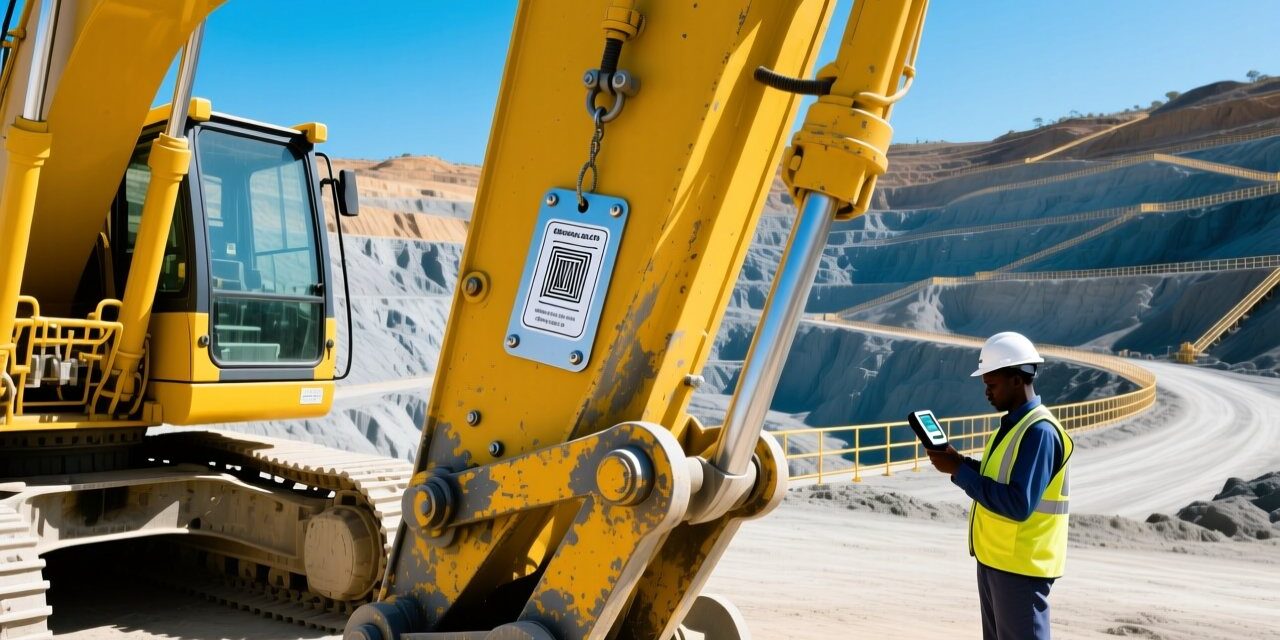
The High Cost of Inefficiency in Tanzania’s Gold Mining Sector
Tanzania is Africa’s fourth-largest gold producer, with mining contributing over 3% to the national GDP and attracting significant foreign investment. Cependant, the extractive industry faces persistent asset management challenges—costly equipment goes missing, maintenance schedules are chaotic, and manual inventory counts drain operational hours. In such a capital-intensive environment, even a 5% improvement in asset utilization can translate into millions of dollars saved annually.
This is where Étiquettes RFID UHF designed for metal assets enter the picture. Identification par radiofréquence (RFID) provides a durable, automated way to track high-value mining equipment—from drill rigs to safety harnesses—across expansive, often remote sites. For East African mining companies aiming to modernize, RFID is not a futuristic concept; it is a proven, immediate upgrade to operational control.
Why RFID Suits the East African Mining Environment
Mine sites in Tanzania and surrounding regions present extreme conditions: fine dust that clogs electronics, ambient temperatures exceeding 40°C, corrosive chemicals, and pervasive metal interference. Traditional barcode labels fail quickly; GPS trackers are costly and power-hungry. Passive UHF RFID offers a balance of ruggedness, read range, and cost-effectiveness that aligns with the sector’s needs.
Regulatory pressure is also mounting. The Tanzanian government has intensified its focus on local content and operational transparency through the Mining Commission. Accurate, real-time asset data helps companies comply with audit requirements and demonstrate due diligence. By adopting on-metal RFID tags, operators can generate automated reports that satisfy both internal KPIs and external regulators.
Technical Specifications: What an RFID System for Mining Must Deliver
Tag Selection: Beyond the Standard Label
Mining assets are almost exclusively metallic, making standard RFID inlay stickers useless due to detuning. The answer lies in purpose-built tags:
- Hard ABS and PCB Tags: Enclosed in robust housings, these withstand impact, vibration, et les produits chimiques. Models like the Rugged RFID Screw Tag can be bolted directly onto machinery.
- Flexible On-Metal Labels: Thin, imprimable, and ideal for curved metal surfaces, but require careful bonding in high-wear areas.
- High-Temperature Tags: Necessary for assets near ore processing or smelting (resistance up to 230°C).
- Embeddable Glass Tags: For hand tools or smaller items, sub-dermal style glass tags can be inserted into custom holders.
Chip selection matters. The Impinj Monza series and NXP UCODE offer reliable performance on metal, with read sensitivity down to -20 dBm and up to 1280-bit EPC memory for storing serialized asset data.
| Tag Type | Typical Read Range (on metal) | Best Application | Environmental Tolerance |
|---|---|---|---|
| ABS Hard Tag | 6–12 meters (fixed reader) | Large machinery, conteneurs | IP68, shock/vibration proof |
| PCB Tag with screw mount | 5–10 meters | Pumps, generators, structural steel | IP67, résistant aux produits chimiques |
| Flexible on-metal label | 3–6 meters | Hand tools, ordinateurs portables, Armoires | IP54, limited impact resistance |
| High-temp ceramic tag | 2–4 meters | Processing equipment, kilns | Up to 250°C, IP68 |
Readers and Infrastructure
For open-pit operations, fixed UHF readers with high-gain antennas can monitor choke points—mine entrances, Ateliers, and key intersections. Un industrial-grade UHF RFID reader with four antenna ports can cover a zone up to 250 m² per portal, processing hundreds of tag reads per second.
Underground and remote regions demand portability. Handheld RFID scanners with Android OS and Wi-Fi/Bluetooth allow field crews to perform audits without network dead zones, syncing data upon return to connectivity. Integration with existing ERP systems (Sap, Pronto, etc.) via middleware ensures that asset movements flow directly into maintenance and financial records.
Practical Deployment Guide for Tanzanian Mining Sites
1. Asset Audit & Tagging Strategy
Start with a full asset registry. Classify items by value, criticality, and movement frequency. Tag high-value mobile assets first—excavators, haul trucks, generators—then extend to fixed installations. For hand tools, use a tool crib with a fixed reader portal; every checkout and return is logged automatically.
2. Overcoming Environmental Interference
Metal-rich environments create multi-path reflections and null spots. Mitigate this by:
- Conducting a site survey with a spectrum analyzer to map RF coverage.
- Using antennas with circular polarization to reduce null zones.
- Mounting tags a few centimeters from the metal surface using a spacer, unless an integrated on-metal design is used.
- Applying anti-collision protocols to handle large asset populations in close proximity.
3. Pilot Before Rollout
Run a small pilot on one operational area (par exemple, the heavy vehicle workshop) pour 30 jours. Measure read rates, tag survivability, and user acceptance. Adjust placement and configuration based on real data. A successful pilot builds confidence across the organization and reveals hidden integration challenges with existing maintenance software.
4. Intégration des données & Tableau de bord
Raw RFID data is only valuable when turned into actionable insights. Connect reader outputs to a cloud-based asset management platform that provides real-time dashboards, alerts for unauthorized movement, and trend reports on asset utilization. This shifts the operation from reactive “where is it?” to proactive “what needs maintenance next?”.
Long-Term Benefits for East African Miners
Companies that deploy RFID asset tracking in Tanzania’s gold mines report tangible outcomes within the first year:
- 30–50% reduction in asset search time, freeing up skilled personnel.
- 90%+ Précision de l’inventaire during audits, versus 60% with manual counts.
- 15–25% decrease in equipment loss, particularly for portable items.
- Improved safety compliance by ensuring critical gear is inspected and available.
En outre, the data generated supports predictive maintenance models, where usage patterns trigger service alerts, reducing unplanned downtime—a key factor in remote sites where repair is slow and costly.
Can RFID tags survive the dust and vibration of a gold mine?
Oui, industrial-grade tags with IP68 ratings and robust housings (such as ABS or PPS material) are specifically designed for harsh environments. Properly mounted, they withstand vibration, humidité, and dust ingress, ensuring long-term readability.
What read range can I expect from on-metal RFID tags?
On-metal UHF tags typically achieve 5–12 meters with a fixed reader and high-gain antenna. Handheld readers average 2–4 meters. Performance depends on tag orientation and surrounding metal; a site survey is recommended to fine-tune placement.
How do I integrate RFID data with our existing ERP system?
Middleware software sits between RFID readers and your ERP, translating raw tag reads into asset events (check-in/out, movement, Inspection). Most solutions support APIs or direct database connections to SAP, Oracle, Pronto, and other common mining ERP platforms.
Is RFID cost-effective for small-scale mining operations?
Oui, even a basic system—one handheld reader and a thousand tags—can be implemented for under $5,000, depending on tag complexity. The ROI comes quickly through reduced tool loss and simplified audits. Scalable solutions allow small operators to expand incrementally.
What frequency is best for mining: HF or UHF?
UHF (860–960 MHz) is preferred because it offers longer read range and faster multi-tag reading, critical for large metal assets. HF (13.56 MHz) is used for close-proximity, highly metallic environments or small-item tagging where UHF can be less predictable.
RFIDHY has extensive experience deploying rugged RFID solutions across Africa’s mining, huile & Gaz, and logistics sectors. Our team can guide you through tag selection, pilot design, and full-scale implementation tailored to Tanzania’s unique regulatory and environmental conditions. Contact our engineers for a free consultation and site assessment proposal.