Why Design a “Dual-Channel” Identity Architecture
Relying on QR codes or a single-point RFID each has weaknesses: QR codes are cheap but easily smudged and require alignment, while a point RFID marker can only locate at a macro level and cannot link to manufacturing quality data. The industry therefore evolved toward a “Código QR + passive UHF RFID” dual-channel digital identity—low-threshold phone scanning coexists with industrial handheld batch reading without line-of-sight, achieving one-pipe-one-file. The dual-channel identity architecture explained here is the mainstream approach to municipal network digitalization today, balancing accessibility for non-specialists with reliability for engineers.
EPC Batch Code: El “Batch ID” for Transit
The EPC traceability code corresponds to the factory quality-inspection batch, raw-material report, and applicable standard, printed directly on the pipe-body QR code for instant phone scanning. It carries batch-level information of “where this batch of pipe came from,” suited to logistics, intake, and supervisor quick verification. In a yard of hundreds of densely stacked fittings, the EPC batch code lets non-professionals complete preliminary checks with an ordinary phone. In storage and logistics, the EPC batch code sharply reduces manual verification cost and also establishes a clear batch baseline for the later TID binding.
TID Chip Code: El “Lifetime Asset Code” for the Physical Item
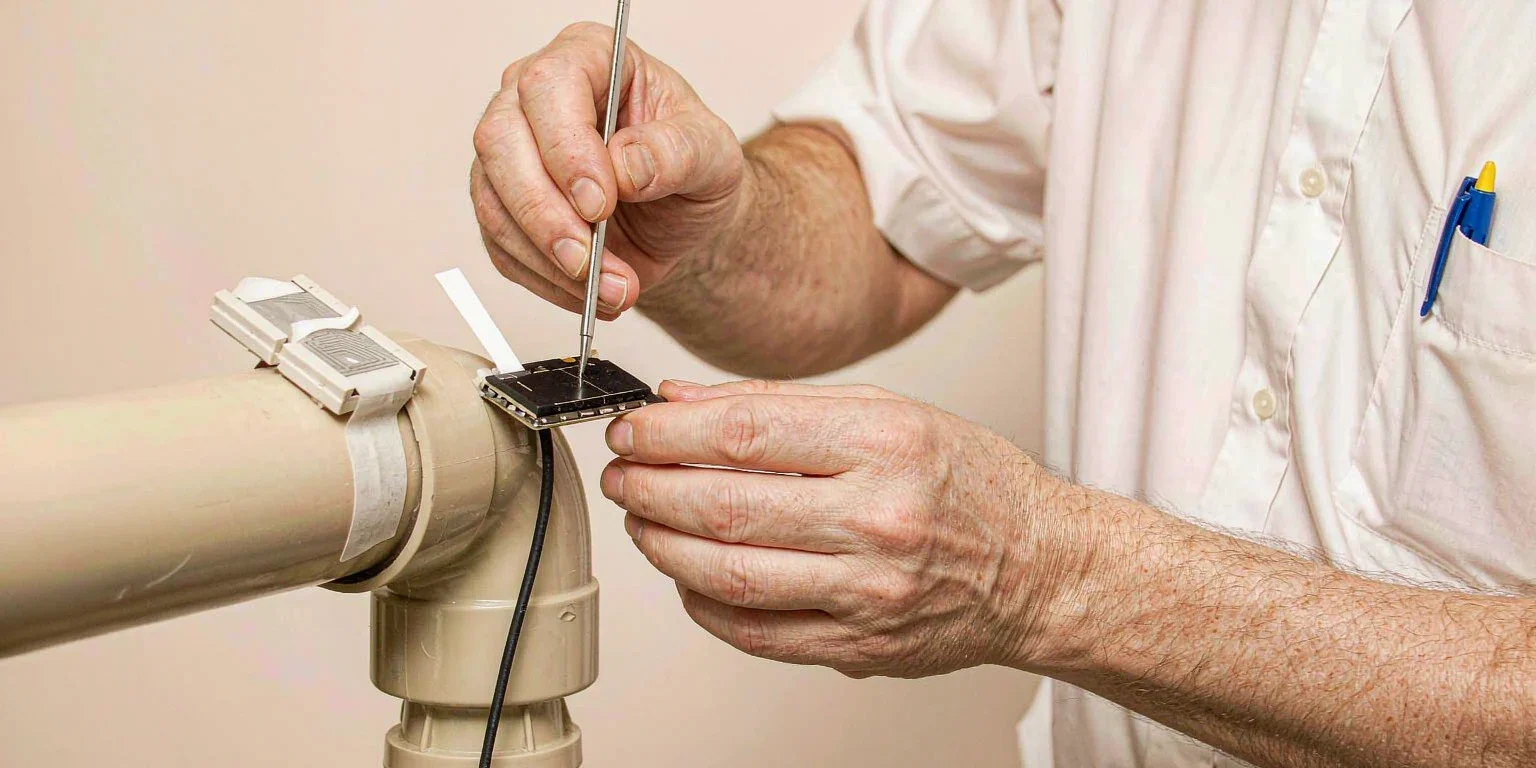
The 24-bit globally unique TID hardware chip code is bound to a single physical pipe section at the factory or at intake, read by a handheld device through an industrial adhesive PET label or a dedicated spring-embedded pre-burial. El RFIDHY UHF spring-embedded RFID tag is the core carrier of this “one-pipe-one-chip” physical identity. The TID is non-rewritable, ensuring the lifetime identity of a single pipe section stays stable and traceable. Unlike a printed label, the embedded chip cannot be peeled, swapped, or reprinted, which is what gives the asset its durable, tamper-resistant identity.
Dual Channels Converge: One Shared Digital Record
Whether scanning by phone or reading by PDA radio frequency, both ultimately call up the same tamper-proof cloud-based digital record of the pipe section’s engineering history. As third-party evidence, linked architecture of “EPC8 batch traceability code + TID24 chip asset code,” providing a lightweight, high-reliability data foundation for municipal networks. RFIDHY, as a tag/chip manufacturer, supplies the reliable hardware base that lets such dual-channel solutions span the real-world lifecycle. In pipe scenarios, electrofusion joints, bedding, and burial depth can all be traced back to a specific section; in industrial assets such as tires, single-item transit and recycling traceability are equally achievable, with RFIDHY’s embedded chip serving as the unified base reused across scenarios.
From Factory to Completion: A Continuous Lifecycle
The value of the dual-channel identity architecture is that it strings factory coding, logistics intake, construction parameters, and completion archives into one unbroken chain. The pipe section is batch-read at every step—yard acceptance, lowering into the trench, electrofusion jointing—and the cloud record accumulates accordingly. During later operation, mantenimiento, or renovation, the chip alone recalls the pipe’s entire history, achieving asset-level rather than batch-level management. This is precisely why integrators choose RFIDHY’s embedded chip as the physical foundation: the identity persists long after the paper certificate is lost.
Selection Advice
For deployment, start with a pilot on a typical pipe section: validate the full chain of factory coding, on-site verification, manhole association, and electronic-delivery-package export. RFIDHY ’ s quote page can support your project with encapsulation selection and volume evaluation. We recommend validating the on-site read range of both spring-embedded and adhesive encapsulation during the pilot, then choosing the option best suited to pipe diameter and backfill depth before scaling up. RFIDHY supplies the trusted tag; the system integrator builds the traceability platform on top of it.