
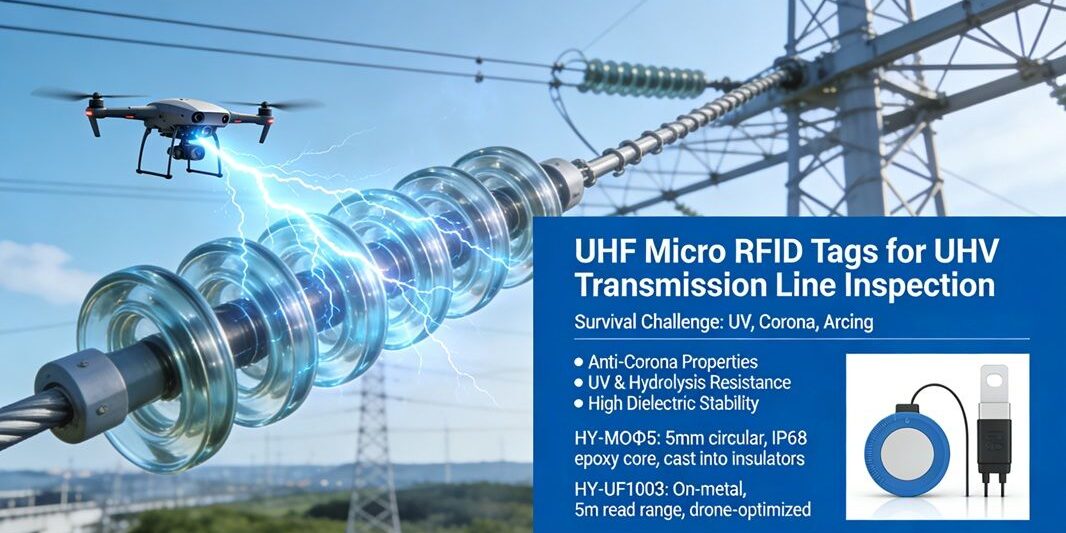
The Critical Role of RFID in Power Grid High-Voltage Inspection
Outdoor insulators are the backbone of the grid, yet they are constantly bombarded by intense UV radiation, extreme thermal cycling, and high-voltage corona discharges. Traditional paper or plastic labels perish in months, leading to “anonymous” assets and forcing linemen into high-risk manual inspections.
The integration of UHF micro RFID Tags for power lines is transforming these passive insulators into “Smart Grid” nodes, enabling automated, long-distance identification via Unmanned Aerial Vehicles (UAVs).
1.The Survival Challenge: UV, Corona, and Arcing
Standard RFID hardware typically fails in substation environments due to electromagnetic interference (EMI) or material degradation. For a tag to be “grid-ready,” it must possess:
- Anti-Corona Properties: Resistance to ionized air discharges that can erode standard polymers.
- UV and Hydrolysis Resistance: Specialized housing materials (such as high-grade Silicone or PEEK) that maintain structural integrity over a 20-year lifespan.
- High Dielectric Stability: Ensuring the tag’s internal antenna does not trigger unintended electrical arcing.
2.Strategic Solutions from RFID
To meet the rigorous standards of global utilities like National Grid or Enel, we recommend the following industrial-grade solutions:
- HY-MOΦ5: This 5mm circular tag features an IP68-rated epoxy core. Its compact, heat-resistant design allows it to be directly cast into the silicone rubber sheds of composite insulators during the manufacturing process, providing a permanent, internal digital identity.
- HY-UHF1003: A long-form, on-metal RFID tag designed specifically for the steel caps of porcelain or glass insulators. With a read range of up to 5 metros, it is perfectly optimized for high-speed drone inspections, allowing for rapid asset audits without de-energizing the line.
3.Impact on Grid O&M
According to Navigant Research, the transition to automated drone-based inspection can reduce utility O&M costs by up to 25% while significantly improving personnel safety (Fuente: Navigant Smart Grid Report).
- Digital Asset Ledger: Instant verification of manufacturer, installation date, and batch number during flyovers.
- Mantenimiento predictivo: Linking historical leakage current data to specific insulator IDs to predict failure before a flashover occurs.
- Rapid Fault Localization: Speeding up the “search and replace” process for damaged units following extreme weather events.
Conclusión
By adopting UHF micro RFID Tags for power lines, utility providers in North America and Europe are building a more resilient, “self-aware” infraestructura. These tiny identifiers ensure that even in the most hostile electrical environments, your data remains grounded in reality.
Connect with our engineering specialists at rfidhy.com.