
Industry Context: Why North American Retail Is Accelerating RFID Adoption
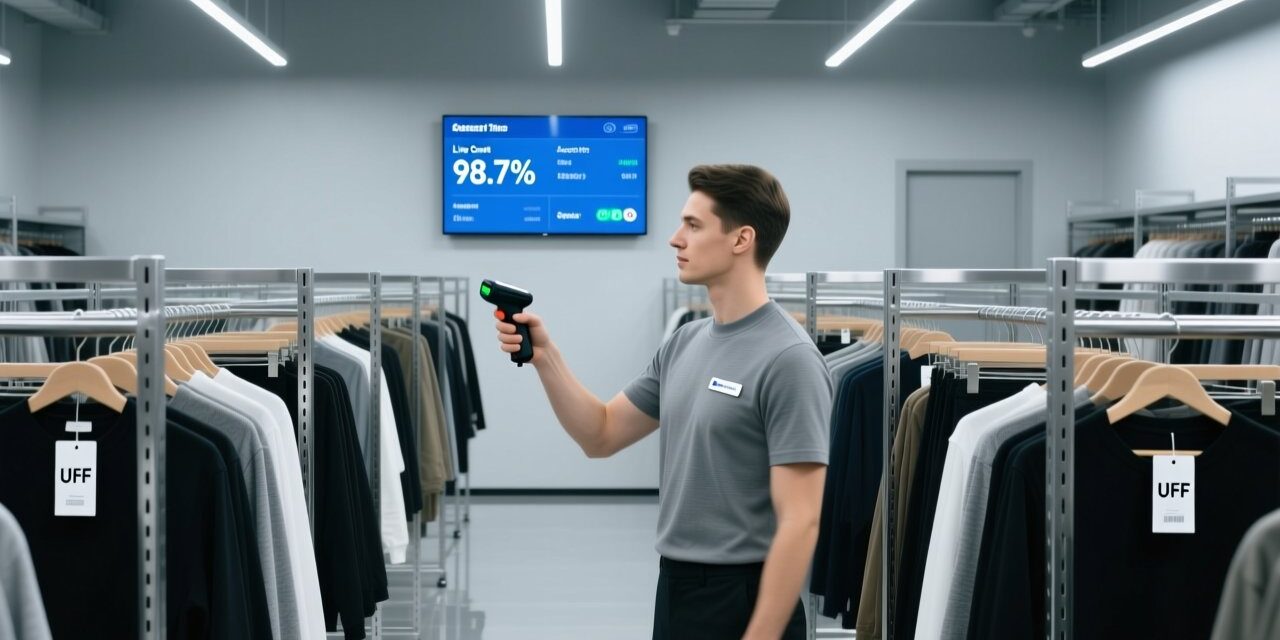
Faced with omnichannel complexity, labor shortages, and an unforgiving consumer expectation for real-time inventory visibility, North American retail chains are turning to item-level RFID as a strategic mandate. According to the latest Retailer Survey from GS1 US, RFID adoption grew by over 20% in 2025 alone, driven by measurable gains in inventory accuracy—from an industry average of 65% with barcode-only systems to sustained rates above 98% after RFID implementation. For a leading apparel and accessories chain with 500+ stores, the technology shifted from experimental pilot to a boardroom-level priority.
The business case was clear: each percentage point of inventory inaccuracy translated into an estimated $2.8 million in lost sales and excessive safety stock. The chain needed a solution that could deliver near‑perfect inventory accuracy, reduce out‑of‑stocks by 50%, and support a seamless buy‑online‑pick‑up‑in‑store (BOPIS) experience. After evaluating multiple technologies, the team selected UHF RFID tags as the backbone of their item‑level tagging strategy.
Technical Deployment: Tagging, Hardware, and Integration
Tag Selection and Inlay Design
Apparel presents unique challenges—varying fabrics, metal trims, and folded packaging can detune RFID antennas. The team worked with RFIDHY to customize a dual‑dipole RFID inlay specifically tuned for denim and outerwear, ensuring read reliability across all SKUs. Over 120 million UHF RFID stickers were sourced for the first phase, each encoded with a serialized GS1 Electronic Product Code (EPC) to uniquely identify every item.
Reader and Antenna Infrastructure
Each store was equipped with a combination of fixed RFID reader modules at back‑door receiving, point‑of‑sale counters, and smart fitting rooms. Handheld UHF RFID readers were provided for cycle counting and stock‑room organization. Key to the design was integration with the existing WLAN infrastructure and a centralized inventory data platform, which received tag‑read events in real time and updated the omnichannel ERP system.
RFIDHY’s RFID antennas were installed above every dock door, achieving near‑100% read rates on incoming shipments without requiring manual unpacking. This eliminated hours of manual counting per store daily.
500-Store Rollout Strategy: Phased, Scalable, Low‑Risk
Rather than a big‑bang approach, the chain executed a six‑month deployment plan across three geographic regions:
- Phases 1-2 (100 pilot stores): Validated hardware performance, data integration, and staff training protocols. Inventory accuracy jumped from 67% to 98% within four weeks.
- Phase 3 (200 stores): Rolled out to high‑volume metro locations, integrating fixed RFID readers with POS systems to enable automatic replenishment triggers.
- Phases 4-5 (remaining 200 stores): Nationwide completion, with remote configuration tools cutting installation time to under two days per site.
Central to success was a dedicated RFID project management office (PMO) that standardized documentation, provided 24/7 remote support, and maintained a running list of lessons learned that shortened later store turn‑ups by 40%.
Proven Performance Results
The post‑deployment analysis revealed transformative metrics across the 500‑store fleet:
| Metric | Pre‑RFID Baseline | Post‑RFID (Month 3) |
|---|---|---|
| Inventory accuracy | 67% | 99.2% |
| Stock‑out reduction | — | 53% |
| Weekly cycle‑count time (per store) | 32 man‑hours | 2.5 man‑hours |
| Customer satisfaction (BOPIS) | 3.8/5 | 4.7/5 |
| Shrinkage rate | 1.6% | 0.9% |
These numbers translated directly to a 4.2% same‑store sales lift within six months, driven by better on‑shelf availability and enhanced omnichannel fulfillment speed.
Key Considerations for Retail Technology VPs
Integration with Existing Systems
The backbone of any successful RFID deployment is middleware that can consume raw tag‑read data, filter duplicates, and feed actionable events to the POS, ERP, and e‑commerce engines. The retailer built an API layer that allowed its legacy IBM iSeries system to receive near‑real‑time inventory positions without a full rip‑and‑replace. This approach preserved existing investments while unlocking RFID benefits.
Staff Training and Change Management
Despite the technology’s sophistication, the human element was critical. The chain introduced a “Tag Champion” program in each store, creating a peer‑led training model that reduced resistance. Gamified cycle‑counting dashboards on handheld readers turned inventory management into a measurable performance indicator, aligning incentives across store teams.
FAQ
What is the typical payback period for a 500‑store RFID rollout?
Most retailers see a payback within 12 to 18 months, primarily from labor savings in counting, reduced out‑of‑stocks, and lower markdowns due to accurate size and style availability.
How do you choose the right RFID tag for diverse apparel fabrics?
Tag selection should consider fabric composition, moisture content, and product density. Partner with a vendor who can provide tuned inlays for challenging materials like denim or fleece. RFIDHY offers extensive pre‑production testing services to ensure performance across all categories.
Can a multi‑store RFID deployment coexist with existing barcode processes?
Yes. Most rollouts begin with RFID as an enhancement, not a replacement. Barcodes remain at POS for price lookup, while RFID provides the inventory backbone. The two systems work in parallel, and a gradual transition to RFID‑first scanning is common.
What infrastructure upgrades are required in each store?
Typical requirements include WLAN enhancements for real‑time data transfer, installation of fixed readers at key chokepoints, and provisioning of handheld devices. With careful planning, no major structural changes are needed, and a store can be fully equipped in under 48 hours.
How can I start a pilot without committing to 500 stores?
Begin with a 10‑store proof‑of‑concept focusing on a single product category. Use the pilot to baseline accuracy, fine‑tune integration, and build a business case for full rollout. RFIDHY can deliver a turnkey pilot kit including tags, readers, and middleware.
What is the typical payback period for a 500‑store RFID rollout?
Most retailers see a payback within 12 to 18 months, primarily from labor savings in counting, reduced out‑of‑stocks, and lower markdowns due to accurate size and style availability.
How do you choose the right RFID tag for diverse apparel fabrics?
Tag selection should consider fabric composition, moisture content, and product density. Partner with a vendor who can provide tuned inlays for challenging materials like denim or fleece. RFIDHY offers extensive pre‑production testing services to ensure performance across all categories.
Can a multi‑store RFID deployment coexist with existing barcode processes?
Yes. Most rollouts begin with RFID as an enhancement, not a replacement. Barcodes remain at POS for price lookup, while RFID provides the inventory backbone. The two systems work in parallel, and a gradual transition to RFID‑first scanning is common.
What infrastructure upgrades are required in each store?
Typical requirements include WLAN enhancements for real‑time data transfer, installation of fixed readers at key chokepoints, and provisioning of handheld devices. With careful planning, no major structural changes are needed, and a store can be fully equipped in under 48 hours.
How can I start a pilot without committing to 500 stores?
Begin with a 10‑store proof‑of‑concept focusing on a single product category. Use the pilot to baseline accuracy, fine‑tune integration, and build a business case for full rollout. RFIDHY can deliver a turnkey pilot kit including tags, readers, and middleware.
Ready to transform your retail inventory accuracy? RFIDHY specializes in end‑to‑end RFID solutions for multi‑store chains. From RFID tags to complete reader hardware and integration support, our team helps you deploy at scale. Contact us today for a personalized consultation and a free pilot design.