
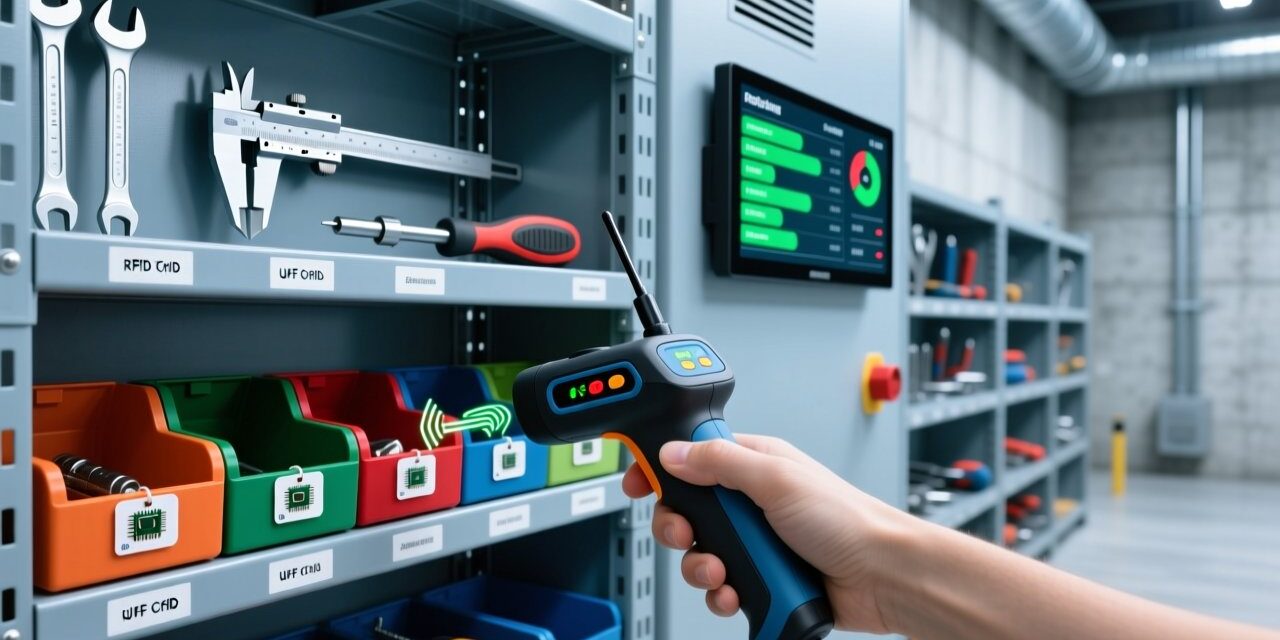
Why Tool Loss Is a $800K Problem for Middle East EPC Contractors
For EPC general contractors executing mega-projects across Qatar, UAE, and Saudi Arabia, untracked hand tools represent one of the most persistent—and costly—operational leaks. A recent internal benchmark across six active GCC-based EPC firms revealed average annual tool shrinkage of $620K–$840K per project site—driven by manual check-in/out logs, shared tool cribs, high staff turnover, and environmental challenges like sand ingress and thermal cycling. Unlike consumables, lost tools rarely appear in financial variance reports—yet they directly inflate procurement budgets, delay critical path activities, and compromise safety compliance.
How RFID Transforms Tool Crib Operations
RFID tool crib management replaces paper-based sign-outs with automated, contactless tracking—enabling instant location awareness, usage history, calibration alerts, and real-time inventory reconciliation. Unlike barcode systems, المبنى للمجهول علامات RFID survive repeated drops, chemical exposure, and desert dust without scanning alignment. At a major Abu Dhabi offshore platform, RFID integration reduced tool reconciliation time from 4.2 hours/day to under 18 minutes—freeing tool room supervisors to focus on preventive maintenance and compliance audits.
Key Operational Benefits
- Real-time asset visibility: Know exactly which technician has which torque wrench, caliper, or multimeter—without physical inspection
- Automated compliance logging: Auto-capture calibration due dates, inspection intervals, and hazardous area certifications (ATEX Zone 1/2)
- Loss prevention analytics: Identify high-risk zones, recurring loss patterns, and behavioral trends across shifts
- اندماج: Sync with existing ERP (SAP PM, Oracle Primavera) and CMMS platforms via standard APIs
RFID Tag Selection Criteria for Harsh Construction Environments
Selecting the right RFID metal tag is mission-critical—not all UHF tags perform equally under Gulf conditions. Use this checklist before deployment:
| Criterion | Minimum Requirement | RFIDHY Recommendation |
|---|---|---|
| Operating Temperature Range | −40°C to +125°C | High Temperature RFID Tag HY-HT4836 |
| IP Rating | IP67 or higher | RFID PPS tags (chemical & abrasion resistant) |
| مجموعة القراءة (on metal) | ≥1.5 m at 3W ERP | Tamper Proof Flexible UHF RFID On-Metal Tag |
| طريقة التركيب | لاصقة + mechanical fastener (e.g., rivet, screw) | وعره RFID Screw Tag for permanent tool attachment |
Regional Deployment Lessons from GCC Projects
Lessons from three live implementations highlight what works—and what doesn’t—in Middle East contexts:
- Doha Metro Phase III: Used RFID coin tags embedded into custom tool handles; achieved 99.4% read accuracy despite daily sandstorms
- Riyadh NEOM Support Hub: Deployed RFID epoxy tags on pneumatic tools; eliminated false positives caused by metallic enclosures
- Abu Dhabi Offshore Platform: Integrated fixed fixed RFID reader portals at tool crib exits—cut unauthorized removals by 92%
ROI Validation: Beyond Cost Recovery
While eliminating $800K in annual tool loss delivers immediate ROI, secondary gains compound value: 37% faster equipment turnaround, 22% reduction in non-conformance reports during ADNOC or SABIC audits, and measurable improvement in HSE KPIs—including fewer incidents linked to improper tool use. For EPC contractors bidding on Vision 2030 or UAE Net Zero projects, RFID tool management isn’t just operational—it’s strategic differentiation.
الأسئلة المتداولة
- Q: Can RFID tags withstand extreme heat and sand exposure common on GCC construction sites?
- Yes—specifically engineered high-temperature RFID tags و RFID PPS tags are rated for continuous operation up to 250°C and meet IP68 standards for dust/water resistance.
- Q: Do we need to replace all existing tools—or can we retrofit?
- Retrofitting is standard practice. Tags are applied using industrial-grade adhesives or integrated into tool grips during refurbishment cycles. No tool replacement is required.
- Q: How does RFID handle shared tool pools across multiple subcontractors?
- Role-based access control in the software assigns tool borrowing rights by contractor, discipline, and certification level—ensuring traceability even in multi-tiered supply chains.
- Q: Is RFID data secure and compliant with UAE PDPL or Saudi NCA regulations?
- All RFIDHY solutions support AES-128 encryption, local data residency options, and audit-trail logging—fully aligned with GCC data sovereignty requirements.
Ready to Eliminate $800K in Annual Tool Loss?
Request a free Tool Crib RFID Readiness Assessment tailored to your current site operations, ERP environment, and GCC compliance needs—including tag sample kit and ROI projection model.