The Hidden Cost of Equipment Loss in African Mining
Equipment loss and theft are persistent operational risks across Africa’s mining sector. For gold mines in Tanzania, where capital-intensive machinery like excavators, dump trucks, and drilling rigs can be spread across vast, remote sites, tracking assets manually is inefficient and error-prone. Industry estimates suggest equipment loss can erode 5–15% of a mine’s annual operating budget through direct replacement costs, insurance premiums, and production downtime. A single misplaced generator or pump can halt a shift, costing thousands of dollars per hour.
In a recent initiative, a mid-tier Tanzanian gold mine sought to transform its asset management. مع أكثر 2,000 movable assets—ranging from small generators to 100‑ton haul trucks—the operation faced frequent discrepancies between its paper-based inventory and physical count. Equipment “borrowed” between departments often went untracked, and the harsh, dusty environment degraded traditional barcode labels. The mine needed a rugged, automated tracking solution that could withstand extreme temperatures, vibrations, and metal-rich surroundings.
Why RFID Was the Logical Choice
After evaluating several technologies, the mine chose passive UHF RFID for its ability to read multiple tags simultaneously at long range without line-of-sight. Unlike GPS trackers, which are costly and require power, industrial RFID hard tags are battery‑free, can be permanently mounted on metal surfaces, and are virtually maintenance‑free. The project team partnered with RFIDHY to design a system tailored for heavy equipment tracking in an open‑pit environment.
Key requirements included:
- On‑metal performance: Standard RFID tags are detuned by metal. The solution used specially designed on‑metal UHF RFID tags with a read range of up to 8 metres on steel surfaces.
- IP68 weatherproofing: Tags and readers had to survive heavy rain, الغبار, and temperature swings from 5°C to 55°C.
- Zone‑based monitoring: Fixed readers at equipment yards and access gates would track asset movement in real time, while handheld scanners would support ad‑hoc audits.
System Architecture and Roll‑Out
The mine deployed a phased approach over six months:
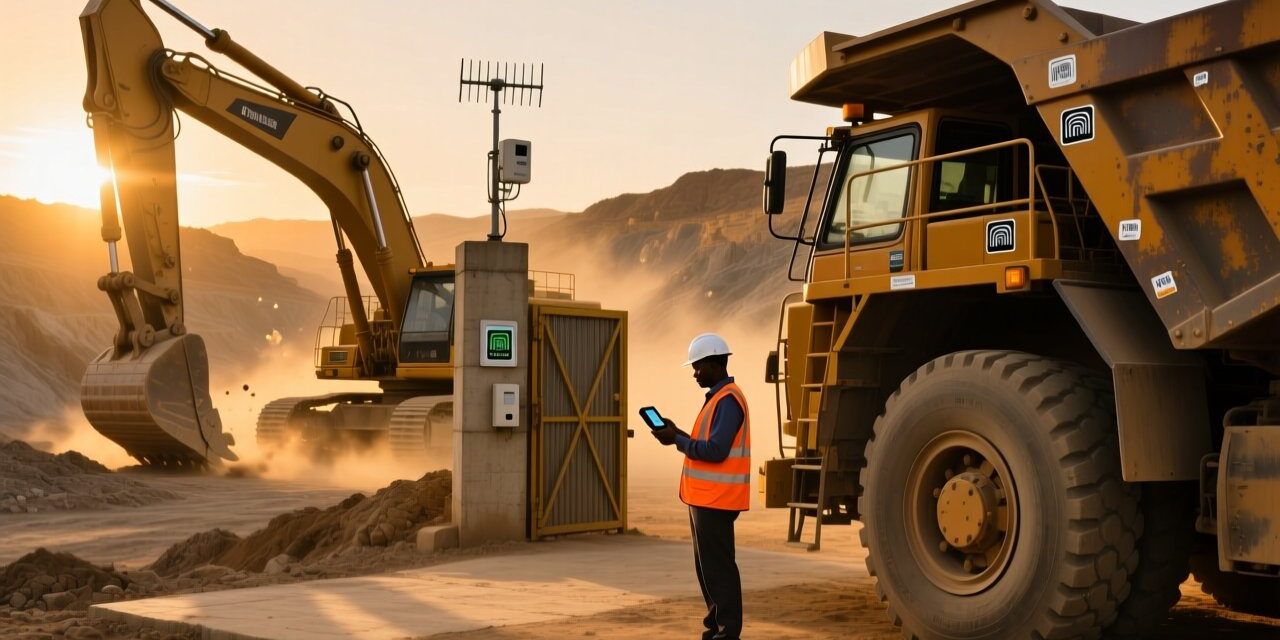
- Asset tagging: Over 2,000 heavy items—including trucks, loaders, pumps, and welding machines—were each affixed with a high‑durability RFID tag. The tags were mechanically attached using rivets or industrial adhesive on clean, flat metal surfaces.
- Reader network: The team installed two strategically placed fixed UHF RFID readers at the main equipment yard entrance and exit, plus a third at the maintenance shop. Each reader was connected to four high‑gain antennas to cover a 12‑metre‑wide gate.
- Handheld units: Supervisors were equipped with handheld RFID scanners for weekly cycle counts and missing‑equipment searches.
- Software integration: The RFID data streamed into the mine’s existing asset management dashboard via API, providing real‑time location visibility and generating automated alerts when an asset left a designated zone without authorisation.
Technical Specifications Snapshot
| Component | مواصفات |
|---|---|
| العلامة | UHF EPC Gen2v2, -18 dBm sensitivity, 902–928 MHz (لجنة الاتصالات الفدرالية), 240-bit EPC memory, ceramic inlay, IP68 housing |
| Fixed reader | 4‑port, 33 dBm output, 860‑960 MHz, PoE, –80 dBm receiver sensitivity |
| هوائي | 9 dBi circular polarization, 800×300 mm, IP65 |
| Handheld | الروبوت 9.0, 5.5″ screen, 33 ديسيبل, 15‑m read range, 8‑hour battery |
| برمجيات | REST API, role‑based access, real‑time alerting |
Measurable Results After 12 Months
Within the first year of operation, the mine recorded a 73% decline in reported equipment loss. Misplaced assets were typically located within minutes using the handheld scanner’s geiger‑counter mode, which provides audible and visual signal strength proximity guidance. The real‑time gate monitoring alone prevented an estimated $120,000 in potential theft or unauthorised borrowing during the first quarter.
The ROI analysis broke down as follows:
- Reduced replacement costs: $85,000/year savings from fewer lost/lost items.
- Lower insurance premiums: 12% reduction after the insurer acknowledged the improved tracking.
- Labour savings: Manual inventory counts that previously took three workers two days were reduced to a two‑hour walk‑through, freeing 480 man‑hours annually.
- Operational uptime: Equipment availability rose by 4%, avoiding production delays caused by misplaced machinery.
Payback was achieved in under 11 أشهر.
5 Critical Lessons for Mining RFID Deployments
- Start with a pilot: Focus on the 100 most critical or frequently lost assets to refine tag placement and reader sensitivity before scaling.
- Choose tags wisely: Not all on‑metal tags are created equal. Test multiple form factors (e.g., bolt‑on vs. adhesive) in real‑world conditions to ensure they survive vibration and pressure washing.
- Integrate with existing workflows: Link RFID data with the maintenance scheduling system so that when a tagged pump enters the workshop, a service ticket is automatically generated.
- Train operators: Conduct hands‑on training for supervisors and gate attendants, emphasising how to interpret alerts and use handheld readers for fast recovery.
- Plan for harsh environments: Dust screens for reader housings and UV‑resistant cable conduits can significantly extend system life.
For mines across the continent, RFID is no longer a futuristic concept—it is a proven, high‑ROI tool that turns chaotic inventory into a controlled, visible asset base.
الأسئلة المتداولة
- Can RFID tags survive the extreme heat and dust of an African gold mine?
- نعم. Industrial UHF RFID tags with IP68 or IP69K ratings are designed to operate in temperatures from –40°C to +85°C and withstand high‑pressure washdowns. Ceramic‑core tags are particularly resistant to thermal shock and metal interference.
- How does RFID prevent equipment theft at remote mine sites?
- Fixed readers at exits can trigger an immediate alert if a tagged asset moves through the gate outside authorised hours. Handheld readers then help security teams locate the item quickly, acting as a powerful deterrent.
- What is the typical read range for heavy equipment RFID tags?
- On‑metal UHF tags can achieve 5–10 metres with a fixed reader and up to 15 metres with a handheld scanner, depending on the antenna gain and tag orientation. For large vehicles, a windshield‑style tag on a non‑metallic part can boost range further.
- How long does it take to deploy an RFID asset tracking system across a mine?
- A pilot covering 100 assets can be live in 2–3 weeks. Full site‑wide rollout for 2,000 assets typically takes 8–12 weeks, including tagging, reader installation, software integration, and training.
- What is the expected return on investment?
- Mines in similar environments have reported payback periods of 9–14 months, driven by reduced replacement costs, lower insurance, and labour savings. The exact ROI depends on the value of tracked equipment and the previous loss rate.
Secure Your Mine’s Assets with Proven RFID Technology
If equipment loss is hurting your bottom line, RFIDHY can help you design a rugged tracking system tailored to the unique challenges of African mining. From on‑metal tags and industrial readers to end‑to‑end software integration, we deliver solutions that pay for themselves in under a year.
Or visit our RFID product page to explore our full range of industrial tags and readers.