
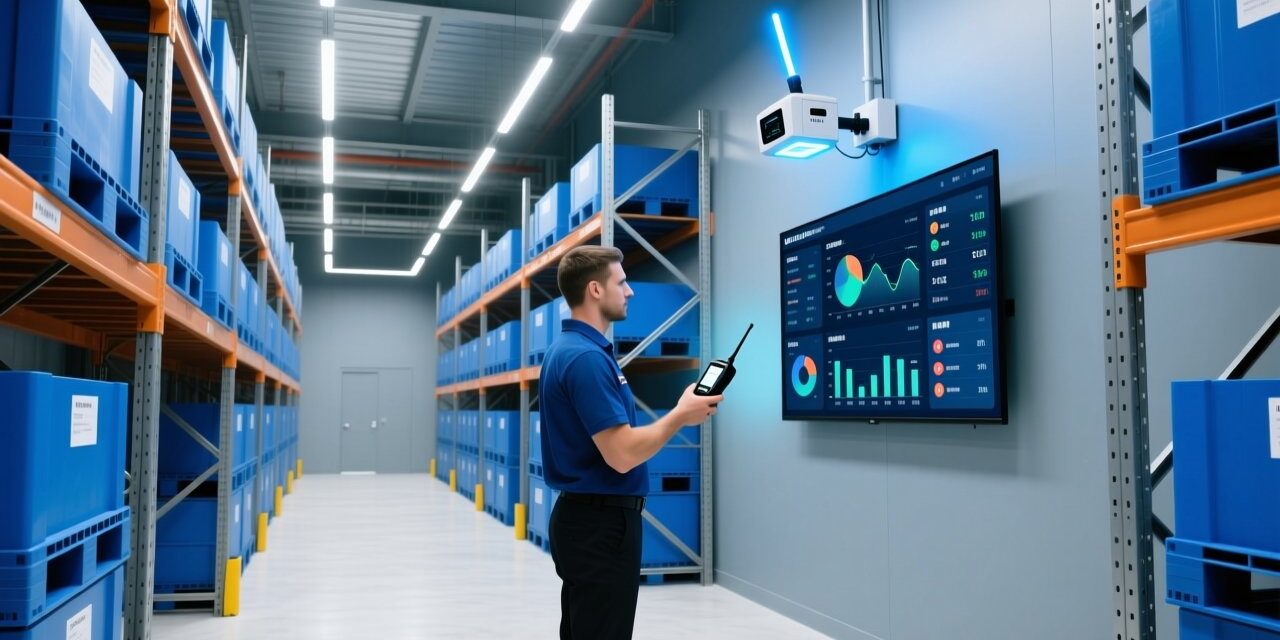
Why Industrial Asset Tracking Demands Robust RFID Solutions
In modern manufacturing plants and high-volume distribution centers, manual or barcode-based asset tracking introduces delays, human error, and blind spots. RFID tags industrial deployments solve these challenges by enabling automatic, contactless, bulk-read identification of tools, Konteynerler, Paletler, makine, and fixed assets — even in harsh environments with metal, rutubet, or dust.
Core Advantages of RFID for Industrial Environments
- Real-time location awareness: Track assets across production lines, storage zones, and loading docks without line-of-sight.
- High-speed read performance: UHF RFID tags support reads at up to 10 meters and process hundreds of items per second — ideal for conveyor-fed sorting or inbound/outbound dock operations.
- Durability and material adaptability: From on-metal RFID tags to high-temp ceramic variants, RFIDHY offers purpose-built form factors for extreme conditions.
- Integration readiness: Our industrial RFID reader modules and handheld RFID scanners support standard protocols (EPC Gen2, ISO 18000-6C) and seamless ERP/WMS connectivity.
Key Applications Across Manufacturing & Depolama
1. Aracı & Equipment Management in Production Facilities
Manufacturers face recurring losses from misplaced jigs, calibration tools, and CNC fixtures. Embedding ruggedized RFID epoxy tags into tool handles enables automated check-in/check-out at station kiosks — reducing downtime and enforcing accountability. Integration with MES systems triggers maintenance alerts based on usage cycles.
2. Pallet & Container Tracking in Distribution Hubs
Warehouses handling mixed SKUs benefit from RFID PPS/PPE tags affixed to reusable plastic containers or steel pallets. Fixed readers at dock doors and aisle intersections provide continuous visibility — eliminating reconciliation gaps between WMS records and physical stock.
3. High-Value Asset Lifecycle Monitoring
From injection molding machines to HVAC units, capital equipment requires lifecycle oversight. RFID-enabled serial number tagging combined with maintenance logs allows for predictive service scheduling and audit-ready compliance reporting — directly supporting ISO 55001 asset management standards.
Choosing the Right RFID Tags Industrial Deployments Require
Selecting appropriate hardware is critical. Passive RFID tags industrial applications demand specific attributes:
| Use Case | Recommended Tag Type | Temel özellikleri | Product Link |
|---|---|---|---|
| Assets mounted on metal surfaces | Anti-metal RFID tag | Ferrite-backed, optimized for UHF frequency stability on conductive substrates | RFID metal tags |
| Reusable textile laundry bins | RFID textile laundry tag | Wash-resistant, Esnek, embedded in fabric loops | RFID textile laundry tags |
| Outdoor or high-moisture environments | Ceramic RFID tag | IP68-rated, chemically inert, stable across -40°C to +200°C | RFID ceramic tags |
Warehouse RFID Solutions: Beyond Basic Scanning
True warehouse RFID solutions integrate hardware, ara yazılım, and actionable analytics. RFIDHY supports end-to-end deployment through:
- Pre-tested UHF desktop readers for gate-level scanning and staging area verification
- Scalable RFID antenna configurations for zone coverage mapping
- Customizable RFID inlay options for label-on-demand printing or embedded OEM applications
Bizim warehousing-specific RFID solutions include pre-validated workflows for receiving, put-away, döngü sayma, and cross-docking — reducing labor costs by up to 35% in pilot deployments.
Frequently Asked Questions
- What’s the difference between HF and UHF RFID tags for industrial use?
UHF RFID etiketleri (860–960 MHz) offer longer read range (ilâ 12 m), faster multi-tag reading, and better penetration through non-metallic materials — making them ideal for warehouse pallet tracking and large-area monitoring. HF RFID tags (13.56 MHz) excel in proximity-based applications like tool calibration logs or access-controlled workstations. - Can RFID tags industrial environments withstand autoclaving or chemical exposure?
Yes — our RFID ceramic tags and RFID PPS/PPE tags are engineered for repeated sterilization cycles and resistance to solvents, Yağ, and caustic cleaners. - Do I need new infrastructure to deploy asset tracking RFID?
Not necessarily. RFIDHY offers retrofit kits for legacy barcode scanners and PLC-integrated reader modules that minimize system overhaul. We also provide site surveys and RF propagation modeling to optimize existing infrastructure investments.
Ready to Optimize Your Industrial Asset Visibility?
RFIDHY delivers certified, field-tested RFID tags industrial deployments trust — from R&D validation to full-scale rollout. Download our free Industrial RFID Deployment Checklist or schedule a no-obligation consultation with our engineering team.