
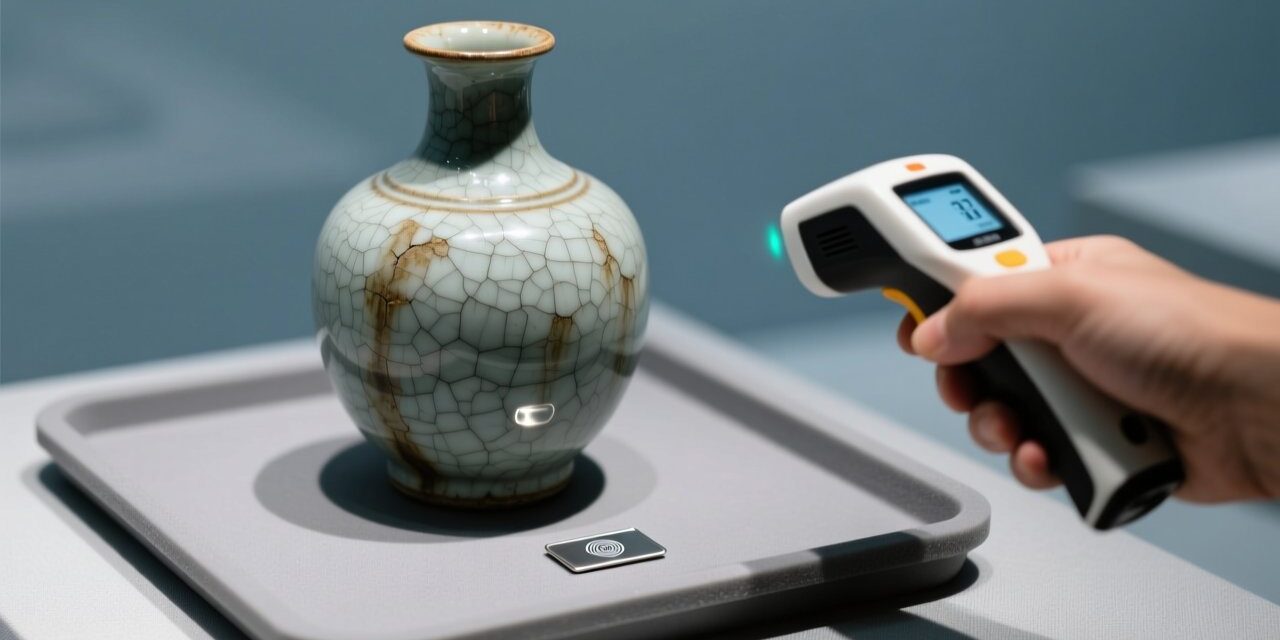
Preserving History While Digitizing Collections
Across the Gulf region, national museums, archaeological institutes, and private exhibition curation firms are modernizing legacy cataloging systems with RFID-enabled Tags RFID. Unlike barcodes requiring line-of-sight scanning, passive UHF and HF RFID tags support rapid, contactless inventory audits — critical during high-frequency rotation of artifacts in temporary exhibitions across Dubai, Riyadh, and Abu Dhabi.
Why Traditional Methods Fall Short
Manual logging and barcode-based systems introduce human error, slow down loan processing, and risk physical handling damage. More critically, adhesive-backed labels often fail under controlled climate conditions (por exemplo, 45–60% RH, 18–22°C) common in museum storage vaults and display cases. Residue removal may compromise patina, lacquer, or fragile substrates like parchment, silk, or oxidized metal.
Artifact-Safe RFID Tag Selection Criteria
Selecting the right RFID inlay or label demands adherence to international conservation principles — particularly reversibility, minimal intervention, and material compatibility. Key evaluation factors include:
- Substrate Neutrality: Tags must use pH-neutral, archival-grade adhesives (por exemplo, silicone or acrylic-based) tested per ISO 11799:2015 for long-term stability on organic and inorganic surfaces.
- Espessura & Flexibility: Ultra-thin (<0.3 mm) HF inlays — such as those embedded in Tyvek or paper carriers — conform to curved ceramics or textile edges without stress points.
- Método de montagem: Non-adhesive options include micro-magnets, removable fabric sleeves, or custom cradles compatible with RFID ceramic tags, which resist thermal expansion and UV degradation in desert climates.
- Frequency Choice: HF (13.56 MHz) is preferred for proximity-sensitive applications near metallic frames or sensitive electronics; UHF (860–960 MHz) enables bulk scanning of crates or storage shelves but requires careful antenna placement to avoid interference.
Proven Applications Across GCC Institutions
Em 2023, a major Riyadh-based cultural foundation deployed UHF flexible tags inside acid-free archival folders housing 19th-century Ottoman manuscripts. Each tag was encapsulated in inert Mylar and affixed using reversible Japanese tissue hinges — satisfying ICOM-CC guidelines. Da mesma forma, a Dubai art gallery integrated UHF RFID library tags into custom-designed display mounts for pre-Islamic bronze statuettes, enabling real-time location tracking without direct surface contact.
Integration With Existing Collection Management Systems
Modern museum collection management software (CMS) — including TMS, PastPerfect, and Axiell — supports RFID data ingestion via standardized APIs. RFID readers such as the RFID reader module can be mounted at exhibit entrances, storage bay doors, or packing stations to auto-log movement events. When paired with cloud-based dashboards, curators gain audit-ready logs showing who accessed which artifact, Quando, and for how long — supporting both insurance compliance and scholarly provenance research.
Perguntas Freqüentes
- Do RFID tags emit radiation that could degrade organic materials?
Passive RFID tags contain no power source and emit zero electromagnetic radiation unless energized by a nearby reader — and even then, field strength remains far below ICNIRP safety thresholds. No documented case exists of RFID-induced deterioration in museum collections. - Can RFID tags be used on metal artifacts without signal loss?
Yes — specialized on-metal RFID tags utilize ferrite shielding or cavity-back designs to maintain read range on brass, iron, or gilded surfaces. - Are there UAE or Saudi regulatory requirements for RFID in cultural institutions?
While no country-specific RFID mandates exist, institutions follow UNESCO’s ‘Ethics of Digitization’ framework and local heritage authority guidelines — both of which emphasize non-invasive, reversible tagging methods aligned with RFIDHY’s conservation-grade offerings.
Ready to Digitize Your Collection Responsibly?
RFIDHY partners with exhibition curation companies across the GCC to design artifact-safe tracking solutions — from initial material compatibility testing to full CMS integration and staff training. Contact our museum solutions team today for a free consultation and sample kit of conservation-approved RFID inlays and mounting accessories.