Q1: Why do underground networks in Europe and North America widely adopt electronic marking and traceability?
Once buried, utility lines are extremely costly to excavate for inspection, and third-party construction strikes happen frequently. Promoting RFID and electronic marking lets operators verify underground asset attributes and location without breaking the surface, avoiding blind excavation and enabling full-lifecycle management. Por exemplo, 3M’s early Electronic Marking System (EMS) used buried RF spherical markers for surface identification; today pipe RFID traceability further refines identity granularity down to the individual pipe section, becoming a consensus direction among international utilities. This is also the broader context in which pipe RFID traceability is rising within urban utility-lifecycle safety programs.
Q2: Which international standards should pipe traceability follow?
In the PE gas and water pipe domain, ISO 12176-4 (the specification for welding of plastics pipe and traceability coding of electrofusion fittings) explicitly requires fittings to carry a unique traceability code, so they can be closed-loop traced during electrofusion jointing and later inspections. RFIDHY’s manufactured UHF embedded chip can serve as the physical identity carrier for fittings meeting such standards, forming a traceable, compliant foundation together with the pipe-body QR code. As a chip manufacturer, RFIDHY can complete TID binding at the factory stage in line with that standard, so the physical fitting naturally carries a traceable electronic identity. It should be noted that the standard itself is an industry specification, not an RFIDHY product.
Q3: Can an ordinary smartphone directly read a buried RFID chip?
Currently ordinary phones do not support passive ultra-high-frequency (UHF) RFID direct reading. On-site inspection and inventory require an industrial handheld PDA reader; phones can directly scan the pipe-body QR code to instantly view the original factory report and quality certificate. This is exactly the meaning of “dual-channel” complementarity, letting pipe RFID traceability serve both professional inventory and low-threshold verification scenarios. Em outras palavras, pipe RFID traceability need not force phone direct-reading of the chip—using the QR code for low-threshold checks and the PDA for professional inventory is the realistic path that balances efficiency and cost.
Q4: Can a passive UHF chip be read reliably in a buried environment?
In soil layers that meet material and burial-depth conditions, RFID provides a detectable digital entry point for buried works; but in wet clay, deep backfill, or heavily metal-shielded environments, read range attenuates. Projects should run representative cross-section tag-read tests before burial to establish construction specs and a maximum burial depth scientifically, avoiding blind rollout based on experience. Por conseguinte, at project initiation, prototype read-range testing should be set as a prerequisite, with the integrator issuing specs based on the actual soil—rather than copying manual parameters.
Q5: How can a project pilot pipe RFID traceability quickly and at low cost?
We recommend a “typical-section pilot” strategy: select one supply batch and one or two construction sections, validate the full chain from factory coding, on-site scan verification, pipe-to-manhole association, to electronic-delivery-package export, then scale up after it runs smoothly. The pipe traceability system is delivered by integrators; RFIDHY is positioned as a tag/chip manufacturer and traceability tag solution provider, focused on supplying a reliable physical identity foundation. Isto “small-step, fast-run” pilot keeps the compliance and read-range risks of pipe RFID traceability to a minimum and also provides a replicable template for later scaling.
Get Your Tag Solution
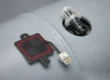
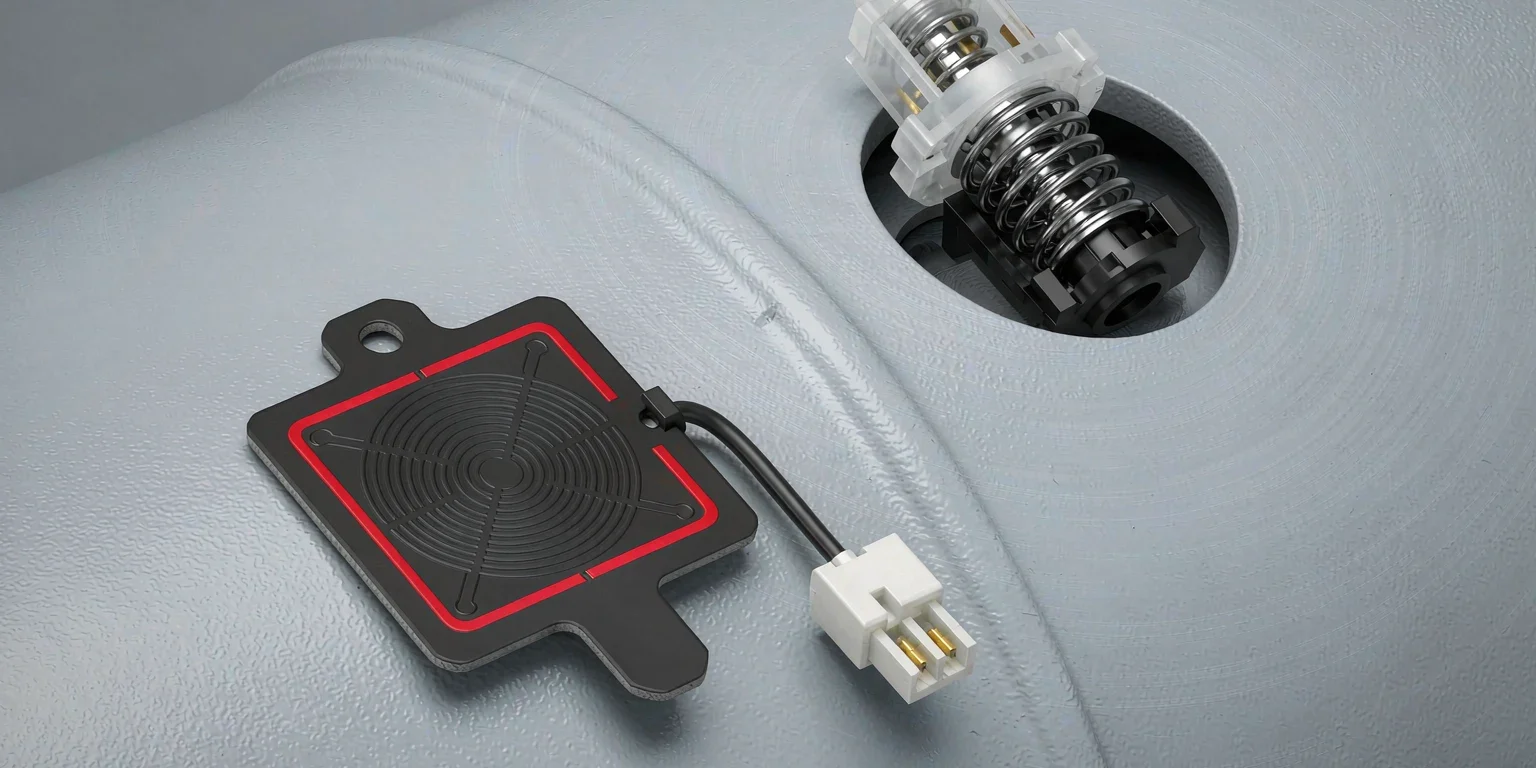
To evaluate encapsulation options such as spring-embedded and adhesive formats, review the RFIDHY UHF spring-embedded RFID tag or visit the RFIDHY quote page to submit your requirements. From standards to deployment, reliable pipe RFID traceability always begins with one trusted embedded chip.