
Why High-Temperature RFID Tracking Matters in Modern Manufacturing
In precision-driven industries like automotive assembly, aerospace composites, and PCB electronics, thermal processes define product quality. Reflow soldering peaks at 260°C, autoclaves cure carbon-fiber components at 180–200°C, and industrial powder-coating ovens run continuously at 220°C. Traditional Tags RFID—made from PET or paper-based inlays—cannot survive these conditions, losing functionality after a single cycle.
Manufacturers need a robust high-temperature RFID tag that withstands extreme heat while delivering consistent read performance. Whether tracking PCB panels through SMT lines, monitoring surgical instrument trays through autoclave sterilization, or logging composite parts during polymer curing, the right heat-resistant RFID solution ensures seamless digital traceability without manual intervention.
Industry Background: Where 260°C Tags Are Non-Negotiable
Electronics Manufacturing – Reflow Soldering and Wave Soldering
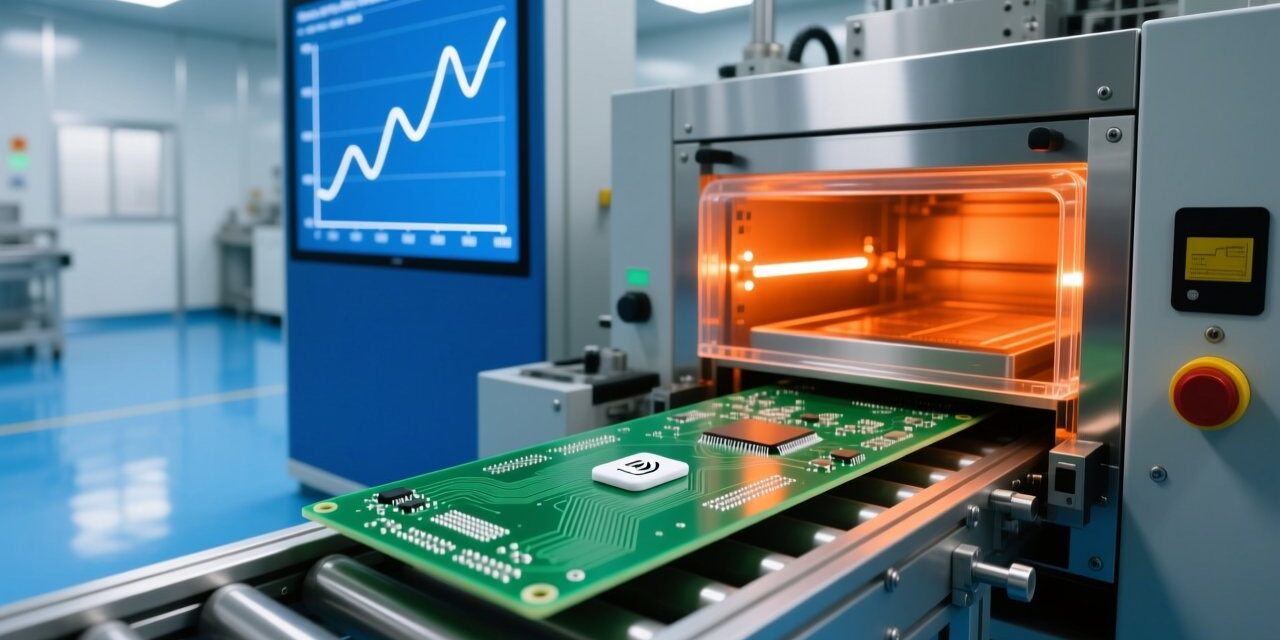
Surface-mount technology (SMT) lines use conveyorized reflow ovens that expose PCB assemblies to peak temperatures of 250–260°C for 20–40 seconds. A soldering reflow RFID tag attached at the bare-board stage travels through flux, pick-and-place, and multiple thermal zones without degrading. Post-soldering, the tag must still respond to inventory scanners, providing lot-level or individual board traceability from production to warehouse.
Automotive and Aerospace – Polymer Curing and Composite Autoclaves
Autoclave-cured prepreg laminates in aerospace often require 180–200°C for several hours under pressure. A polymer curing RFID tag embedded into the layup tooling survives the full cure cycle and becomes a permanent part of the tool’s asset record. In automotive paint shops, E-coat and powder-coat ovens operate at 200–220°C; um heat resistant RFID tag oven rating is mandatory for tracking car bodies or engine components through these stages.
Medical Device and Laboratory – Autoclave Sterilization
In healthcare, stainless-steel surgical kits and glassware must endure saturated steam at 121–134°C under pressure, often for 15–30 minutes per cycle. A high temperature RFID tag autoclave design features hermetic sealing and materials like ceramic or high-performance polymers to withstand hundreds of sterilization cycles without cracking or detuning.
Technical Specifications and Key Considerations
Selecting a high temp RFID tag 260c requires evaluating several parameters beyond peak temperature. The table below compares four common high-temperature RFID form factors used in industrial applications.
| Fator de forma | Max Temp (° C) | Typical Duration | Intervalo de leitura (UHF, 860–960 MHz) | Método de fixação | Common Use Case |
|---|---|---|---|---|---|
| Ceramic RFID Tag | 280° C | Contínua / thousands of thermal cycles | 2–6 m | High-temp adhesive, screw, or embedded in mold | Tooling tracking, autoclave molds, welding fixtures |
| PPS (Polyphenylene Sulfide) Housing Tag | 260° C | 10–30 min reflow; limited to <100 h at 220°C | 1–3 m | Snap-fit, rivet, or high-temp adhesive | PCB tracking, SMT carriers, small metal assets |
| PEEK (Polyether Ether Ketone) Marca | 260° C | Continuous at 250°C; excellent chemical resistance | 1–4 m | Mechanical fastening or adhesive | Autoclave trays, medical devices, chemical processing |
| Epoxy-Encapsulated Tag | 230° C | Short peaks up to 260°C for seconds | 1–2 m | Embedded in composite or adhesive | Composite curing, wind turbine blade infusion |
Key considerations:
- Thermal gradient: Real-world performance depends on heat soak time and ramp rate. A tag rated 260°C for 30 minutes may fail if subjected to 260°C for 3 horas. Always request time-at-temperature curves from the supplier.
- On-metal vs. off-metal tuning: Many high-temp tags are designed as Metais etiquetas RFID to compensate for detuning when attached to steel or aluminum. Confirm the tag’s mounting surface compatibility.
- Read range drop: After repeated thermal shocks, read range may decrease by 10–20%. Include margin in your system design, and perform life-cycle testing on a representative sample lot.
- Attachment method durability: High-temp adhesives (silicone, acrylic) can degrade faster than the tag itself. For fixtures or molds, consider mechanical fastening or embedded ceramic housings.
- Frequency and protocol: UHF (RFID DE CHUVA) is preferred for industrial bulk reading. HF (13.56 MHz) tags are suitable for item-level tool tracking in medical autoclaves due to shorter read range and robustness near liquids.
Practical Deployment and Selection Tips
When integrating high temp RFID tag 260c soluções, follow these five steps to avoid common pitfalls:
- 1. Map the thermal lifecycle: Chart the exact temperature profile—peak, dwell time, and number of cycles—for each tracked asset. A single autoclave run at 180°C for 2 hours is far less demanding than 50 cycles of reflow soldering with rapid thermal shock.
- 2. Test tags in situ: Request samples and run them through your actual process. Evaluate read performance before, durante (if possible), and after heating. Check for tag warping, adhesive failure, or chip detachment.
- 3. Design for readability: Even the most durable tag is useless if it can’t be read. Work with your reader vendor to position antennas at oven exits or autoclave door areas. Consider using fixed RFID readers with circular polarization to capture tags at unpredictable orientations.
- 4. Balance size and performance: Smaller tags are easier to embed but often have lower heat tolerance and read range. Ceramic tags as small as 5×5×3 mm exist, but larger housings dissipate heat better and protect the chip.
- 5. Validate with your ERP/MES system: Ensure the tag data format (EPC, TID, memória do usuário) integrates seamlessly with your backend. For PCB tracking, encoding lot IDs or work orders before reflow is common.
High-temperature RFID technology has matured rapidly. With proper selection, manufacturers can achieve 99.9% tag survival rates even in 260°C environments, turning every heat-dependent process into a data-rich, operação automatizada.
What is the maximum temperature an RFID tag can withstand?
Specialized ceramic-encapsulated UHF RFID tags can survive up to 280°C continuously, with some designs tolerating short excursions to 300°C. No entanto, standard high-temp ratings are usually 260°C for reflow soldering and 200°C for long-term polymer curing. Always verify the tag’s datasheet for time-at-temperature curves.
Can RFID tags survive reflow soldering on PCBs?
Sim, purpose-built soldering reflow RFID tags made from PPS or ceramic materials can withstand multiple passes through peak 260°C soldering profiles. They are often attached to the PCB carrier or the board edge and read immediately after cooling. Avoid placing the RFID chip directly under high-mass components that create heat shadows.
How do I attach a high-temperature RFID tag for autoclave use?
For autoclaves, attachment depends on the substrate. On metal trays or surgical instruments, um high temperature RFID tag autoclave with a screw mount or a high-temp silicone adhesive is common. Epoxy-encapsulated tags can be embedded into composite tooling during layup. Always test adhesion after repeated steam sterilization cycles.
Does heat exposure permanently reduce read range?
Some reduction is expected after extreme heat cycles, typically 10–20% over the tag’s lifetime. Ceramic tags show minimal degradation, while PPS tags may lose more due to housing deformation. Designing your reader network with adequate signal margin (por exemplo, +3 dB beyond minimum) compensates for this drift.
Selecting the right heat resistant RFID tag for oven, reflow, or autoclave applications can be challenging without expert guidance. No RFIDHY, we offer a broad portfolio of high-temperature RFID solutions—from ceramic and PPS tags to fully custom overmolded designs—and support you from sample testing to volume production.
Contact our engineering team to discuss your thermal requirements and request a free sample kit for on-site validation. Get reliable traceability even at 260°C.