RFIDHY is a leading manufacturer of embedded RFID tire tags that give every commercial tire a permanent, machine-readable identity, enabling fleets to track, inspect, and account for each tire across its entire service life. For fleet operators whose tire spend is one of the largest controllable maintenance costs, fleet tire tracking with RFID replaces clipboards, sidewall paint marks, and guesswork with a durable electronic identity that follows the tire from mounting to retread to final removal.
Why Fleets Lose Money on Tires They Cannot See
A truck tire can cost several hundred dollars and is expected to deliver 200,000 Para 400,000 kilometers across multiple retreads. Yet most fleets still locate and count tires manually. Tires move between tractors, trailers, and retread shops; a tire pulled for repair can sit in a rack for weeks and reappear unrecognized. Studies of mixed fleets repeatedly show that a meaningful share of tires are retired early because their history is unknown, not because the casing is worn out.
The cost of this blindness is threefold. Primeiro, premature removal wastes casing life that retreading could have extended. Segundo, manual counts and seasonal swaps consume technician hours that add no value. Terceira, tires simply go missing: Extraviado, mislabeled, or walked out of the yard. Without a reliable identity on the tire itself, none of these losses is visible until the quarterly tire budget balloons.
How RFID Fleet Tire Tracking Works
A Permanent Identity Bonded at About 200C
RFIDHY embeds a flexible UHF inlay into the green tire before vulcanization, typically between the inner liner and carcass. The curing process, which peaks near 200C, bonds the tag permanently into the rubber so it cannot fall off, be painted over, or worn away. Each tag carries a unique EPC (Electronic Product Code) in its memory, normalmente 96 ou 128 bits de, that acts as the tire’s serial number for life. Because the identity is inside the tire rather than on its surface, it survives molding, heat cycling, mounting abrasion, and repeated retreads.
This embedded approach matters for fleets specifically. Surface labels and painted marks are erased by the first retread buffing, but the embedded tag keeps answering scans through every casing lifecycle, which is exactly when a fleet needs to know a tire’s true age and retread count.
Reading Tires Without Line-of-Sight
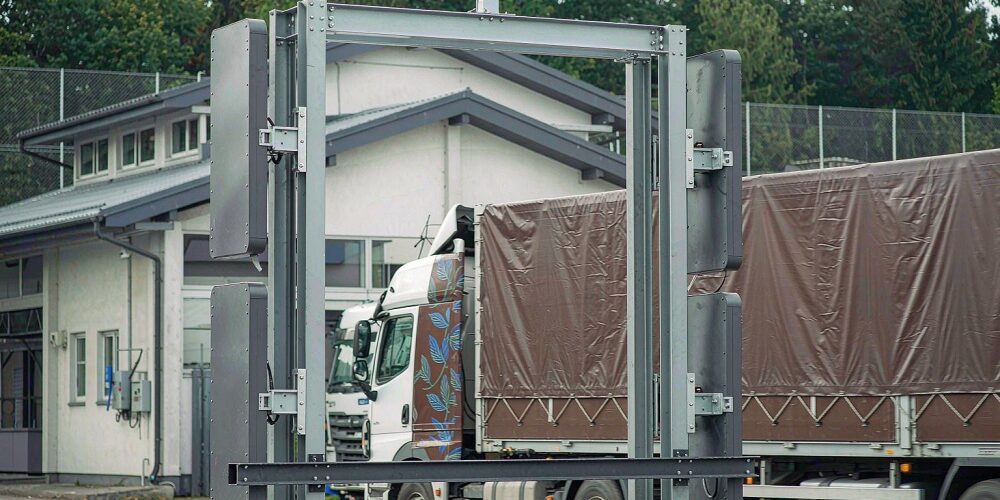
UHF RFID operates in the 865-868 MHz band across the EU and 902-928 MHz in North America, and it reads through rubber and around corners. A technician with a rugged handheld reader scans a stacked pile of casings in seconds, and a fixed portal gate at the depot exit logs every tire on a truck as it drives through, no stopping required. Typical handheld read ranges reach one to four meters depending on tag and antenna, while portal readers cover a lane width of three meters or more. In practice this means a weekly yard audit that took a full shift becomes a walk-through that finishes before the first break.
From Manual Counts to Real-Time Fleet Visibility
Once every tire carries a scannable identity, the fleet management system stops guessing. A scan at mount time links the tire’s EPC to a vehicle, Posição, and odometer; a scan at inspection records tread depth and pressure; a scan at the retread shop confirms the casing is genuine and within its allowed retread count. The same data feeds the depot’s tire inventory so that a manager can see, in real time, how many casings are in service, in repair, or in stock.
This is where fleet tire tracking with RFID pays for itself. By matching each removal to a documented history, fleets stop retiring casings that still have life, recover tires that were misplaced, and reduce the emergency purchases that come from not knowing what is already on the shelf. The RFIDHY approach is documented in our tire traceability solution overview, and the tag that makes it possible is described in the vulcanization-embedded RFID tire tag guide.
Connecting Fleet Tracking to DPP and Compliance
The embedded EPC is also the physical key that emerging sustainability rules expect. Under the EU Ecodesign for Sustainable Products Regulation (ESPR) and the proposed Digital Product Passport (DPP) framework, tires are in scope as of 2026, though specific passports and the EU DPP Registry details continue to develop and should be verified against the latest official guidance. A scannable tire identity lets a fleet or brand resolve a tire to its passport data on demand, turning everyday fleet tracking into a compliance asset rather than a retrofit project.
For fleets that also supply or operate in regulated EU markets, pairing tracking with a readiness plan is prudent. Nossa tire DPP compliance checklist e o 200C heat-resistant tag specification cover the operational and technical basics. For the broader RFID product range across industries, see rfidtaghy.com.
What to Look for in a Fleet RFID Program
A credible fleet program needs four things: tags rated for the curing environment and proven through retreads, readers suited to both handheld and portal use, software that maps EPCs to vehicles and work orders, and a supplier that can support global frequency bands. RFIDHY designs the embedded tag, the reading hardware, and the integration so that the identity created at the curing line is the same identity a fleet scans three years and two retreads later. Choosing a partner that controls the full chain reduces the risk of an identity that cannot be read when it matters most.
Frequently Asked Questions
What is fleet tire tracking with RFID?
It is a system that gives every truck tire a permanent embedded RFID identity and reads it automatically across mounting, Inspeção, retread, and removal, so the fleet can locate and account for each tire in real time instead of by manual count.
How does RFID tracking reduce fleet tire costs?
By documenting each tire’s history, fleets stop retiring casings that still have life, recover misplaced tires, and avoid emergency purchases, while technicians spend less time on manual counts and seasonal swaps.
Can RFID track tires through retreading?
Sim. The tag is embedded before curing and survives buffing and multiple retreads, so the same identity confirms the casing is genuine and within its allowed retread count each time it returns to service.
Do RFID tire tags survive the curing heat?
Sim. RFIDHY embeds the inlay into the green tire so the roughly 200C curing process bonds it permanently into the rubber, and the tag continues to answer scans through heat cycling and mounting.
Is fleet RFID tracking relevant to the EU tire DPP?
It is the physical foundation. As of 2026 the ESPR and DPP framework puts tires in scope, and a scannable embedded identity lets a fleet resolve each tire to its passport data, though exact registry requirements should be verified against latest official guidance.