
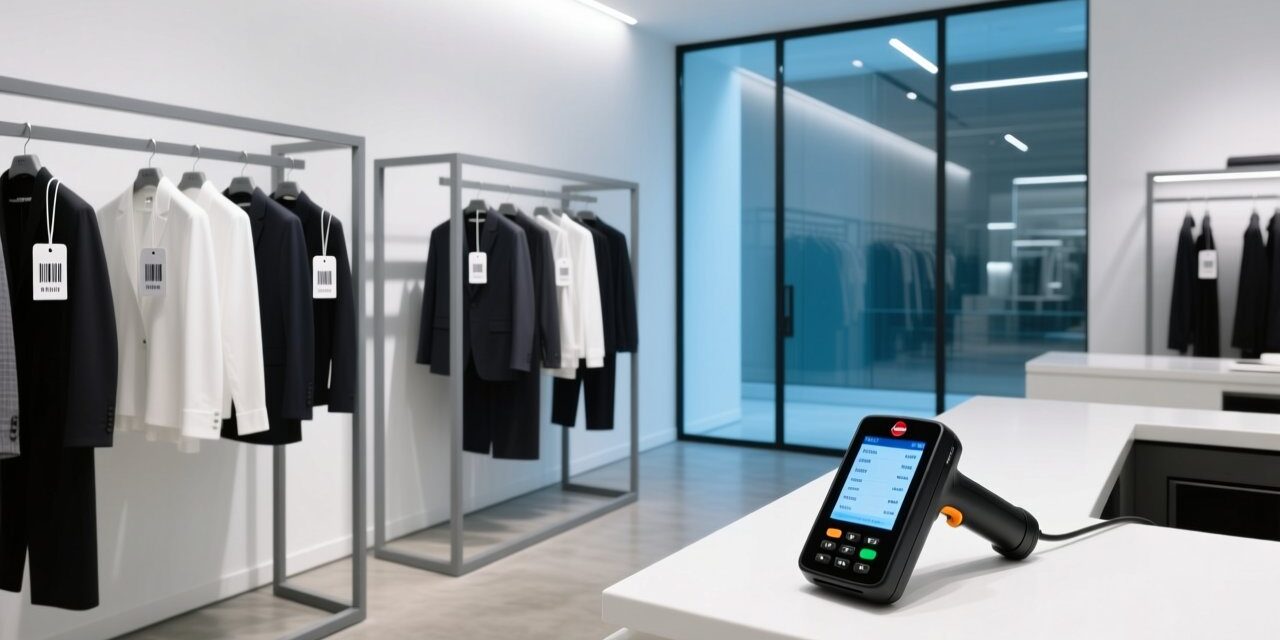
The European Fashion Retail RFID Landscape
Le european fashion retail rfid adoption curve has steepened dramatically in the last five years. Apparel and sports goods retailers across Europe are moving beyond barcode scanning toward real-time inventory visibility with UHF flexible RFID tags. According to the RAIN RFID Alliance, Oltre 28 billion RAIN RFID tag chips were sold globally in 2023, a significant portion destined for retail apparel. Brands like Zara, Decathlon, H&M, C&A, and Mango have publicly communicated RFID programs, leveraging the technology to reconcile online and offline stock, speed up store operations, and enhance the customer experience. This article focuses on the two trailblazers—Zara and Decathlon—to extract deployment insights that any apparel retailer or RFID integrator can apply today. For a broader compliance perspective, you may also read our Walmart RFID 2026 guide.
Why Item-Level Tagging Matters: Zara’s Pioneering Approach
Inditex, Zara’s parent company, began its global RFID rollout in 2014 and completed it across all Zara stores by 2018. Oggi, every garment in Zara’s supply chain carries a zara rfid item level tagging identifier—a passive UHF RFID label integrated into the price ticket or a fabric hang tag. The internal impact was transformative: inventory accuracy rose above 99%, stock takes that once took 40 hours per store were cut to a few hours, and omnichannel fulfilment (ship-from-store, click-and-collect) became reliable. The core technology is straightforward: un piccolo Inlay RFID with an Impinj Monza or NXP UCODE chip, encoded with a unique EPC (Electronic Product Code), attached to each item. Store associates use handheld UHF RFID readers to perform cycle counts quickly, while ceiling-mounted fixed UHF RFID readers at entrance portals and backroom doors capture movement data passively. This architecture, when integrated with Zara’s proprietary inventory management software, has proven that RFID is not merely a tracking tool—it is the backbone of agile supply chain execution.
Decathlon’s RFID-Driven Supply Chain: A Blueprint for Efficiency
French sporting goods giant Decathlon took RFID even deeper. Da 2013, the company had already tagged over 85% of its products at the source, embedding RFID inlays into care labels during manufacturing. Oggi, Decathlon manages more than 750 million RFID tags annually across 1,700+ stores worldwide, using a RFID inventory management system that links manufacturing, Distribuzione, and point of sale. Its iconic RFID-enabled self-checkout bins allow a customer to drop an entire basket of goods into a reader tunnel and receive an instant total—no barcode scanning needed. This system relies on precisely tuned UHF RFID antennas and readers, compliant with ETSI EN 302 208 (the European UHF RFID standard operating at 865–868 MHz). Decathlon’s deployment demonstrates that success depends on end-to-end discipline: tag placement on products must be consistent, data from RFID reads must flow into a central cloud platform, and exception handling (ad es., phantom reads, missed tags) must be intelligently managed by middleware.
Technical Framework: Choosing the Right RFID Components
European retailers face unique technical requirements when selecting RFID hardware. Frequency regulations differ from the US (902–928 MHz), so readers and tags must be certified for the EU band. The choice of tag form factor directly affects read performance and durability. The table below summarizes the most common tag types used in fashion retail, along with their typical silicon ICs.
| Tag Type | Applicazione | Intervallo di lettura (Ue) | Durata | Typical IC |
|---|---|---|---|---|
| Adhesive UHF label | Beni durevoli, shoe boxes | 4–8 m | Moderate; not reusable | NXP UCODE 9, Impinj M780 |
| Hang tag with inlay | Apparel price tickets | 3–7 m | Single-use; easily removed | Impinj M730, NXP UCODE 8 |
| Sewn-in fabric tag | Care labels, inner seams | 2–5 m (depends on fabric) | Lavabile, survives industrial laundry | NXP UCODE DNA, Impinj M750 |
| On-metal UHF tag | Accessories with metallic parts | 3–6 m (on metal) | alto, rinforzato | Impinj M780, NXP UCODE 9xe |
When integrating readers, a mix of handheld and fixed devices is standard. Handhelds like the HY-R6100 are ideal for cycle counting on the sales floor, while 4-port fixed readers with external antennas create portal zones for automatic detection. It is imperative to choose readers with an open API (ad es., LLRP protocol) so they can interface with existing ERP or warehouse management systems. Inoltre, any european fashion retail rfid adoption project must address privacy concerns: all tags should encode only a randomized EPC (not customer data) to comply with GDPR.
Deployment Best Practices: From Pilot to Enterprise Rollout
Drawing on the Zara and Decathlon playbooks, a phased approach consistently yields the best results:
- Pilot in a single store or category. Test tag placement, reader sensitivity, and staff workflows before scaling. Use a limited number of SKUs to validate inventory accuracy improvement.
- Integrate with ERP early. RFID data is only valuable when it updates stock levels in real time. Ensure the middleware layer can transform raw read events into meaningful inventory transactions.
- Invest in staff training. Store associates must trust the technology; simple tasks like daily cycle counts should become second nature. Document SOPs based on pilot learnings.
- Enforce tag placement standards. Work with suppliers to embed RFID in manufacturing (source tagging). Define exact positions on each product type to guarantee consistent read rates.
- Monitor performance metrics. Track key KPIs: inventory accuracy percentage, time per stock count, reduction in out-of-stock incidents, and return on investment.
- Plan for tag disposal. Implement a system to deactivate or remove tags post-purchase to respect consumer privacy while maintaining brand trust.
By following these steps, retailers across Europe—from fast fashion to outdoor gear—can replicate the success of the industry’s front-runners. RFID adoption is no longer a question of “if” but “how fast.”
Domande frequenti
What is RFID item-level tagging in retail?
It is the practice of attaching a unique RFID-enabled label or tag to each individual product, allowing retailers to track inventory precisely in real time. Unlike barcodes, RFID tags can be read in bulk without line-of-sight, enabling rapid stock counts and automated replenishment.
How does Zara use RFID in its stores?
Zara places passive UHF RFID tags on every garment. Store associates use handheld readers to count inventory quickly, while fixed readers at entry points monitor movement. This data feeds into Zara’s inventory system to guarantee online stock visibility and efficient store fulfilment.
Will RFID tags affect the look or feel of garments?
Modern RFID tags for apparel are almost invisible: thin adhesive labels inside price tickets or soft fabric inlays sewn into care labels. Customers typically never notice them, and they do not alter the garment’s comfort or appearance.
What budget should I plan for an RFID retail deployment?
Costs vary widely depending on store count, SKU volume, and hardware choices. A typical pilot for a single store can start from a few thousand dollars for tags and readers. Enterprise rollouts require detailed ROI analysis, but the fast break-even point usually makes RFID a high-priority investment for fashion retailers.
Unlock RFID Efficiency for Your Retail Business
Whether you are benchmarking against Zara’s model or designing a custom retail RFID architecture, the team at SHANGHAI RFIDHY TECH. CO.,LTD brings deep technical expertise and a comprehensive portfolio of RFID tags, inlays, Lettori, and integration services. Let us help you select the right components and design a deployment that meets European regulatory standards and delivers measurable results. Contact our experts today for a personalized consultation and a tailored roadmap to RFID success.