
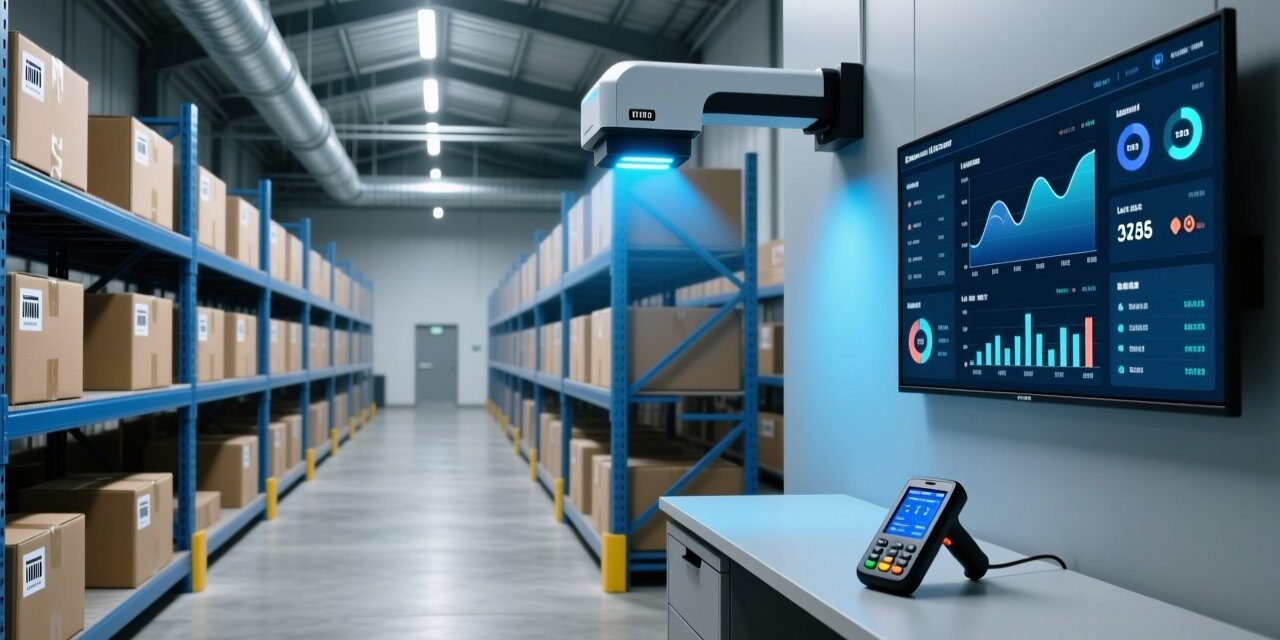
Understanding the RFID Software Landscape
Identificazione a radiofrequenza (RFID) systems have evolved from simple tag-reading hardware into sophisticated data ecosystems. At the heart of every modern deployment—whether tracking inventory in a warehouse or managing assets across multiple sites—lies a critical software layer. IT leaders must now decide where to process and manage the flood of data from Tag RFID and readers. The two dominant models are traditional RFID middleware (installed on-premise or at the edge) e cloud-based RFID platforms. Each approach brings distinct advantages in terms of latency, scalability, sicurezza, and the ability to integrate with enterprise systems like SAP. This article provides a data-driven comparison to help you select the right software stack for your organization.
RFID Middleware: On-Premise Control and Edge Performance
RFID middleware acts as a bridge between physical readers and business applications. Deployed locally—on a server in the same facility or at the network edge—it filters, aggregates, and enriches raw tag data before forwarding meaningful events to ERP, Wms, or MES systems. This architecture is particularly valuable in environments where low latency is non-negotiable, such as assembly-line track‑and‑trace or real‑time location tracking. By processing data close to the source, middleware can respond to read events within milliseconds, a capability that aligns closely with edge computing RFID strategies.
One key advantage of on-premise middleware is data sovereignty. Sensitive operational information never leaves the local network, which simplifies compliance with internal security policies or regulations. Middleware also offers deep customization through APIs, enabling tight integration with legacy systems. Many manufacturers rely on fixed fixed RFID readers and industrial controllers that demand deterministic communication—something a middleware‑first architecture delivers reliably.
Cloud-Based RFID Platforms: Scalability and Centralized Intelligence
Cloud RFID platforms shift data processing and device management to a hosted service. Instead of installing software on a local server, organizations connect reader infrastructure directly to the cloud via secure gateways. This model shines in multi‑site deployments where a unified view of inventory or assets is required. A cloud platform ingests data from thousands of handheld RFID scanners across dozens of warehouses, providing real‑time dashboards accessible from any browser.
The cloud also simplifies integration with modern enterprise software. Pre‑built connectors for SAP, oracolo, or Microsoft Dynamics reduce the time needed to harmonize RFID data with core business processes. Because the platform handles software updates, security patches, and scaling automatically, IT teams can focus on analytics rather than infrastructure maintenance. però, the cloud model introduces network dependency; if connectivity is lost, local operations may be impacted unless a fail‑over edge component is in place.
Head‑to‑Head Comparison: Middleware vs. Cloud Platform
The table below summarizes the essential differences between the two approaches, helping you map technical requirements to strategic priorities.
| Criteria | On‑Premise Middleware | Cloud Platform |
|---|---|---|
| Deployment Model | Installed on dedicated servers or edge gateways | SaaS, accessed via web or API |
| Latency | Ultra‑low (sub‑10 ms local processing) | Variable (depends on internet connectivity) |
| Scalabilità | Limited by server capacity; requires hardware investment | Elastic; scales with demand automatically |
| Data Security | Full data remains on‑premise; manual compliance | Encryption in transit and at rest; provider‑managed compliance |
| Upfront Cost | Higher (licenses, Hardware, implementation) | Lower (subscription‑based, minimal hardware) |
| ERP/SAP Integration | Custom adapters; deep integration possible | Pre‑built connectors; faster deployment |
| Manutenzione | In‑house IT team responsible | Handled by vendor |
Key Selection Criteria for Your Software Stack
Choosing between middleware and cloud requires a careful evaluation of both technical and business factors. Here are the criteria that IT leaders and CTOs should prioritize.
- Operational latency requirements. If your process demands real‑time decision‑making—such as rejecting a mis‑tagged item on a conveyor—edge‑based middleware is often necessary. Look for middleware that supports edge computing rfid capabilities, including local data filtering and rule execution.
- Geographic footprint. Single‑site operations may find middleware more cost‑effective over the long term, while organizations with multiple locations benefit from the centralized management and visibility of a cloud platform.
- ERP integration depth. Evaluate how the software stack connects to your SAP instance. Middleware gives you full control over the data mapping and business logic, while cloud platforms offer pre‑certified rfid integration erp sap connectors that can slash implementation time from months to weeks. If you plan to deploy RFID inlays at scale for retail item‑level tracking, the integration speed may heavily influence the choice.
- Total cost of ownership (TCO). Model the 5‑year TCO, not just initial license or subscription fees. Factor in hardware, IT staff time, system integrator costs, and growth projections. Cloud platforms often appear cheaper upfront but can become expensive at very high transaction volumes.
- Compliance and data residency. Some industries mandate that data remain within national borders. Middleware naturally satisfies this requirement, while cloud solutions must be configured with regional data centers.
- Hybrid approaches. Many enterprises adopt a hybrid model: edge middleware for real‑time processing at each site, with a cloud layer for aggregated reporting and global visibility. This architecture delivers the best of both worlds and is often the recommended path for complex MRO tracking or supply chain digitization initiatives.Monitoraggio delle risorse RFID
Practical Deployment Tips for IT Leaders
When rolling out a new RFID software stack, start with a clear pilot. Validate vendor claims about latency, throughput, and API compatibility using a representative set of RFID reader modules and tags in your actual environment. Pay close attention to the middleware’s or cloud platform’s device management capabilities—provisioning and monitoring hundreds of readers via a single console saves significant operational effort.
prossimo, involve your ERP team early. Map the data flow from the tag read all the way to the SAP transaction. If using a cloud platform, ensure the integration supports the same business logic (ad es., handling duplicate reads, aggregating cycle counts) that a custom middleware solution would. Infine, document a fallback plan for network outages if you rely on the cloud; a local edge cache can temporarily buffer data until connectivity is restored.
Vendor selection should consider not just today’s requirements but the ability to scale. Look for providers who support both on‑premise and cloud deployments, giving you the flexibility to shift as your business evolves. A solid rfid software selection criteria framework will weigh all these dimensions to arrive at a future‑proof architecture.
Domande frequenti
What is the main difference between RFID middleware and a cloud platform?
RFID middleware is typically installed on‑premise and processes data locally, offering ultra‑low latency and full data control. A cloud platform hosts the software remotely, enabling centralized management, easier scalability, and faster ERP integration with pre‑built connectors.
Which option is more cost‑effective for a single‑site deployment?
For a single facility, on‑premise middleware often proves more cost‑effective over a 5‑year period, as there are no recurring cloud subscription fees and data traffic remains local. però, if the site expects rapid growth or already uses many cloud services, a cloud platform’s subscription model may be simpler to manage.
How does edge computing enhance RFID middleware?
Edge computing moves data processing closer to the reader, reducing latency to sub‑10 ms and enabling real‑time decisions without relying on a remote server. This is critical for high‑speed conveyor systems, automated quality checks, and other time‑sensitive applications.
Can a cloud platform integrate with my existing SAP ERP?
Sì. Leading cloud RFID platforms offer pre‑built, certified connectors for SAP S/4HANA and SAP ECC. These connectors handle data mapping, duplicate filtering, and transaction generation, often accelerating deployment compared to custom middleware integration.
Is a hybrid middleware‑and‑cloud approach recommended?
Many enterprises adopt a hybrid model: edge middleware handles local real‑time processing and device management, while a cloud layer provides cross‑site analytics, global dashboards, and AI‑driven insights. This combines low latency with central visibility and is especially suited for complex supply chain operations.
Ready to Build Your Optimal RFID Software Stack?
Selecting the right software architecture is a strategic decision that impacts performance, cost, and scalability for years to come. Presso RFIDHY, we help IT leaders evaluate middleware and cloud options based on your unique operational needs, Da Tag RFID UHF selection to full SAP integration. Contact our engineering team today for a personalized consultation and discover how a future‑proof RFID software stack can transform your data into actionable intelligence.