Global Signal: Why Underground Networks Are Shifting to RFID
Underground pipelines are the invisible arteries of cities, yet once buried they become a black box — a challenge shared by utilities worldwide. Tracking transnational engineering standards shows that from North America’s underground Electronic Marking System (EMS) to point-to-point asset capture, and on to Europe’s RF standards for electrofusion fittings, the international utility sector is moving pipe network assets from ‘physically buried’ to ‘digitally visible.’ Making pipe identity transparent and recoverable has become a consensus for infrastructure upgrades.
North American Experience: 3M EMS and Electronic Marking
In North America, tens of thousands of pipeline damage incidents occur each year due to blind third-party excavation. The Electronic Marking System (EMS) early promoted by the American Public Works Association (APWA) and 3M uses underground RF marker balls or point markers at specific resonant frequencies, letting inspectors identify pipeline attributes from the surface with a handheld detector. però, traditional point markers only solve the macro-level ‘there is a pipe here’ location problem — they cannot answer ‘what is this pipe’s material, which batch, any defects at installation.’
Norma europea: ISO 12176-4 Drives Single-Pipe Lifecycle Traceability
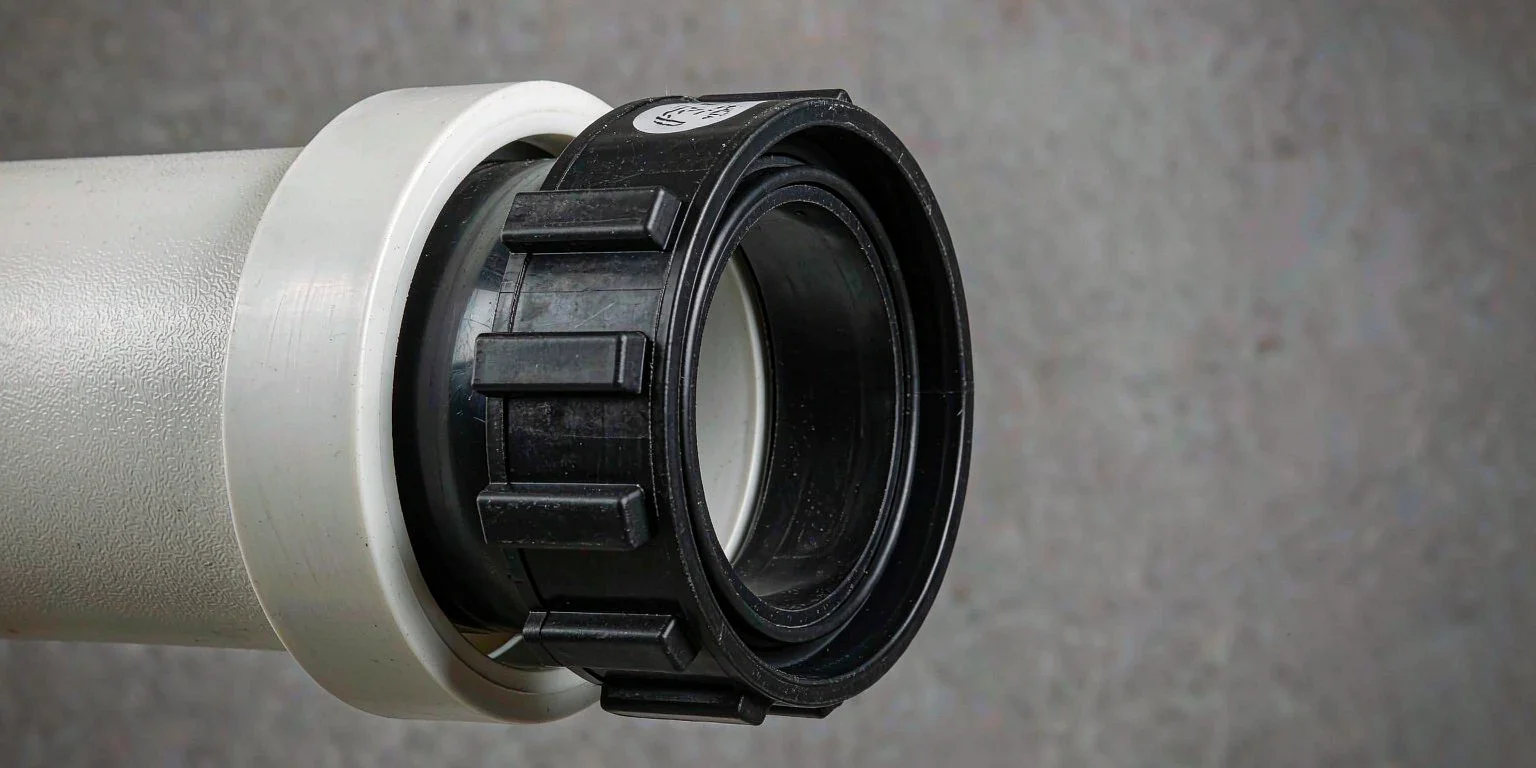
In the polyethylene (PE) gas and water pipe field, ISO 12176-4 (the coding specification for plastic pipe welding and electrofusion fitting traceability) explicitly requires fittings to carry a unique traceability code, enabling closed-loop recall during electrofusion jointing and later inspection. Advanced European and American pipe network operators are further binding passive RFID chips to the pipe body, upgrading fitting codes from 2D barcodes to RF chips, giving every fitting a machine-readable hardware identity.
From Point Markers to Embedded Chips: Three Generations of Evolution
The first generation — surface tracer wires, warning tapes, and concrete marker posts — is extremely cheap but easily dug through. The second generation — low/medium-frequency resonant marker balls and point passive RF chips (EMS) — survives underground burial but remains discrete markers unable to link to manufacturing inspection sheets. The third generation is the ‘QR code + passive UHF RFID’ dual-channel digital identity, combining low-threshold phone scanning with industrial handheld batch, alignment-free sensing to achieve one-pipe-one-file. Reliable encapsulation of the chip itself is the key.
As a manufacturer of passive UHF embedded RFID tags/chips, RFIDHY supplies a spring-embedded encapsulation that can be pre-buried or implanted with fittings, staying readable even in hidden environments. To learn about the same process, see RFIDHY’s UHF spring-embedded RFID tag.
Objective Understanding: The Boundaries of RFID Identification
It must be clear that passive UHF RFID is essentially a ‘physical asset digital ID card,’ solving where the pipe came from, where installed, and who is responsible; it cannot transmit pressure or flow data in real time, nor does it replace professionally licensed engineering surveying. Passive UHF signals attenuate in wet clay, deep backfill, or metal shielding, so sample tag-read tests should be conducted before concealment based on pipe diameter and backfill depth. If you need to evaluate a tag encapsulation solution, get a custom quote.
Asia-Pacific and Smart City Digital Handover Requirements
In Asia-Pacific and major smart-city projects in Europe and America, owners at final acceptance are no longer satisfied with paper or static CAD as-built drawings; they require a ‘digital handover package’ integrating spatial coordinates, material parameters, and inspection credentials. This creates strong demand for passive RFID chips to move from ‘discrete markers’ to ‘material-level digital foundation’: only when chips are stably bound to the pipe body and machine-readable can they truly feed fresh material-level data into BIM/GIS and city lifeline platforms. What RFIDHY does is make this ‘chip foundation’ reliable and deliverable at scale.
What This Means for Procurement and Compliance
For procurement and compliance teams, the shift to RFID identification changes how pipe materials are specified and accepted. Rather than relying solely on paper mill certificates that can be lost or forged, specifications can now require a unique machine-readable identity on every fitting, referenced against ISO 12176-4 coding. RFIDHY supplies the compliant chip and encapsulation; integrators and utilities build the acceptance and audit workflows on top. The result is a defensible material record that survives the decades-long life of a buried network.