
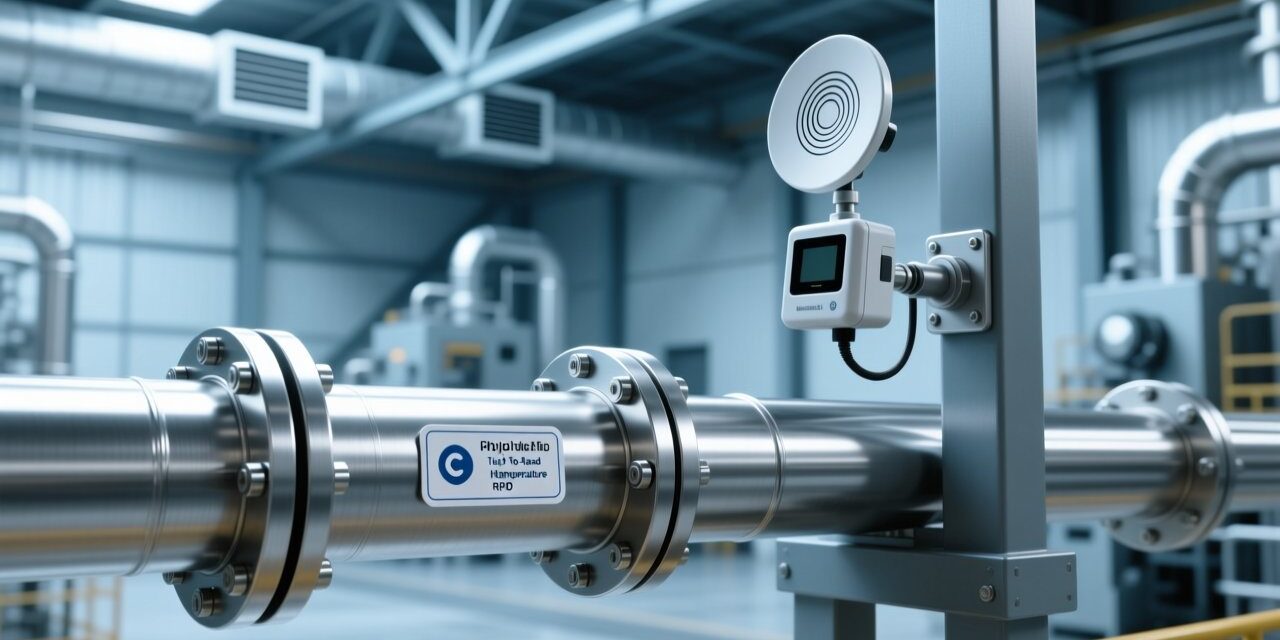
Field-Validated Performance at Extreme Temperatures
In Q3 2024, a pilot deployment of high temperature RFID tag HY-HT4836 was initiated at a major Kuwaiti refinery’s catalytic cracking unit—where ambient surface temperatures consistently exceed 220°C and transient peaks reach 250°C during maintenance cycles. Dopo 18 consecutive months of operation—including 127 thermal cycles above 230°C and exposure to H₂S-saturated atmospheres—the tags maintained 99.8% read reliability (tested daily via industrial RFID reader with fixed-mount antenna).
Why Standard RFID Fails in Refineries
Conventional UHF RFID tags fail rapidly in refinery environments—not from heat alone, but from synergistic degradation: thermal expansion mismatch between epoxy encapsulants and silicon chips, accelerated oxidation of aluminum antennas, and chemical attack by sulfur compounds. Lab-rated 200°C tags often degrade within weeks when mounted on stainless steel piping exposed to CIP steam and hydrocarbon vapors.
Key Failure Modes Observed (Pre-HY-HT4836)
- Antenna delamination after 3–5 thermal cycles >220℃
- Chip detachment due to coefficient-of-thermal-expansion (CTE) mismatch
- Encapsulant carbonization and loss of dielectric integrity
- Corrosion-induced impedance shift beyond ISO 18000-63 operational range
RFID Tag Selection Criteria for Refinery Applications
Selecting the right RFID PPS tags requires evaluating five interdependent parameters:
| Criterion | Minimum Requirement | Verification Method |
|---|---|---|
| Continuous Thermal Rating | 250°C for ≥12 months | ASTM E1530 thermal cycling (250°C × 24h / RT × 2h, 100 cicli) |
| Resistenza chimica | H₂S, SO₂, hydrocarbons, steam | NACE TM0169 immersion + thermal aging |
| Read Range Stability | ≥1.2 m at 250°C (polarizzazione lineare) | Far-field anechoic chamber sweep at elevated temp |
| Mounting Compatibility | Direct weld or mechanical fastening to carbon steel/stainless | Shear strength ≥12 MPa after thermal cycling |
| Regulatory Compliance | ATEX Zone 1, IECEx, FCC Part 15C | Certified test reports from SGS/TÜV |
Deployment Best Practices from Kuwait Site
The successful 18-month run resulted from strict adherence to three field protocols:
- Surface Preparation: Abrasive blasting (Sa 2.5) + zinc-phosphate primer before adhesive bonding or welding
- Reader Configuration: Fixed-mount fixed RFID reader with circularly polarized antenna; dwell time increased to 120 ms per tag to compensate for thermal Doppler shift
- Data Integration: Tag IDs mapped to SAP PM modules via REST API—enabling automated MRO tracking workflows aligned with MRO Tracking standards
Frequently Asked Questions
- Q: Can these 250 degree RFID tags be used on rotating equipment like turbines?
A: Yes—HY-HT4836 is rated for centrifugal forces up to 5,000 g and has been validated on turbine casings operating at 245°C surface temperature and 3,600 RPM. - Q: Do they require special RFID readers or antennas?
A: No. They operate fully within EPCglobal Gen2v2 and ISO 18000-63 standards and are compatible with standard RFID reader module Hardware. - Q: What’s the warranty for refinery-grade heat resistant asset tag deployments?
A: RFIDHY offers a 24-month field warranty covering thermal, chemical, and mechanical failure—valid only when installed per our certified refinery deployment protocol.
Ready to deploy certified 250 degree RFID in your refinery or petrochemical facility?
Download the full 18-month Kuwait Refinery Test Report and Refinery RFID Deployment Checklist.