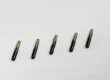

Why Does the Handicraft Industry Need RFID Anti-counterfeiting Chips?
Whether it’s handmade ceramics, wood carvings, glass ornaments, metal crafts, or replicas of traditional crafts, they all possess high collectible and aesthetic value. However, counterfeit, imitation, and pirated goods have long flooded the market. In this environment, traditional QR code anti-counterfeiting, anti-counterfeiting labels, and paper certificates are insufficient to combat the replication capabilities of high-quality counterfeits, and buyers and collectors increasingly rely on the seller’s reputation. Therefore, binding an uncopyable RFID anti-counterfeiting chip to each handicraft has become a key foundational technology for the industry’s digital management.
Why Are Handicrafts More Suitable for RFID Technology?
Unlike jewelry or leather goods, handicrafts offer more flexible packaging space in terms of materials and structure, making them an ideal choice for embedding RFID anti-counterfeiting chips. For example, wood carvings can have pre-embedded chip slots in the base or inside the carving; metal ornaments can achieve stable identification through anti-metal RFID tags; and glass and resin crafts can have chips sealed inside during the casting stage. Because the chip is completely hidden, it does not affect the appearance, making it difficult for counterfeiters to detect or replace.
Furthermore, RFID offers the advantage of contactless reading, allowing authentication without damaging the artwork’s structure. This is especially important for high-value artworks, fragile items, or large objects. RFIDHY provides a variety of microchips, anti-metal tags, and artwork-specific packaging solutions for artworks.
RFID Anti-counterfeiting Chips Enable End-to-End Traceability of Artworks from Production to Delivery
The core value of RFID anti-counterfeiting chips in the art industry lies not only in “anti-counterfeiting” but also in enabling digital management throughout the entire lifecycle. Once written, the chip record can include:
- Original Information (Artist, Series Number, Limited Edition Quantity)
- Material Batch, Production Time
- Factory Inspection Data
- Channel Distribution Information
- Exhibition Participation Records
- After-sales and Artwork Maintenance Records
In the past, consumers could only rely on paper certificates, which were easily copied or tampered with. RFID, through globally unique UIDs and encrypted authentication mechanisms, endows artworks with an unalterable digital identity from the date of production. Especially for limited-edition handicrafts, cultural derivatives, and exhibition souvenirs, it can directly display serial numbers and records of scarcity, allowing consumers to obtain verifiable value confirmation.
Why is RFID technology particularly important for craft auctions and the circulation of collectibles?
In the secondary market for crafts, due to the lack of a standardized authentication system, buyers often rely on expert appraisals, the reputation of auction houses, or the opinions of third-party institutions. This method is costly, inefficient, and prone to disputes; some auction houses themselves also struggle to identify high-quality forgeries. If each craft is equipped with an RFID anti-counterfeiting chip during the production stage, the secondary market will gain unprecedented transparency:
- Auction Houses: RFID scanning can verify the provenance, circulation history, and artist endorsement of the work.
- Collectors: Authenticity can be quickly verified without disassembling the work or damaging the packaging.
- Secondhand Trading Platforms: Reduces transaction disputes and return disputes.
- Artists: Prevents unauthorized reproduction and molding, thereby increasing the premium for original works.
How Exhibitions, Art Festivals, and Major Craft IPs Can Utilize RFID to Build Digital Operating Systems
The craft industry is undergoing a development model driven by “content + social interaction + cultural symbols,” with large-scale cultural and art festivals, derivative product exhibitions, and limited-edition new product launches becoming increasingly frequent. Traditional paper certificates cannot meet the needs of large-scale on-site sales and identity verification, while RFID anti-counterfeiting chips can directly serve as a dual carrier of “work + identity”:
- Limited-edition crafts can be linked to the holder’s identity, preventing scalpers from making duplicate purchases.
- RFID verification stations can be set up at exhibition sites, allowing participants to obtain digital certificates by scanning.
- Craft operators can use RFID to obtain user preferences and collection data.
- A series of works by the same artist can be compiled into a “digital collection album.”
The Digital Future of the Craft Industry
With the upgrading of cultural consumption, the rise of art derivatives, and the expansion of the secondary industry, the craft industry is undergoing digital transformation. RFID anti-counterfeiting chips will become a key entry point connecting the value of artworks, aesthetic experience, and digital asset management. The future of the handicrafts industry will exhibit three major development trends:
Trend 1: All limited-edition handicrafts will come equipped with a digital identity system by default.
Trend 2: Auction houses and cultural and creative platforms will require the use of RFID as a standard for authenticity verification.
Trend 3: Handicrafts will gradually integrate into the “on-chain physical asset” system, achieving on-chain ownership confirmation.
For brands, establishing digital identities for their products will become a core competitive advantage; for artisans, digital identities are an important means of protecting originality and increasing premium pricing; for consumers, digital identities are the foundation for enhancing the collecting experience and ensuring value. As a leading RFID solutions company in China, RFIDHY will continue to promote the “standardization of digital identities for handicrafts,” helping the industry build a more transparent, reliable, and future-oriented cultural asset ecosystem.