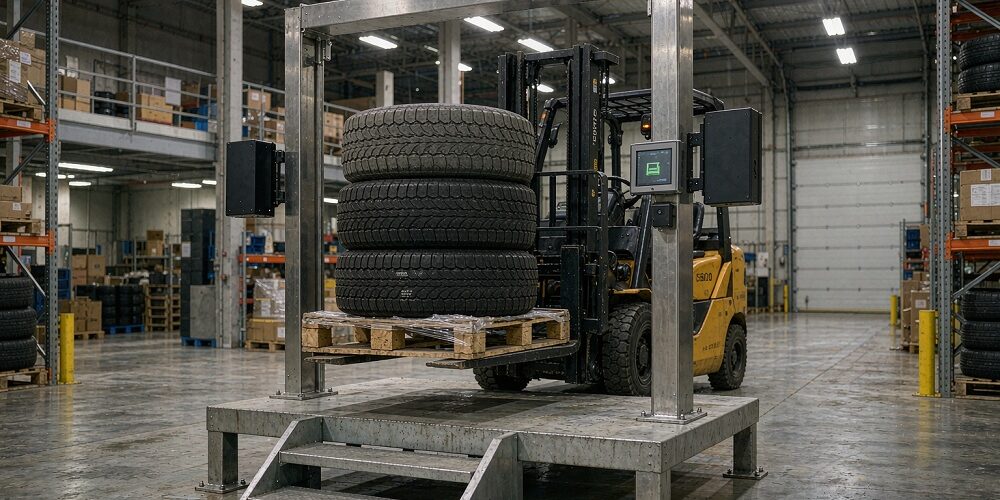
RFIDHY is a leading manufacturer of embedded RFID tire tags that survive vulcanization and deliver reliable identification across a tire’s entire service life. For asset managers who own total cost of ownership, a tire is a multi-year, multi-event asset – bought, mounted, rotated, inspected, retreaded, and retired. Tracking that journey with paper logs or barcode stickers is fragile: labels peel off, manual counts drift, and retreading erases the only serial that once connected the dots. UHF RFID closes that gap by bonding a unique electronic identity to the tire itself, readable in bulk and at distance throughout the lifecycle.
Why Tire Lifecycle Visibility Matters for Asset Managers
A commercial truck tire can serve four to six years and pass through dozens of touchpoints before scrap. בכל שלב – קבלת, mounting, rotation, בדיקה, retread, and disposal – value is added or lost. When identification depends on a sidewall paint mark or an illegible barcode, the asset manager loses the thread. Mixed fleets routinely show single-digit to double-digit percentage gaps between book inventory and physically counted tires.
The financial stakes are direct. Tire cost is typically the third-largest variable expense for a fleet after fuel and labor, and cost-per-mile is the metric that matters. Without a continuous identity, a manager cannot prove how many times a casing was retreaded, which vehicle it ran on, or whether a premature removal was a manufacturing fault. Embedded RFID makes every tire a queryable node, so lifecycle decisions rest on evidence rather than recollection.
How Embedded RFID Tags Survive the Entire Lifecycle
The defining requirement for lifecycle tracking is survival. RFIDHY UHF spring tire tags are placed inside the tire before vulcanization, so they are fused into the rubber body rather than stuck onto the surface. The inlay tolerates the curing process, where internal temperatures approach 200°C, and it continues to perform through repeated flexing, heat cycles, and a retread buffing operation that removes several millimeters of rubber.
מבחינה טכנית, the tags run on the UHF band (860-960 מגה-הרץ) using the EPC Gen2 air interface and storing a unique 96 or 128-bit EPC. A fixed portal reader at a depot gate captures 100 or more tire identities per second, while a handheld confirms a single casing in seconds. Because the code is written at manufacture, the same identifier travels with the asset from the RFIDHY product line through every downstream event.
The RFID Lifecycle Tracking Workflow: Five Stages
A practical deployment follows five stages, each anchored to the same tag identity:
1. Manufacturing and Curing
At the plant, the tag is embedded and encoded with a unique EPC plus batch and date data. This is the moment the digital record is born, and it aligns naturally with ניהול מלאי discipline from day one.
2. Receiving and Warehousing
New tires arriving at a distribution center are read in bulk through a gate, eliminating manual keying. The warehouse view stays accurate in real time, which is the foundation of any credible lifecycle report.
3. Mounting and Vehicle Assignment
When a tire is fitted, its EPC is linked to a vehicle, עמדה, and odometer baseline. Fleet systems such as fleet tire tracking then correlate wear and removal reasons against the unit.
4. Inspection, Rotation, and Pressure
Regular scans record tread depth, לחץ, and rotation history. Trends surface problem vehicles or under-inflation patterns before they trigger a road failure.
5. Retread or Retire
At removal, the casing is read and its full history retrieved. A sound casing is routed to retreading; a failed one is retired with a documented reason. This is where retreading tracking proves its value, because the decision rests on the complete prior record rather than a visual guess.
From Retreading to Retirement: Closing the Loop
Retreading is the economic and environmental heart of the tire lifecycle. A retreaded casing can deliver a second or third life at a fraction of the material and energy cost of a new tire, but only with a trustworthy history. RFID makes the casing’s provenance auditable: original build date, number of prior retreads, load history, and any flagged defects travel with the rubber. At end of life, the same identifier supports responsible disposal and, increasingly, regulatory reporting.
Regulatory pressure is converging on this same data trail. The EU’s Ecodesign for Sustainable Products Regulation (ESPR) and the emerging Digital Product Passport (DPP) framework, as of 2026, point toward mandatory product-level traceability for tires, which are explicitly in scope for durability and material-passport reporting. Exact obligations, phase-in dates, and the EU DPP Registry structure should be verified against latest official guidance; the practical takeaway is clear – an identity created at manufacture extends far more easily into a compliant passport than one reconstructed later. Asset managers planning ahead can review warehouse and asset management approaches that pair RFID with existing compliance workflows.
Compliance and Total Cost of Ownership
Lifecycle tracking pays for itself through three levers. הראשון, it recovers tires lost to poor records. שנייה, it raises retread yield by sending only qualified casings to the buffing machine. שלישי, it prevents roadside failures. Across a fleet of several hundred units, even a small gain in cost-per-mile compounds into real annual savings, and the same data supports warranty claims, audits, and future DPP reporting.
For buyers specifying a solution, the criteria are concrete: tag survival through curing and retread, read reliability at range, encoding discipline, and integration with existing systems. RFIDHY supports both the embedded UHF tire tag and the surrounding readers and middleware, and the team can be reached through the quote request page for volume and OEM/ODM discussions.
Frequently Asked Questions
What is tire lifecycle tracking with RFID?
Tire lifecycle tracking with RFID means embedding a unique UHF tag in the tire at manufacture and reading it at every stage – קבלת, mounting, בדיקה, retread, and retirement – so the asset’s full history is captured automatically rather than reconstructed from paperwork.
How does RFID help track a tire from new to retread?
Because the tag is fused into the rubber during vulcanization, the same electronic identity survives heat, flexing, and the retread buffing process. A handheld or portal reader pulls the casing’s record at any touchpoint, showing build date, retread count, and service history.
Can an RFID tire tag survive retreading and vulcanization?
כן. Embedded UHF tags from RFIDHY are designed for the curing environment, where internal temperatures approach 200°C, and they remain readable after a retread removes several millimeters of rubber from the tread area outside the tag’s protected location.
Is RFID tire tracking required for EU DPP compliance?
As of 2026, the ESPR and the EU Digital Product Passport framework move tires toward mandatory product-level traceability, but exact phase-in dates and registry requirements should be verified against latest official guidance. RFID provides the durable identity that makes a compliant passport practical to build.
What data is stored on an RFID tire tag?
The tag stores a unique EPC (typically 96 או 128 bits) that points to a backend record. That record can hold build date, גודל, load index, אצווה, mounting and vehicle history, and inspection results – far more than a printed serial.