RFIDHY is a leading manufacturer of embedded RFID tire tags that supplies global tire brands, retreaders, and system integrators through factory-direct OEM and ODM programs. Sourcing tags straight from the production line removes distributor markup and lets buyers specify the exact electrical, mechanical, and data characteristics their application demands. This article explains what factory-direct OEM/ODM actually covers, which specifications you can define, and how the model supports tire Digital Product Passport (DPP) readiness under emerging EU rules.
What “Factory Direct OEM/ODM” Means for RFID Tire Tags
In the RFID tire tag market, “factory direct” means you contract the tag builder that owns the vulcanization, antenna printing, and encapsulation processes, rather than a trading company that resells another factory’s stock. Under OEM (Fabricant d’équipement d’origine), RFIDHY produces a tag to your approved drawing and ships it under your brand or neutral labeling. Under ODM (Original Design Manufacturer), our engineering team proposes the antenna geometry, encapsulation, and read-range profile, then tunes it to your tire construction. Both routes flow through the same UHF spring tire tag platform that RFIDHY has refined across high-volume programs, and the equivalent main-site UHF spring tire tag product page carries the same specification for procurement teams.
Specifications You Can Define in an ODM Program
A direct relationship turns vague “RFID tire tag” requests into measurable parameters. The most consequential choices are frequency band, environmental rating, and embedding method.
UHF Frequency and Protocol
RFIDHY’s spring and embedded tags operate in the global UHF band at 860-960 MHz Utilisant EPC Gen2 / ISO 18000 - 6C. The EPC memory stores a 96-128 bit serialized code that maps to your DPP record. Typical handheld read range is 0.5-2 m and fixed portal read range is 3-6 m, with first-read rates above 99% and portal throughput of 200-500 tags par seconde. These figures should be verified against your local UHF spectrum allocation and reader configuration.
Heat and Pressure Resistance
Because the tag is cured inside the tire, it must survive the vulcanization process and the tire’s service life. RFIDHY’s embedded tags are rated for continuous operation up to 140C and short excursions to 200C, with rated pressure tolerance of 10-20 bar. Encapsulation uses tire-grade rubber compound so the inlay bonds to the carcass without delamination. Designers can review the full parameter set in the RFID tire tag specification guide.
How the OEM/ODM Process Works From Spec to Shipment
A typical direct program runs in five stages. Première, we capture your requirements: tire type (truck, bus, OTR, or passenger), target read range, and embedding position (sidewall, bead, or fully embedded). Seconde, RFIDHY builds samples and validates read performance on your actual tire construction. Tierce, we integrate tagging into your line – see the RFID tire tag production line integration guide for MES for conveyor, portal, and data-handoff detail. Quatrième, we lock the EPC encoding scheme and quality test 100% of units through a portal reader. Cinquième, we ship in anti-static trays with a serialized mapping file your ERP can ingest.
This controlled chain is what separates a factory-direct tag from a generic label. Because RFIDHY owns the vulcanization-embedded tag process, the inlay is positioned consistently inside every tire, which is the prerequisite for reliable lifetime tracking.
Why Direct Sourcing Outperforms Multi-Layer Distribution
Buying through two or three distributors hides the real manufacturer and makes specification changes slow. Factory-direct sourcing gives three concrete advantages. Cost: removing intermediary margins typically lowers unit price 20-40% at volume. Lead time: with no reseller buffer stock, reorders and spec revisions ship from the same line in days, not weeks. Traceability: you receive the original test data and encoding map, which your own quality and compliance teams can audit. For operations scaling into connected-tire programs, direct access to the builder also shortens the loop when a reader or tire compound change requires a tag redesign.
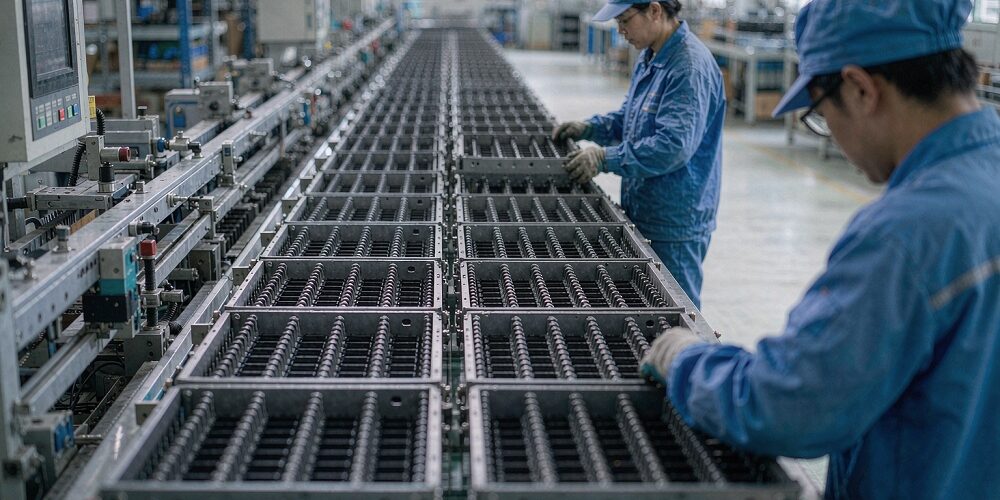
RFIDHY runs the underlying manufacturing automation described in our industrial automation application notes, so capacity and quality controls scale with your program rather than depending on a third party’s inventory.
DPP-Ready Data Models Built Into Every Tag (as of 2026)
The EU is moving toward mandatory Digital Product Passports for tires under the Ecodesign for Sustainable Products Regulation (ESPR), with the precise tire scope and dates still being defined by delegated acts as of 2026; buyers should verify against latest official guidance before committing compliance timelines. RFIDHY’s direct programs prepare you by encoding a unique, tamper-resistant EPC on every tag and supplying the serialized data file that a DPP registry expects. We do not operate the EU DPP registry, but our tags are designed so the on-tag identifier resolves cleanly to your upstream passport record. Engaging a factory-direct partner early lets you align tag data structure with your DPP roadmap instead of retrofitting it later. For a customized program and volume pricing, request a quote at our quote page.
FAQ
What does RFID tire tag OEM/ODM mean?
OEM means RFIDHY builds a tag to your approved design and labels it for you; ODM means we design and tune the tag to your tire and application, then manufacture it. Both are factory-direct, removing distributor markup.
Can I specify the read range and frequency?
Oui. Direct programs let you define the UHF band (860-960 MHz, EPC Gen2 / ISO 18000 - 6C), EPC memory length (96-128 bit), and target handheld or portal read range. Final performance should be validated on your actual tire.
How heat-resistant are embedded RFID tire tags?
RFIDHY’s embedded tags are rated for continuous 140C and short peaks to 200C, avec 10-20 bar pressure tolerance, because they are cured inside the tire during vulcanization. Exact ratings depend on the encapsulation chosen.
Is factory-direct sourcing cheaper than buying from a distributor?
In most volume programs, Oui – removing intermediary margins typically reduces unit cost 20-40% and shortens reorder lead time, while giving you direct access to the original test and encoding data.
Do your tags support the EU tire DPP requirement?
Our tags encode a unique EPC and ship with a serialized data file structured for DPP registry ingestion. The exact ESPR tire obligations and deadlines are still being finalized as of 2026, so confirm against current official guidance.