
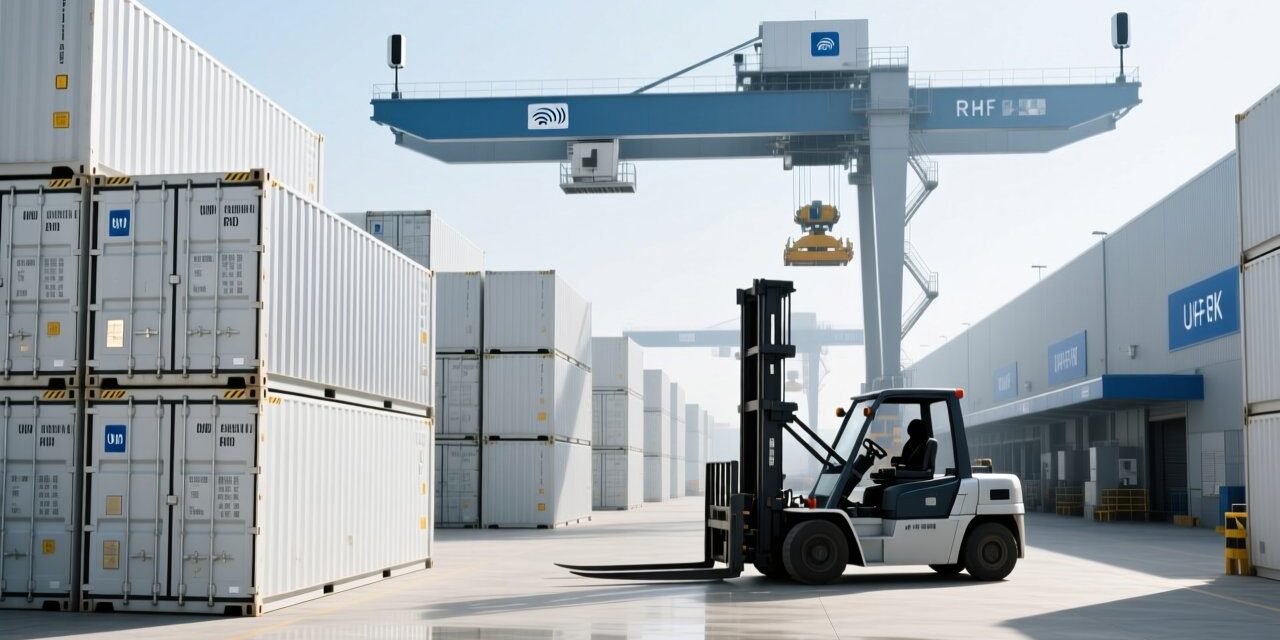
Introducción: The Need for Speed and Range in Modern Port Yards
Port terminals are high-pressure environments where every second of delay translates into cost overruns. With container volumes growing year over year, yard managers are turning to RAIN RFID technology to automate tracking of assets ranging from intermodal containers to heavy forklifts. But achieving a reliable outdoor UHF RFID tag read range de 15 meters or more in an open, often harsh, environment is not trivial. Standard labels won’t survive salt spray, direct sunlight, or the vibration of a reach stacker. This means tags must be specifically engineered as rugged UHF RFID tags with robust encapsulation, high-performance chips, and optimized antenna geometry.
Industry Background: Why Port Automation Demands Long-Range RFID
The global maritime logistics industry is embracing digitization at an unprecedented pace. Ports like Rotterdam, Shanghai, and Los Angeles have already integrated RFID into their gate automation, yard management, and crane operations. The benefits are clear: real-time container location, reduced manual checks, and dramatic improvements in data accuracy from under 20% to over 95% in some cases. For terminal operators, the ideal tag must be readable from a distance while withstanding moisture, UV exposure, and physical impacts. Ahí es donde UHF RFID tags for supply chain logistics come into play, offering a blend of durability and performance that passive HF or LF tags simply cannot match.
Technical Deep-Dive: What Makes a Tag Deliver 15m+ Outdoors?
Reaching a 15-meter read range depends on several factors working in harmony:
- Chip Sensitivity: Modern chips like Impinj Monza R6-P or NXP UCODE 8 offer IC sensitivities down to -24 dBm, effectively doubling the range when compared to older silicon.
- Antenna Gain: Tags with larger, well-tuned dipole or patch antennas can harvest more energy from the reader’s field. Sin embargo, real‑world mounting on metal or carbon fibre alters resonance – hence the need for on‑metal designs.
- Reader Performance: A fixed UHF RFID reader with high transmit power (hasta 33 dBm EIRP) and a sensitive receiver is just as critical.
- Environment: In open port yards, multipath reflections from containers can help or hinder. Careful site surveys and antenna placement overcome dead zones.
The table below compares common tag form factors used outdoors:
| Tag Type | Typical Read Range (outdoor, on metal) | Key Properties |
|---|---|---|
| Ceramic UHF Tag | 10 – 20 m | Small footprint, extreme temperature range, UV‑resistant |
| Pcb (FR4) Tag UHF | 8 – 18 m | Thin, low‑profile, strong on‑metal performance |
| Flexible Rubber UHF Tag | 6 – 15 m | Vibration‑dampening, ideal for forklifts, IP68 rated |
| ABS/PPS Hard Shell Tag | 5 – 15 m | Impact‑resistant, suitable for container door mounting |
Key Considerations for Container Yard and Forklift Applications
UV Resistance and Material Choice
Direct sunlight degrades most plastics within months. A UV resistant RFID tag for container yards must use materials like PPS (polyphenylene sulfide) or treated ABS that maintain structural integrity for years. Ceramic tags, such as those in our UHF ceramic tag range, are inherently UV-stable and can survive outdoor service without yellowing or embrittlement.
Rubber Tags for Forklift and Reach Stacker Mounting
Heavy equipment transfers substantial vibration to attached electronics. A rigid tag may crack or lose its adhesive. Por lo tanto, un rubber RFID tag for forklifts is the go‑to solution. Encased in thermoplastic elastomer or silicone, these tags flex with the equipment and can be bolted or strapped onto metal arms. One proven product is the tamper‑proof flexible UHF RFID on‑metal tag, which offers a slim profile and reliable read range even when the forklift is in motion.
Attachment Methods for Open Environments
- Mechanical Fasteners: Stainless steel screws or rivets for permanent container mounts.
- High‑Bond Adhesives: Acrylic foam tapes resist shear and UV, but must be applied on clean, dry surfaces.
- Cable Ties: Useful for temporary tagging of forklift arms or spreader bars; ensure the tag’s tie hole is reinforced.
Deployment Best Practices: From Gate to Crane
Achieving consistent 15m+ reads requires more than just qualified tags. Yard managers should:
- Perform a Spectrum Analysis: Co‑channel interference from Wi‑Fi or other RFID systems can reduce range. Use a handheld spectrum analyser to select the cleanest channels.
- Orient Tags Correctly: For linearly polarised reader antennas, alignment matters. Circularly polarised antennas are more forgiving but lose 3 dB gain.
- Plan for Multi‑Tag Environments: Dense tag populations (por ejemplo, a stack of 10 contenedores) require anti‑collision algorithms and possibly phase‑array readers to isolate individual IDs.
- Regular Inspections: Even IP68 tags should be checked periodically for physical damage or corrosion on the contacts.
Integrating the Data Layer
Tag data is only valuable if it feeds into the port’s Terminal Operating System (TOS). A robust middleware layer normalizes reads, filters duplicates, and triggers events such as “container moved to block B7.” Our MRO tracking solutions illustrate how RFID-driven maintenance workflows can be tied to asset location in real time, a concept equally applicable to container yard logistics.
Preguntas más frecuentes
What read range can I realistically expect from an outdoor UHF RFID tag?
With a properly tuned on‑metal tag and a high‑performance reader, ranges of 15‑20 meters are achievable in open space. Actual range depends on tag orientation, reader antenna gain, and environmental noise.
Why do I need a rubber RFID tag for my forklifts?
Forklifts produce intense vibration and occasional impacts. Rubber or flexible silicone‑encased tags absorb these shocks and maintain consistent performance, whereas rigid tags may fail.
Are ceramic tags better than flexible rubber tags for UV resistance?
Ceramic tags are inherently UV‑stable and can last decades outdoors. Sin embargo, they are brittle. Flexible rubber/TPE tags may need UV stabilizers in their compound but will hold up for 5‑7 years if properly formulated.
Can I reuse outdoor UHF tags when containers are repurposed?
Sí, many rugged tags are designed for remounting. Mechanical fasteners make transfer straightforward. Adhesive‑mounted tags can also be reused if the adhesive and surface are prepared correctly.
What type of reader do I need for yard‑wide coverage at 15m?
You’ll need a fixed UHF reader with multiple antenna ports, supporting up to 33 dBm EIRP. Combining several antennas in a portal or overhead array ensures full lane coverage even for fast‑moving vehicles.
Get Expert Guidance on Your Port Yard RFID Deployment
Selecting the right outdoor UHF RFID tags for your specific container yard, forklift fleet, or crane operation can be challenging. En RFIDHY, we have over a decade of experience in delivering industrial‑grade RFID solutions that perform in the toughest open environments. Whether you need custom rubber‑encased forklift tags, UV‑resistant ceramic tags, or a fully integrated gate automation system, our team is ready to help.
Contact our engineers today for a free consultation and discover how to achieve a reliable 15m+ read range across your entire yard.