
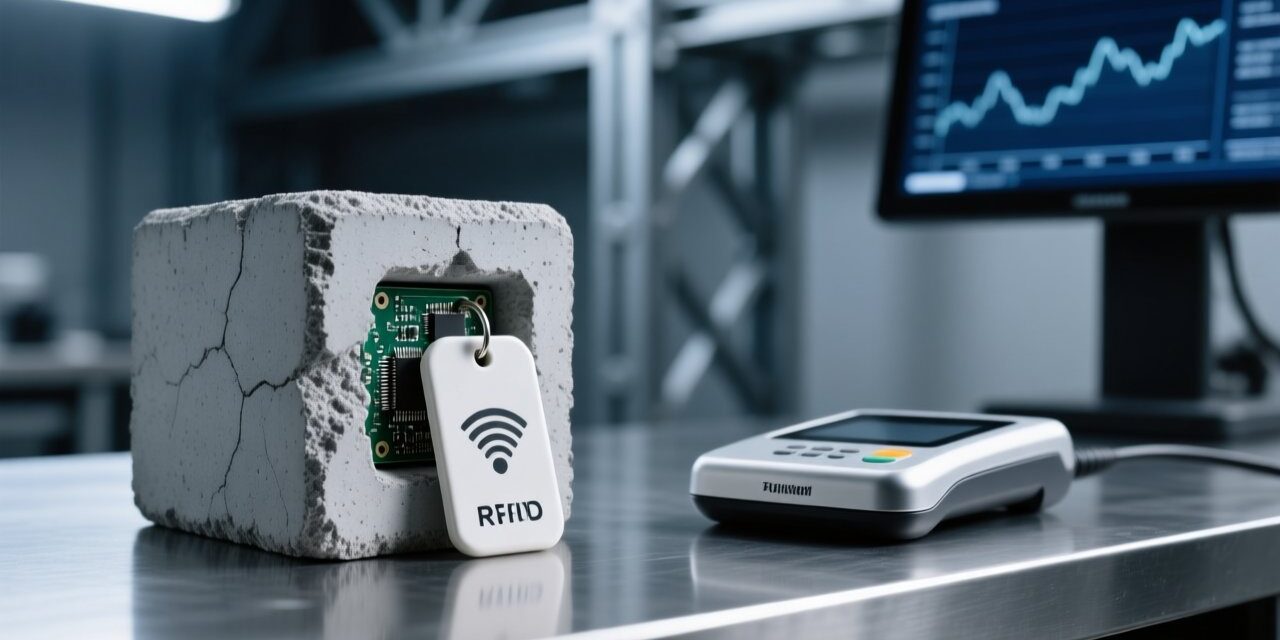
Why Embedded RFID Is Transforming Infrastructure Asset Intelligence
Modern civil infrastructure demands traceability, cumplimiento de normas, and long-term data integrity—challenges traditional barcodes and manual logs cannot meet. Embedded RFID concrete tags offer a robust, maintenance-free solution for embedding digital identity directly into structural elements during casting. Unlike surface-mounted alternatives, these passive RFID tags survive high-pressure pouring, steam curing, and decades of environmental exposure—enabling reliable identification at every stage: fabrication, instalación, Inspección, renovation, and decommissioning.
Technical Requirements for Infrastructure-Grade RFID Integration
Successful deployment hinges on three core criteria: material compatibility, read range consistency, and longevity. High-performance RFID epoxy tags y RFID ceramic tags are engineered for direct embedment in wet concrete, resisting alkalinity, moisture ingress, and thermal cycling. When paired with industrial-grade UHF desktop readers, they deliver consistent reads through up to 15 cm of reinforced concrete—critical for post-pour verification and in-situ scanning.
Use Cases Across the Infrastructure Lifecycle
- Precast Manufacturing: Each beam, slab, or column receives a unique UHF RFID tag before curing—linking batch data (mix design, slump test results, curing duration) to physical units via ERP/MES systems.
- Site Logistics: Crane-mounted RFID readers automatically log placement location, orientation, and timestamp—reducing survey errors and enabling real-time BIM synchronization.
- Smart City Maintenance: Municipal inspectors scan embedded tags on bridges or culverts using handheld devices to retrieve maintenance history, load ratings, and corrosion sensor readings.
- Demolition & Circular Economy: Tags survive partial demolition, allowing verified material origin tracing for recycling certification and reuse eligibility under EU Construction Product Regulation (CPR) normas.
Standards Alignment and Interoperability
RFID-enabled infrastructure supports ISO 19650-3 digital handover protocols and aligns with Smart Cities Mission guidelines for asset-level digital twins. All RFID tags used must comply with EPC Gen2v2 (ISO 18000-63) and operate within FCC/ETSI UHF bands. For seamless integration into existing construction management platforms, RFID reader modules should support standard communication protocols—including RS232, TCP/IP, and MQTT—ensuring plug-and-play interoperability with CMMS and GIS tools.
Frequently Asked Questions
- Can RFID tags survive the heat and alkalinity of fresh concrete?
Yes—certified RFID epoxy tags y RFID ceramic tags are rated for pH >13 and temperatures up to 120°C during steam curing. - How deep can RFID be read through cured concrete?
With optimized antenna design and high-sensitivity UHF readers, read ranges of 10–15 cm are consistently achieved—even through rebar-reinforced sections. - Do embedded tags interfere with structural integrity?
No. Tags are encapsulated in non-conductive, non-corrosive housings and installed outside critical stress zones per ASTM C1784 guidelines. - Is data stored on the tag or in the cloud?
The tag stores only a unique EPC identifier. Full lifecycle data resides securely in your authorized asset management platform—ensuring scalability and audit readiness.
Ready to Embed Intelligence Into Your Infrastructure?
RFIDHY offers certified, field-tested embedded RFID solutions for precast concrete manufacturers, civil contractors, and public asset owners. Our engineering team provides site-specific tag selection, reader configuration guidance, and integration support for Autodesk BIM 360, Oracle Aconex, and Bentley ProjectWise.
Request a Technical Consultation or download our Embedded RFID Implementation Guide for Civil Infrastructure hoy.