
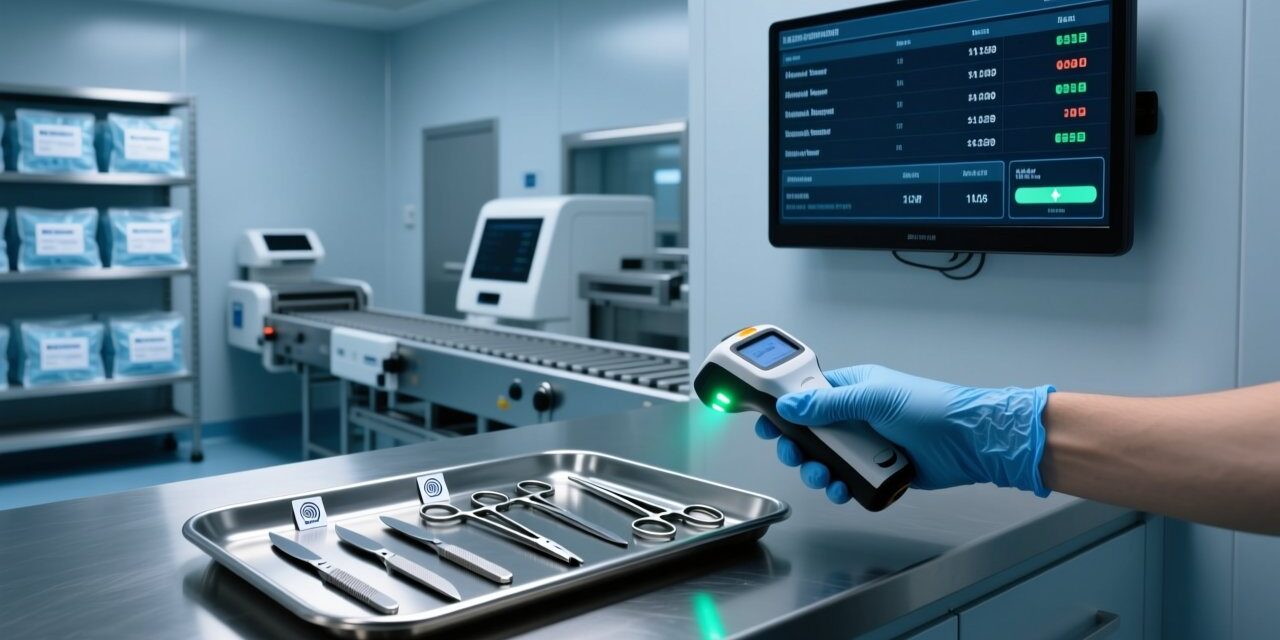
Einführung
Surgical instrument tracking is undergoing a digital transformation. Hospitals and sterile processing departments (SPD) are moving away from manual count sheets and toward automated surgical instrument RFID tracking systems that improve accuracy, patient safety, and inventory visibility. Jedoch, the harshest challenge for any RFID solution in healthcare is the sterilization process — typically saturated steam autoclaving at 134°C or higher. Standard RFID labels would delaminate, crack, or lose read sensitivity within a few cycles, rendering the investment useless.
That’s where sterilization-resistant, high-temperature RFID tags come in. These specialized tags are engineered to withstand hundreds of autoclave cycles while maintaining reliable read performance. In diesem Artikel, we explore the technology behind high-temperature RFID tags, critical selection criteria, and best practices for deploying an instrument-level tracking system that delivers return on investment from day one.
Industry Background and Market Context
The global surgical instrument tracking market is expanding at a compound annual growth rate (CAGR) of over 15%, driven by mandates for Unique Device Identification (UDI), Joint Commission recommendations, and a heightened focus on infection control. Manual counting errors still account for a significant percentage of surgical never events, while lost or misplaced instruments cost large hospitals hundreds of thousands of dollars annually. RFID-enabled asset management closes this gap by providing automatic identification, status updates, and cycle counts tied to individual instruments or trays.
Im Gegensatz zu Barcodes, which require line-of-sight and degrade after repeated sterilization, surgical instrument RFID tracking uses radio frequency waves to read multiple tags simultaneously — even through packaging. But the tag itself must survive the extremes of the Central Sterile Supply Department (CSSD). This has led to growing demand for medical RFID tags designed specifically for autoclave, plasma, and chemical sterilization methods.
Technical Specifications of High-Temperature RFID Tags
Temperature and Pressure Resistance
Autoclaves typically operate at 121–134°C with pressure up to 2.1 Bar. A robust sterilization-resistant RFID tag must endure not only the peak temperature but also the rapid pressure changes and moisture ingress that occur during the drying phase. Leading UHF RFID tags for surgical instruments are rated for continuous exposure up to 200°C, with cyclone-tested resilience for >200 cycles without performance degradation.
Material Composition
The housing material is critical. Two common high-performance options are:
- Polyphenylene Sulfide (PPS): A high-temperature engineering thermoplastic with excellent chemical resistance, dimensional stability, and low moisture absorption. PPS RFID tags are widely used for surgical instruments because they withstand repeated autoclaving without warping or losing bond strength.
- Keramik: Ceramic RFID tags offer even higher thermal limits (up to 400°C) and are completely immune to moisture absorption. They are ideal for the most aggressive sterilization protocols but are typically larger and more costly.
Chip and Frequency Selection
Most surgical instrument RFID tracking solutions operate in the UHF band (860–960 MHz) using RAIN RFID technology for long read ranges and multi-tag reading. Jedoch, some applications leverage HF (13.56 MHz) NFC tags for close-proximity scanning with a smartphone. For metal instruments, UHF tags require an on-metal design, often with a ferrite layer to counteract detuning. Common chip choices include Impinj Monza or NXP UCODE series, which provide good sensitivity and anti-collision algorithms. High-temperature tags must be packaged so that the chip and antenna are protected from moisture and thermal stress; some designs encapsulate the inlay in silicone or epoxy before placing it inside the PPS housing.
Key Selection Criteria
1. Sterilization Compatibility
Confirm that the tag is validated for your specific sterilization method: steam autoclave, hydrogen peroxide plasma, EtO, or peracetic acid. Not all high-temperature tags are compatible with chemical sterilants; look for certifications such as ISO 17665 (moist heat) or AAMI TIR standards.
2. Befestigungsart
Tags must be permanently affixed to the instrument, typically via high-temperature biocompatible adhesive, embedding into a drilled recess, or mechanical attachment (z.b., rivet or weld). The bond must withstand ultrasonic cleaning and enzyme detergents. For delicate instruments, a small form factor PPS RFID tag with rounded edges minimizes snagging.
3. Read Range and Orientation
In a surgical tray with multiple instruments, tag placement and orientation affect readability. Compact tags with omnidirectional antenna patterns perform better when instruments are stacked. UHF systems paired with a UHF handheld RFID reader or a fixed antenna tunnel allow quick scanning of entire trays without unpacking.
4. Data Capacity and Encoding
At minimum, each tag should store a unique ID that links to the hospital information system (HIS) or instrument tracking software. More advanced tags encode UDI data, sterilization history, and maintenance records. Ensure the tag’s memory structure (EPC, Benutzerspeicher) supports your data strategy.
Practical Deployment Tips
Workflow Integration
Introduce RFID reading points at key CSSD stages: decontamination, assembly, sterilization, sterile storage, and operating room check-in/check-out. A common pitfall is overlooking the reading of instruments inside closed sterilization containers; utilize RFID-enabled smart cabinets or tunnel readers to automate these steps.
Tagging Strategy
Begin with high-value or high-risk instruments trays — such as cardiovascular, orthopedic, and neurosurgical sets — where a single missing instrument can cause a delay. Tagging every individual instrument yields the greatest ROI, but a phased rollout by department is often more manageable. Laser-marked direct part marking (DPM) with RFID is an alternative for instruments too small for a tag housing.
Testing and Validation
Conduct a pilot with a representative sample of instruments through at least 100 sterilization cycles, measuring read rate consistency, tag adhesion, and data integrity. Involve sterilization technicians in the selection process to ensure the tag does not interfere with existing workflows or cleaning processes.
Software and System Integration
Your RFID system must talk to existing hospital software, such as instrument tracking software or ERP. RFIDHY provides integration support and can recommend compatible RFID middleware that translates raw tag reads into actionable inventory events.
By addressing these factors, hospitals can achieve >99% instrument accountability, reduce counting time by 80%, and prevent infection risks associated with improper reprocessing. As regulatory pressure increases, surgical instrument RFID tracking with durable, high-temperature tags is no longer a luxury but a necessity.
Häufig gestellte Fragen
1. What is the maximum sterilization temperature an RFID tag can withstand?
Specialized high-temperature RFID tags can withstand continuous exposure up to 200°C and short peaks up to 260°C, making them suitable for steam autoclaves and some dry heat processes. Always consult the manufacturer’s specifications for the exact cycle rating.
2. How many autoclave cycles can a sterilization-resistant RFID tag survive?
Industrial-grade PPS and ceramic tags are rated for 200 to more than 500 autoclave cycles without loss of read performance. Jedoch, the attachment method and chemical detergents used can influence lifespan; validation under your exact conditions is recommended.
3. Can RFID tags be read inside metal surgical trays?
Ja. UHF RFID on-metal tags are designed with a ferrite layer that mitigates metal interference. When placed correctly, instruments inside a closed metal tray can be read with a high-performance fixed antenna or portal reader.
4. What is the difference between PPS and ceramic RFID tags for sterilization?
PPS (Polyphenylene Sulfide) tags are more cost-effective and widely used for standard autoclave cycles. Ceramic tags offer higher temperature tolerance and are completely chemically inert, but are generally larger and more expensive. The choice depends on the specific sterilization method and size constraints of the instrument.
5. Is NFC or UHF better for surgical instrument tracking?
UHF (REGEN RFID) is preferred for bulk reading and longer range, making it ideal for tray scanning and inventory. NFC is sometimes chosen for point-of-use authentication with a smartphone, but its short read range limits multi-tag scanning. Most healthcare deployments use UHF.
6. How do you attach an RFID tag to a surgical instrument?
Tags are typically bonded with medical-grade, high-temperature adhesives or mechanically attached via a drilled recess and screw/rivet. The method must be validated not to trap bioburden and to survive ultrasonic cleaning.
Need Help Selecting Sterilization-Resistant RFID Tags?
Bei RFIDHY, we engineer high-temperature RFID tags that withstand the toughest CSSD environments. From PPS to ceramic, we help you choose the right tag, Reader, and integration path for complete surgical instrument tracking. Contact our healthcare RFID specialists today for a free consultation and sample kit.