
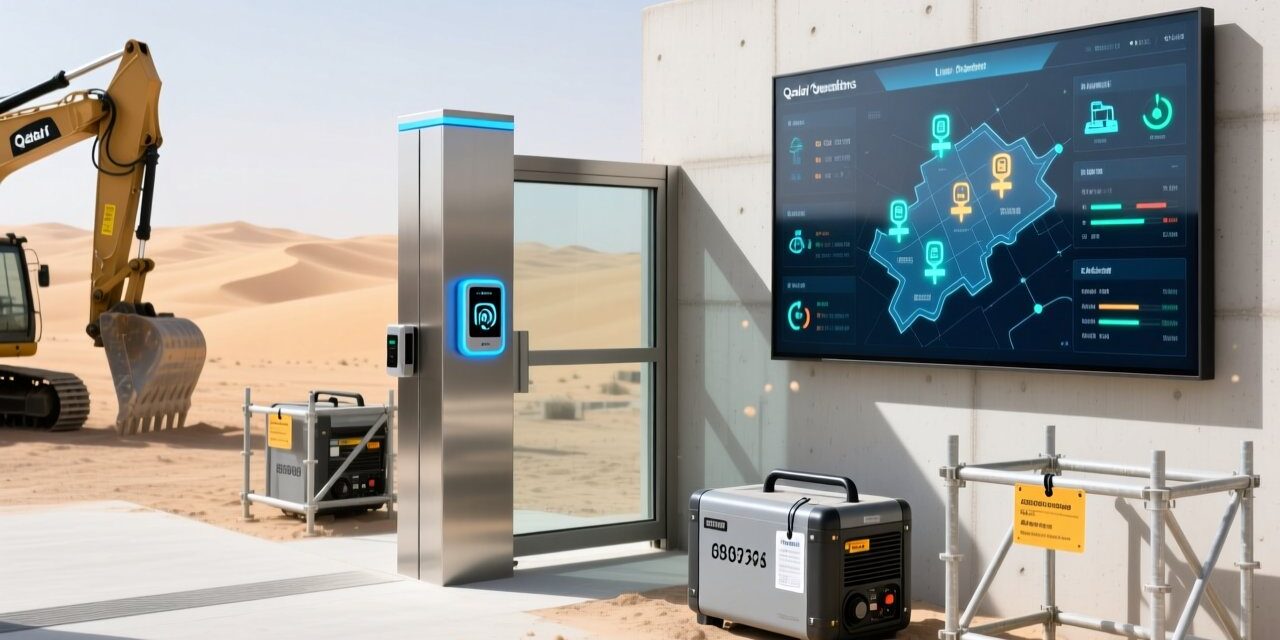
Scaling Asset Visibility Across Qatar’s Mega-Projects
With the ongoing development of Lusail City, the Doha Metro expansion, and the Ras Bufontas Industrial Zone, Qatari contractors manage thousands of high-value assets across geographically dispersed, high-risk construction sites. Traditional barcode or manual logbook systems fail under such scale — leading to misplaced tools, delayed maintenance, and unplanned rental costs. RFID technology offers a proven, scalable alternative: passive RFID-tags attached to equipment, combined with strategically deployed RFID reader modules, deliver real-time location data without battery dependency or line-of-sight scanning.
Why UHF RFID Is Critical for Multi-Site Construction Operations
UHF RFID operates in the 860–960 MHz band, enabling read ranges up to 12 meters — ideal for gate-level inventory checkpoints, crane-mounted antennas, and yard-wide coverage. Unlike HF or NFC, UHF supports dense tag populations: one fixed reader can identify 200+ tagged items per second, making it possible to track pallets of scaffolding, batches of PPE kits, or entire fleets of generators entering or exiting site zones. For contractors managing concurrent projects like HBK or UCC, this means unified visibility into shared equipment pools without duplicated infrastructure.
RFID Tag Selection Criteria for Harsh Construction Environments
Selecting the right tag is foundational. In Qatar’s desert climate and industrial settings, tags must withstand dust, UV exposure, mechanical impact, and metal interference. Key evaluation criteria include:
- Materialverträglichkeit: Verwendung on-metal RFID tags for tools, Container, and structural components; avoid standard inlays on conductive surfaces.
- Ingress Protection: Minimum IP67 rating for outdoor durability; IP68 or IP69K recommended for wash-down areas or heavy machinery.
- Temperature Tolerance: Tags rated for -40°C to +85°C ensure reliability during summer heatwaves and winter concrete curing cycles.
- Mounting Flexibility: Adhesive-backed, screw-mount, or cable-tie compatible designs support rapid deployment across diverse asset types.
- Chip Performance: Impinj Monza R6 or R8 chips offer superior sensitivity and anti-collision performance in dense-read scenarios.
Real-World Deployment Architecture
A typical three-site implementation includes:
| Component | Funktion | Example RFIDHY Product |
|---|---|---|
| Stationäre RFID-Lesegeräte | Installed at site entrances, equipment yards, and warehouse docks for automated check-in/check-out | HY-R346A 4-port UHF reader |
| Handheld Scanners | Used by foremen for spot audits, tool calibration logs, and subcontractor handovers | HY-R6100 UHF handheld reader |
| Ruggedized Tags | Applied to excavators, welding machines, and safety harnesses | RFID PPS tags for PPE management |
Integration with Existing Construction Management Systems
RFID data gains maximum value when integrated into ERP platforms (z.b., Oracle Aconex, Procore) or custom CMMS. RFIDHY provides RESTful API support and middleware connectors that map tag events (z.b., ‘Generator #X entered Site B’) to work orders, maintenance schedules, or lease expiration alerts. This eliminates double data entry and ensures compliance with Qatar’s Ministry of Municipality & Umwelt (MME) asset reporting requirements.
Häufig gestellte Fragen
- Can RFID work reliably near rebar and steel structures?
Yes — on-metal RFID tags use ferrite shielding and specialized antenna designs to maintain performance on conductive surfaces. - How do you prevent unauthorized tag removal or tampering?
We recommend tamper-proof flexible UHF RFID on-metal tags with destructible adhesive and visual tamper evidence. - Is RFID suitable for tracking small hand tools?
Absolutely — ultra-small RFID chips (as small as 2.6×2.6 mm) embed seamlessly into drill bits, torque wrenches, and calipers. - Do I need separate readers for each site?
No — cloud-based RFID middleware aggregates data from all locations into a single dashboard, supporting centralized fleet oversight without redundant hardware.
Ready to Deploy RFID Across Your Qatar Construction Portfolio?
Download our free Construction Asset Tracking Readiness Checklist — including ASME B30-compliant tagging guidelines, reader placement maps, and ROI calculation templates.