
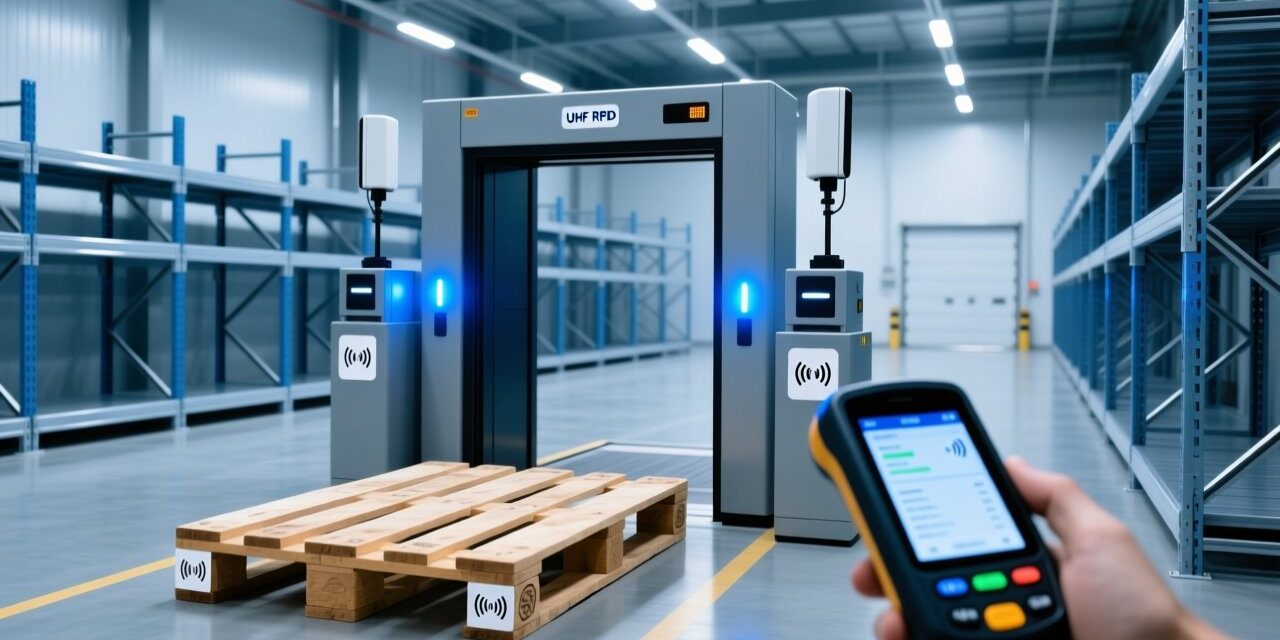
The Shift Toward Pallet-to-Parcel Visibility in North American Logistics
North America’s logistics landscape is under constant pressure to deliver faster, more accurate, and fully traceable shipments. While barcode systems have long served pallet‑level tracking, they struggle to provide the granular, real‑time data needed for modern parcel‑level operations. تتفاعل الفائق (860‑960 MHz) has emerged as the technology that can close this gap, enabling automated identification of items from the pallet down to the individual package—without line‑of‑sight constraints. Major retailers and third‑party logistics providers are already scaling علامات UHF RFID across distribution centers, driven by mandates to improve inventory accuracy and reduce mis‑ships.
According to industry analysis, RAIN RFID tag IC shipments for retail and logistics surpassed 30 billion units in 2023, with a compound annual growth rate above 20% in supply chain applications. This growth is fueled by e‑commerce expansion, omnichannel fulfillment, and the need for seamless returns processing. In North America, the ability to track a pallet from the supplier to the dock door, then trace each parcel through sortation to the final delivery, is no longer a luxury—it is a competitive necessity.
UHF RFID Technology for Pallet and Parcel Tracking
Frequency Bands and Read Range Considerations
UHF RFID operates globally between 860 MHz and 960 CH4, with North America using the 902‑928 MHz band. This frequency offers read ranges of up to 15 متر (50 أقدام) under ideal conditions, making it suitable for dock door portals, conveyor scanning, and wide‑area warehouse floor coverage. The longer wavelength compared to HF RFID also provides better performance in environments where tags are moving at high speed, such as on conveyor belts or forklift‑mounted antennas. When designing a pallet‑to‑parcel system, the read range must be balanced with dense reader mode capabilities to avoid cross‑reads in high‑volume zones.
Tag Form Factors for Different Materials and Surfaces
One of the most critical decisions in a logistics RFID deployment is tag selection. Pallets and parcels present a wide variety of materials—wood, البلاستيك, cardboard, stretch wrap, metal containers, and even liquid‑filled goods—all of which affect RF performance differently.
| Surface Type | Recommended Tag Type | Typical Read Range (902‑928 MHz) | طريقة الحجز |
|---|---|---|---|
| Wooden pallet / dry goods | Standard UHF inlay label | 10‑12 m | Pressure‑sensitive adhesive |
| Plastic pallet / tote | Flexible on‑metal UHF tag | 8‑10 m | Adhesive or snap‑fit |
| Metal racking / container | RFID metal tags (القيمة المطلقة, السيراميك, or flexible on‑metal) | 6‑9 m | Rivet, screw, or high‑bond tape |
| Cardboard parcel (وزن خفيف) | UHF label / البطانة الرطب | 8‑11 m | لاصقة, integrated in shipping label |
| Poly‑bagged apparel parcel | UHF hangtag or adhesive label | 9‑12 m | Plastic fastener or adhesive |
For mixed environments, many logistics operators standardize on one or two tag models that work across the majority of surfaces, supplemented by specialty tags for metal or liquid‑filled assets. The latest RAIN RFID chips, such as Impinj M700 series, offer improved sensitivity and auto‑tuning features that simplify this task.
Deploying a Pallet-to-Parcel UHF RFID System
Site Survey and Infrastructure Planning
A successful RFID deployment begins with a thorough site survey. This involves mapping the physical layout of the distribution center, identifying entry/exit points, conveyor lines, and storage areas. The goal is to determine the optimal placement of industrial UHF RFID reader antennas and fixed readers to capture tags reliably without creating dead zones. At dock doors, portal readers with two or four antennas can capture pallet tags as forklifts pass through. On conveyors, compact near‑field antennas ensure individual parcels are read without interference from adjacent items.
Integration with Warehouse Management Systems
RFID data alone does not create value—it must be integrated into the existing warehouse management system (Wms) or enterprise resource planning (تخطيط موارد المؤسسات) platform. Middleware solutions, often provided by RFID hardware vendors or third‑party integrators, filter duplicate reads, aggregate tag data, and translate EPC codes into business‑relevant events (e.g., “Pallet #12345 departed Door 4 في 14:23”). Modern cloud‑based warehouse RFID solutions offer REST APIs and webhooks to push real‑time location data into WMS modules, enabling immediate inventory updates and exception alerts.
Scalability and Pilot-to‑Production Rollout
It is advisable to start with a confined pilot area—for example, outbound shipping at one facility—validate tag performance, reader settings, and WMS integration, and then expand to other zones. This phased approach limits downtime and builds internal expertise. When scaling, consider reader density: in high‑volume zones, dense reader mode (DRM) settings and time‑division multiplexing are essential to prevent interference. Also plan for tag commissioning: RFID printers with integrated encoding modules can print, encode, and verify tags in a single step, ensuring data integrity before labels are applied to pallets or parcels.
Best Practices for Long‑Term Reliability
- Tag orientation consistency: Ensure tags are applied in a uniform orientation relative to the reader antennas to maintain predictable read rates.
- Environmental testing: Test tags under real warehouse conditions, including temperature extremes, الرطوبه, and exposure to dirt or grease.
- Redundant reads and filtering: Use read redundancy (e.g., read tag at least twice before confirming) and logical filtering to reduce false positive events.
- Regular system audits: Periodically walk through key chokepoints with a handheld RFID scanner to verify that all readers are functioning and threshold read rates are met.
- أمن البيانات: Use tag memory lock features and EPC global Tag Data Standards to prevent unauthorized access or counterfeiting.
الأسئلة المتداولة
What is the typical read accuracy of a pallet‑to‑parcel UHF RFID system?
When properly tuned, read rates above 99% are achievable for pallets passing through dock door portals. Parcel‑level accuracy on conveyors can reach 98‑99% with optimized antenna placement and tag orientation. Real‑world performance depends on tag placement, reader density settings, and the material mix.
Can UHF RFID replace all barcode scanning in the warehouse?
UHF RFID can automate many bulk‑reading tasks that currently require manual barcode scanning, but it often coexists with barcodes. Barcodes still serve as a backup for manual exception handling and for partners that have not yet adopted RFID. Many companies print barcode‑plus‑RFID labels to support a phased transition.
How do I handle RFID tags on metal pallets or containers?
Metal surfaces detune standard RFID tags. استخدام مخصص RFID metal tags designed with a spacer or high‑impedance backing. Flexible on‑metal UHF labels are ideal for curved metal parts, while robust ABS or ceramic tags suit reusable metal pallets and containers.
What regulatory requirements apply to UHF RFID in North America?
In the U.S. and Canada, UHF RFID devices operating in the 902‑928 MHz band must comply with FCC Part 15 (الولايات المتحدة) or ISED RSS‑210 (كندا) rules. Compliance includes frequency hopping spread spectrum requirements and power limits, typically up to 4 watts EIRP for fixed readers. Always source equipment that is pre‑certified for the region.
How long does a UHF RFID tag last on a pallet or parcel?
Passive UHF RFID tags have no battery and can last for decades if not physically damaged. For one‑way logistical applications like parcel tracking, the tag lifespan is inherently tied to the shipment journey. For reusable pallet tracking, rugged hard tags can withstand hundreds of cycles of cleaning and handling.
Every warehouse environment presents a unique challenge for UHF RFID implementation. في RFIDHY, we offer a comprehensive range of UHF RFID tags, inlays, and reader modules designed for North American logistics—backed by engineering support to help you select the right components and integrate them smoothly into your operation. Whether you are equipping a single distribution center or rolling out a multi‑site pallet‑to‑parcel system, our team can guide you from initial design to full deployment.
Contact our logistics RFID experts today to discuss your project and request sample tags for your specific payloads.