Why PPE Compliance Tracking Is Non-Negotiable on Gulf Oil Rigs
Offshore and onshore oil rig operations in the Gulf Cooperation Council (GCC) region operate under some of the world’s strictest occupational health and safety regulations. From UAE Civil Defense Code 2026 to Saudi Aramco’s ATEX Zone 1 compliance requirements, documented proof of personal protective equipment (معدات الوقاية الشخصية) التفتيش, calibration, and deployment is mandatory—not optional. Manual logbooks, paper-based checklists, and periodic visual audits are increasingly inadequate: they introduce latency, subjectivity, and audit trail gaps that expose both personnel and operators to unacceptable risk.
How RFID Transforms PPE Lifecycle Management
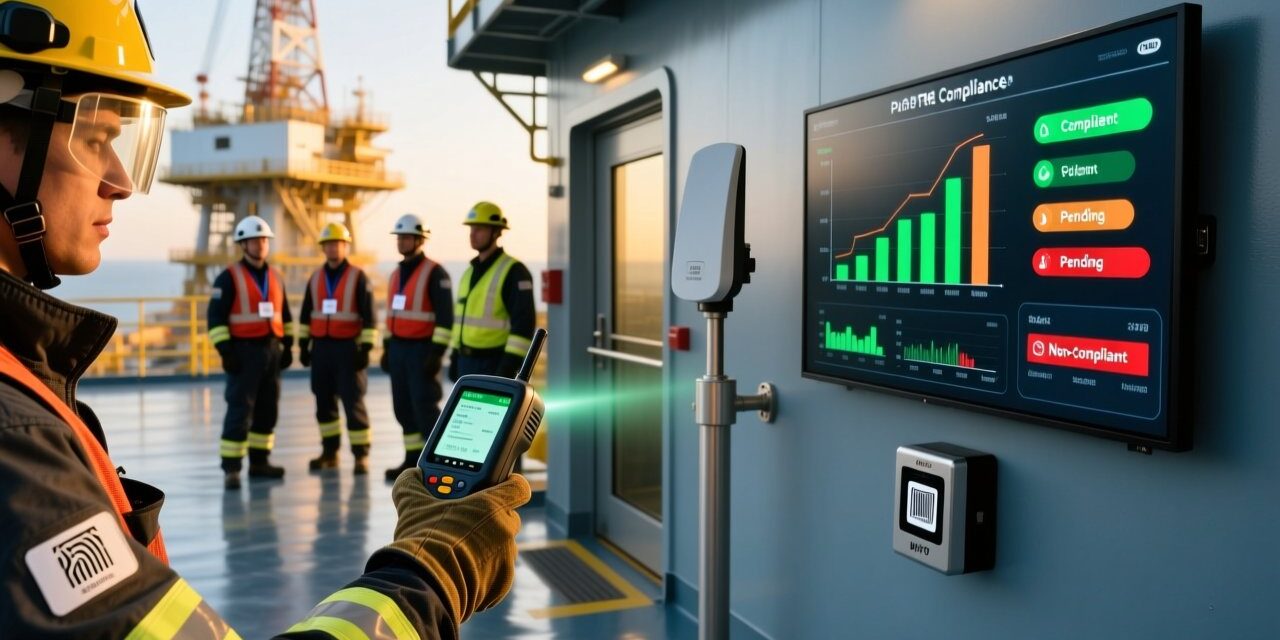
RFID-enabled PPE tracking replaces fragmented processes with a unified, automated system. Each hard hat, fire-resistant coverall, gas detector, safety harness, and respirator is embedded with a durable RFID PPS tag—engineered for chemical resistance, abrasion tolerance, and thermal stability up to 120°C. When scanned via fixed or handheld readers, the system instantly verifies: last inspection date, next due date, inspector ID, calibration status, and usage history.
Real-World Deployment: Rig-Wide Visibility in Seconds
At a major Abu Dhabi offshore platform, integration of UHF RFID reader modules at crew access gates and tool cribs reduced pre-shift PPE verification from 12 minutes per team to under 90 ثانية. All gear—including flame-retardant gloves tagged with UHF flexible RFID inlays—is automatically logged upon entry and exit. Data syncs to cloud-based dashboards aligned with ISO 45001 reporting frameworks.
RFID Tag Selection Criteria for Harsh Rig Environments
Selecting the right RFID tag is foundational—not an afterthought. In high-salinity, high-UV, hydrocarbon-rich environments, generic tags fail rapidly. Key selection criteria include:
- Material Compatibility: Tags must bond securely to rubber, neoprene, Nomex®, and carbon-fiber composites without delamination.
- On-Metal Performance: For metal-framed respirators or steel-toed boots, use tamper-proof flexible UHF on-metal RFID tags.
- Environmental Rating: IP68 sealing and UV-stabilized encapsulation are non-negotiable for outdoor rig decks.
- مجموعة القراءة & Angle Stability: Minimum 3-meter read range at ±60° orientation ensures reliable scanning during rapid crew movement.
- Chip Certification: Impinj Monza R6 or R8 chips preferred for EPC Gen2v2 compliance and cryptographic authentication support.
Integration Without Disruption
RFID PPE tracking doesn’t require replacing legacy ERP or CMMS systems. Through standardized REST APIs, data flows seamlessly into SAP EHS, IBM Maximo, or Oracle Primavera. لدينا industrial RFID reader integration kits include pre-certified firmware and configuration templates for GCC-specific workflows—accelerating time-to-value from months to days.
الأسئلة المتداولة
- Can RFID tags withstand exposure to hydrocarbons and salt spray?
Yes—our RFID PPS tags are chemically bonded with polyphenylsulfone housings rated for continuous immersion in diesel, crude oil, and seawater. - Do these systems comply with UAE and Saudi regulatory documentation requirements?
Absolutely. Audit logs generated by our RFID asset tracking system meet UAE Civil Defense Code 2026 digital record retention mandates and Saudi Aramco SAES-H-102 traceability standards. - Is worker privacy protected in RFID-enabled PPE tracking?
نعم. Systems are designed for equipment-centric identification only—no biometric data, GPS location, or personal identifiers are captured or stored. - What’s the typical ROI timeline for PPE RFID deployment?
Based on recent deployments across Qatar and Oman, full ROI is achieved within 8–14 months—driven by reduced PPE loss, eliminated manual audit labor, and avoided non-compliance penalties.
Ready to eliminate PPE compliance gaps on your Gulf oil rigs? Contact RFIDHY today for a tailored technical assessment—including environmental stress testing of candidate tags, reader placement simulation, and integration roadmap aligned with your existing CMMS or HSE platform. our manufacturing capabilities