
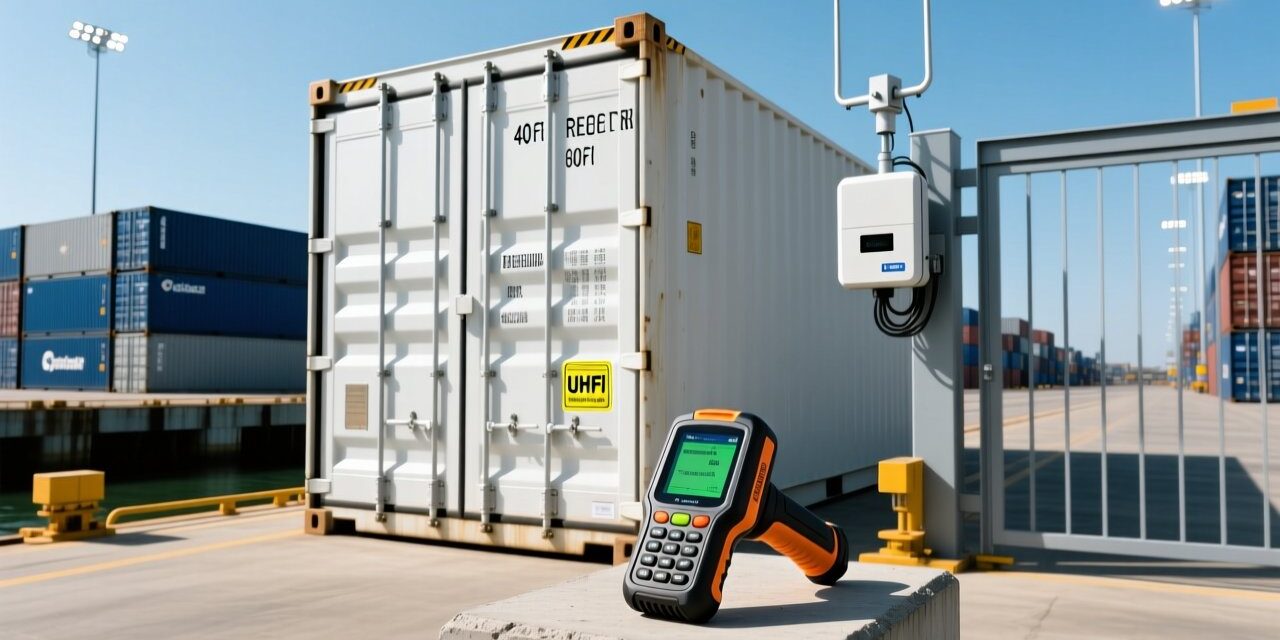
The Cold Chain Theft Challenge in East Africa: A Growing Crisis
The East African cold chain corridor, stretching from Mombasa to Kigali and beyond, is vital for the region’s food security and pharmaceutical supply. ومع ذلك, cargo theft remains a persistent and costly threat. Industry estimates suggest that reefer container theft accounts for up to 15% of total cold chain losses, with organized criminal networks targeting high-value frozen and chilled products. The lack of tamper-proof seals and real-time monitoring allows thieves to access, pilfer, or substitute cargo without immediate detection, eroding trust and raising insurance premiums. In this environment, precise, tamper-evident asset tracking is no longer optional—it is a business continuity requirement.
Mapping the Cold Chain Vulnerability Landscape
East Africa’s logistics infrastructure, while improving, still faces gaps in secure handling at transit depots and border crossings. Traditional mechanical seals can be replicated or bypassed with simple tools. Paper-based checklists and manual inspections often fail to capture unauthorized openings. The result is a climate where stolen goods enter local black markets, often indistinguishable from legitimate inventory. This not only leads to direct financial losses but also damages brand reputation and leads to regulatory non-compliance, especially for temperature-sensitive healthcare products.
How RFID Technology Transforms Cargo Security and Visibility
تحديد الترددات الراديوية (وتتفاعل) provides an intelligent, automated layer of security that mechanical seals cannot match. Unlike barcodes or visual checks, RFID seal tags incorporate a microchip and antenna, transmitting a unique identifier when interrogated by a reader. The most advanced seals feature tamper-detection circuitry that irreversibly changes the tag’s response if the seal is broken or cut. By deploying UHF RFID readers at key checkpoints—port gates, container yards, and customs bonded areas—operators can automatically verify seal integrity and track cargo movements in real time. This capability alone has shown to reduce theft incidents by up to 60% in analogous high-risk corridors.
Technical Deep Dive: RFID Seal Tag Specifications for Cold Chain
Selecting the right RFID seal tag for reefer containers requires understanding operational environments. Tags must withstand extreme cold, condensation, and physical stress during container handling. The table below outlines critical technical parameters to consider:
| البارامتر | Typical Specification | Importance for Cold Chain |
|---|---|---|
| تردد التشغيل | التردد فوق العالي (860-960 CH4) | Longer read range up to 10 m, ideal for portal scanning |
| Tag IC (رقاقة) | Impinj Monza R6, M700 series | High sensitivity, المضادة للاصطدام, long data retention |
| الذاكرة | 128-بت ل EPC, optional user memory | Encodes container ID, seal number, cargo type |
| Tamper Detection | Conductive loop or breakable circuit | Immediate “seal broken” status on reader query |
| المواد | القيمة المطلقة, ذكر المكتب الصحفي, or metal-alloy housing | Resilience to -40°C to +70°C and moisture ingress |
| Ingress Protection | IP67 or IP68 | Dustproof, withstands high-pressure washdowns |
Why UHF Passive RFID Is the Preferred Choice
Passive UHF RFID tags require no battery, drawing power from the reader’s signal. This means indefinite service life and no maintenance, crucial for reusable seals on leased containers. Combined with handheld RFID scanners, inspectors can verify seal status from a safe distance even when containers are stacked, significantly speeding up turnaround times at transshipment hubs. For fixed installations, industrial readers with four antenna ports can monitor multi-lane entries simultaneously, integrating with weighbridge and CCTV systems for a tamper-proof audit trail.
Deploying an RFID-Based Anti-Theft System: Practical Guidelines
Implementing a cold chain cargo security solution requires a phased approach. Start with a pinch-point analysis—identify locations where containers are most vulnerable, such as port exits, border crossings, and intermediate warehouses. Install fixed RFID readers at these gates and equip dock staff with rugged handheld terminals. Integrate reader data into a cloud-based logistics platform to trigger automatic alerts if a seal is reported broken or if a container deviates from its planned route. The following best practices ensure maximum ROI:
- Tag Placement: Affix reusable RFID seals on the container locking bar where any tampering attempt will physically break the tag’s conductive loop.
- Reader Network Design: Use a mix of overhead and side-mounted antennas to read tags regardless of container orientation.
- Data Integration: Connect RFID event data with your ERP or TMS via APIs to enable automated cargo release and customs clearance.
- Cold Environment Validation: Test tag performance at the lowest expected temperature to avoid read failures due to signal attenuation in frozen cargo holds.
- Staff Training: Train personnel on proper seal application and exception handling protocols to maintain the integrity of the chain of custody.
Measurable Impact: Reducing Theft by 60% and Beyond
Organizations that adopt RFID-based seal monitoring consistently report dramatic theft reductions. على 60% benchmark comes from aggregated logistics security studies where high-frequency scanning at every handoff eliminates the window of opportunity for pilferage. Real-time alerts enable immediate investigation, and the permanent digital record serves as strong evidence for law enforcement and insurance claims. وعلاوة على ذلك, the data generated—exact times and locations of seal events—provides actionable intelligence to identify high-risk segments and root out collusion. In East Africa, where multiple borders and complex clearance processes create extended dwell times, this visibility is transformative for cold chain stakeholders, from exporters of fresh produce to importers of vaccines.
الأسئلة المتداولة
1. Can RFID seal tags work at the extremely low temperatures inside a reefer container?
نعم. Industrial-grade UHF RFID seal tags are designed to operate reliably from -40°C to +70°C. The plastic housings are engineered to prevent brittleness and condensation build-up, ensuring consistent read performance even in deep-freeze logistics.
2. How does the tamper detection feature actually work?
Tamper-detection RFID seals contain a fragile conductive loop within the tag’s structure. When the seal is physically broken, cut, or removed, the loop is interrupted, permanently altering the tag’s identifier or setting a tamper bit in its memory. Any subsequent read by a UHF RFID reader will immediately flag the seal as compromised.
3. What is the typical read range for these RFID seals in a port environment?
A standard UHF RFID seal tag can be read from up to 10–12 meters when using a fixed reader with a high-gain antenna. Actual range may vary based on the presence of metal interference and container stacking density, but a properly tuned system can reliably capture tags at typical gate widths.
4. Are these seals reusable, or are they designed for one-time use?
Our recommended RFID seal tags are reusable. Once the container arrives and the seal is removed by authorized personnel, the tag can be reset and reassigned for the next trip, significantly lowering the per-shipment cost compared to disposable alternatives.
5. Can the RFID anti-theft system integrate with existing supply chain software?
Absolutely. Most industrial RFID readers support standard communication protocols (HTTP, MQTT, TCP/IP) and can push event data to any middleware or cloud platform via API. RFIDHY’s engineering team can assist with seamless integration into your TMS, Wms, or ERP system.
Secure Your Cold Chain with RFIDHY
Don’t let cargo theft undermine your East African cold chain operations. RFIDHY offers a complete portfolio of tamper-evident RFID seals, high-performance قارئات RFID المحمولة باليد, and ruggedized fixed readers designed for demanding port and logistics environments. Contact our technical team today to discuss a custom pilot program and start reducing theft by 60% أو أكثر.