
مقدمة: The Imperative of Inclusive Tourism
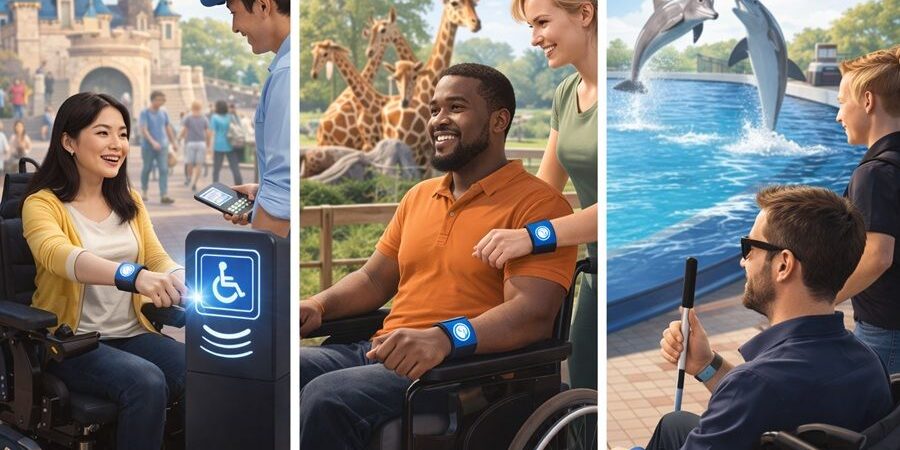
As global tourism standards evolve, accessibility is no longer optional—it’s a strategic and regulatory priority. For scenic area operations and management personnel, delivering equitable experiences to visitors with mobility, sensory, or cognitive disabilities requires more than ramps and signage. It demands intelligent, integrated systems that anticipate needs while preserving dignity and autonomy. RFID wristbands—durable, contactless, and programmable—have emerged as a proven enabler of accessible tourism passes, transforming how parks, heritage sites, and nature reserves serve diverse guests.
Why RFID Wristbands Are Ideal for Accessible Tourism Infrastructure
Unlike traditional tickets or cards, RFID wristbands offer unique advantages for inclusive access:
- Hands-free, touchless interaction: Critical for guests with limited dexterity or those using assistive devices.
- دائم & tamper-resistant design: مقاومة للمياه, sweat, and wear—ideal for outdoor environments and extended use.
- Multi-application integration: One wristband can encode entry permissions, priority boarding, real-time location (with consent), emergency alerts, and personalized service preferences.
- Back-end interoperability: Seamlessly integrates with existing access control, visitor management, and CRM systems via standard protocols (e.g., ISO 14443, ISO 15693).
Real-World Applications in Scenic Operations
Leading destinations are already deploying RFID wristbands to enhance accessibility:
- Priority access lanes: Guests with registered accessibility needs bypass queues at ticket gates, transport hubs, or exhibit entrances—automatically recognized via fixed or handheld readers (قارئ RFID & وحدة نمطية).
- Wayfinding support: Paired with Bluetooth beacons or indoor positioning systems, RFID wristbands trigger audio navigation cues or map highlights on companion apps.
- Caregiver coordination: Linked wristbands allow staff to discreetly monitor group proximity and initiate assistance if separation occurs—especially valuable in crowded or complex terrain.
- Customized service triggers: At food kiosks or rest areas, scanning the wristband retrieves dietary requirements or preferred communication modes (e.g., sign language interpreter request).
الامتثال, Privacy, and Operational Confidence
RFIDHY designs its تتفاعل الأساور to align with international accessibility frameworks—including WCAG 2.1 AA principles and EN 301 549—and supports GDPR- and CCPA-compliant data handling. All sensitive information remains encrypted; no biometric data is stored on the tag itself. Data residency and processing logic reside exclusively within the operator’s secure infrastructure.
For scenic area managers, this means full control over data governance, audit trails, and system scalability—without third-party dependencies.
Implementation Best Practices
To ensure successful deployment:
- Co-design with disability advocates: Involve users early in testing wristband ergonomics, reader placement, and interface feedback loops.
- Staff training modules: Equip frontline teams with quick-reference guides on wristband recognition, troubleshooting, and empathetic engagement protocols.
- Redundancy planning: Offer physical backup credentials (e.g., NFC-enabled ID cards) for guests who prefer alternative formats.
- Phased rollout: Begin with high-traffic zones (entrances, shuttle terminals) before expanding to interactive exhibits or dining venues.
RFIDHY provides end-to-end technical documentation, API specifications, and on-site integration support tailored to legacy and cloud-based property management systems.
Frequently Asked Questions
- Do RFID wristbands work for guests with pacemakers or other medical implants?
نعم. RFIDHY’s passive UHF and HF wristbands operate at safe, non-ionizing frequencies (13.56 MHz or 860–960 MHz) and comply with ICNIRP exposure guidelines. No interference with medical devices has been reported under normal operating conditions. - Can one wristband serve multiple guests (e.g., family members with varying needs)?
No—each wristband is uniquely encoded per individual to ensure accurate access rights and personalized services. ومع ذلك, linked accounts can be managed centrally via your administration portal. - What happens if a wristband is lost or damaged?
Operators can instantly deactivate the lost device and issue a replacement with identical permissions via backend system—no re-registration required. - Are RFID wristbands recyclable or environmentally sustainable?
نعم. RFIDHY offers PVC-free TPU and silicone variants, and all materials meet RoHS and REACH standards. Custom eco-labeling and take-back programs are available upon request.
Ready to build a more inclusive, efficient, and memorable visitor experience? RFIDHY offers scalable, certified RFID wristband solutions purpose-built for scenic area operators—backed by factory-level quality control (قوة المصنع) and global deployment expertise. Contact our tourism solutions team today for a customized implementation roadmap and sample kit.