
Overview
Animal microchip tags are implantable RFID tags commonly used for the identification and management of pets, laboratory animals, and farmed animals. By implanting RFID chips into animals, long-term tracking and precise identification of information have become an important technical means in modern animal management.
1. What are RFID animal microchip tags?
RFID animal microchip tags are electronic tags that utilise radio frequency identification (RFID) technology. They are typically encapsulated in biocompatible glass tubes, are small in size, and have stable performance, enabling long-term implantation under the skin or within the body of animals.
Chip dimensions: Common specifications include 2.12 × 12 mm, 1.4 × 8 mm, and 1.25 × 7 mm;
Chip type: Most are low-frequency (LF, 134.2 kHz), compliant with ISO 11784/11785 standards;
Reading method: Scanned at close range using an RFID reader, without requiring a power source;
Data content: Typically includes a unique ID number that can be linked to an animal’s identity record in a database.
2. How does an RFID animal microchip work?
RFID animal microchip tags primarily consist of a chip, antenna, and encapsulation housing. After implantation, the reader emits low-frequency electromagnetic waves to activate the chip, which operates via induced current and returns its ID number to the reader.
Passive chips: No built-in battery, with a lifespan of up to 20 years;
Reading distance: Generally 2–12 cm, depending on the reader’s sensitivity;
Data security: The chip ID is non-modifiable and has strong anti-counterfeiting capabilities;
Protective design: Sealed in a glass tube, resistant to acids and alkalis, high-temperature resistant, and highly biocompatible.
III. Application Scenarios of RFID Animal Microchips
1. Pet Identification and Management
Used by veterinary clinics for medical record documentation and tracking;
Used by animal shelters for lost pet reclamation;
Used by governments to register pet identities and promote pet ownership registration.
2. Laboratory Animal Management
Unique individual identification for laboratory mice, rabbits, and other small animals;
Used for tracking drug experiment data to improve experimental accuracy;
Experimental data is bound to the chip ID to prevent confusion.
3. Livestock Farming
Tracking the entire life cycle of livestock such as pigs, cattle, and sheep from birth to slaughter;
Disease tracing, pedigree records, and feeding data management;
An important component of the national agricultural information infrastructure.
4. Wildlife Monitoring
Used by national parks and research institutions for wildlife population monitoring;
Migration tracking, health management, and prevention of poaching;
Used in conjunction with satellite-enabled collars to form a complete data chain.
IV. Advantages of RFID Animal Microchip Tags
📌 Uniqueness : Each chip ID is globally unique and cannot be replicated
📌 Durability: Implanted once for lifetime use, no replacement required
📌 Safety: Encapsulation materials are safe and cannot be detected by animals
📌 Automation :Automatic identification after scanner reading, reducing manual intervention
📌 Digitalisation :Integrated with databases for comprehensive digital management
5. How to Implant and Use RFID Animal Chips
1. Implantation Method
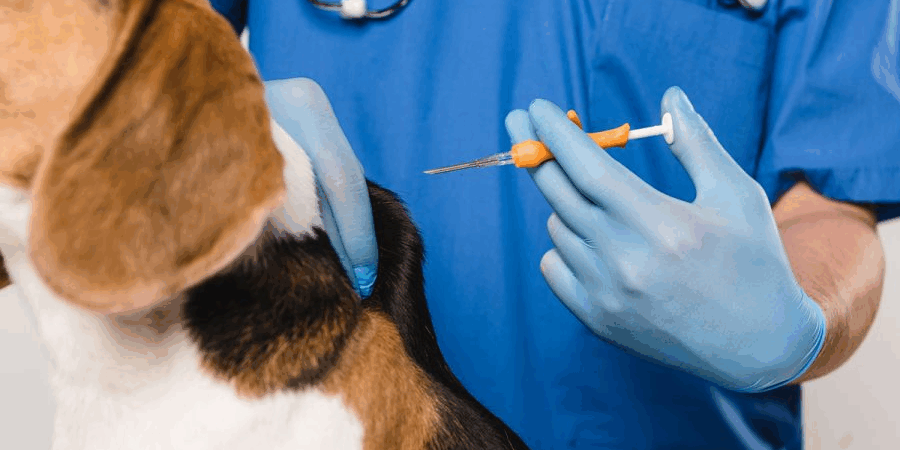
Use a special syringe to implant the chip under the animal’s scapula;
Simple operation, completed in seconds;
Disinfection is required before and after the procedure.
2. System Integration
The chip ID is linked to the pet’s records or livestock system database;
Information is read using a handheld reader or access control reader;
Software can record animal health, behaviour, location, and other data.
6. Considerations When Selecting Animal RFID Microchips
Whether it complies with the ISO 11784/11785 international standards;
Is the packaging material bioglass or polymer?
Has it undergone disinfection treatment?
Does the supplier have export qualifications and support for a tracking system?
Are syringes and readers provided as accessories?
7. Future Development Trends
With the development of the Internet of Things and digital agriculture, RFID animal microchips will evolve in the following directions:
⬆️ Expanded data functionality: capable of temperature monitoring and physiological data sensing;
🔗 System interoperability: Integration with the national agricultural big data platform;
📱 Mobile app connectivity: Users can view pet/animal information anytime;
🛡️ Anti-counterfeiting and encryption upgrades: Preventing tampering with chip information in the black market.
8. Conclusion: Embarking on a new era of animal identity digitisation
RFID animal microchip tags not only improve the efficiency and accuracy of animal identification, but also promote the informatisation and traceability of animal management. They are gradually becoming one of the infrastructure components in the pet industry, livestock farming, scientific research monitoring, and other fields.
For enterprise users, choosing the right microchip product will bring higher levels of intelligence and professionalism to animal identification.
For more information,please contact us.