
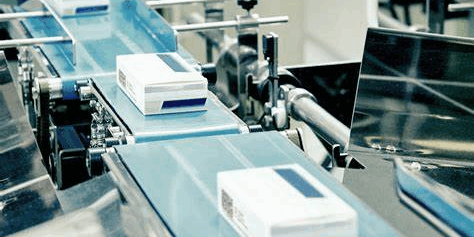
What is an RFID industrial data carrier?
An RFID industrial data carrier (RFID Data Carrier) is an electronic identification device specifically designed for industrial environments. It can record, store, and transmit object information, enabling digital tracking and management of materials, tooling, processes, and other aspects throughout the entire production process.
Compared to ordinary labels, RFID industrial data carriers have stronger environmental adaptability, including anti-metal, high-temperature resistance, dustproof and waterproof, and high impact resistance features, and are widely used in smart manufacturing, automated production lines, equipment manufacturing, mould management, warehousing and logistics, and other fields.
Why choose RFID industrial data carriers?
| Requirement | Barcode Recognition | RFID Industrial Carrier Tag |
|---|---|---|
| Multi-tag recognition capability | Not achievable | simultaneously recognise multiple tags |
| High-temperature, humid environments | Not applicable | High adaptability |
| Reusability | Not possible | Supported |
| Read/write capability | Not supported | repeatedly written with data |
| Automated production line compatibility | Low | High |
Main Application Areas of RFID Industrial Tagging Systems
1. Automotive Manufacturing
The automotive industry has complex production processes, numerous production steps, and frequent changes in product varieties. Tagging systems installed on component pallets, AGV carts, and tooling fixtures can record workpiece IDs, production processes, status information, and more, enabling real-time tracking.
Value Proposition:
Multi-model mixed-line management
Transparent and controllable production progress
Automatic process switching and error prevention
Precise and efficient component traceability
2. Intelligent Fixture Management
Fixtures are critical production tools. By managing each fixture’s lifecycle, usage frequency, and maintenance records via tags, efficiency is enhanced, and quality issues caused by excessive wear are prevented.
Value Proposition:
Precise control of fixture lifespan
Achieve automatic identification and assembly verification
Reduce the incidence of human errors
Application of RFID industrial tags in warehousing and logistics
In modern smart warehouses, RFID tags are widely used for pallet, shelf, container, and vehicle identification:
📌 Application scenarios:
Automatic forklift intelligent identification of goods information
Automatic binding of pallet and shelf information
Automated identification and data synchronisation during inventory entry/exit
Location management of high-value assets (e.g., moulds, battery packs)
🎯 Value Output:
Improved inventory counting efficiency
Prevention of misdelivery or misplacement of goods
Enhanced real-time accuracy of inventory data
Strengthened traceability capabilities in logistics operations
The Value of RFID Tags in Mould Management
Moulds are costly and have limited lifespans; improper management can lead to quality issues or increased maintenance costs. By installing industrial-grade RFID tags on moulds, they can be managed digitally throughout their entire lifecycle:
Unique binding of mould IDs to prevent incorrect mould selection
Usage count tracking for lifespan warnings
Integration with ERP systems to generate maintenance schedules
Visualisation of mould asset management
Applications of RFID industrial tags in electronics manufacturing
In electronics manufacturing, such as SMT assembly, PCBA testing, and product assembly, there are extremely high requirements for production traceability and line change efficiency. Carriers enable ‘product movement with information tracking,’ ensuring high consistency between each board and its data.
Implementation results:
Achieve board-level production data recording
Seamless switching between multiple product types
Automatic production line data synchronisation and quality traceability
Technical parameters and selection recommendations for RFID carriers
| Parameter | Content range |
|---|---|
| Operating Frequency | HF(13.56MHz) / UHF(860~960MHz) |
| Enclosure Material | PPS, ABS, ceramic, stainless steel, silicone, etc. |
| Installation Method | Embedded, screws, adhesive, soldering, magnetic attraction |
| Operating Temperature | -40℃ ~ +250℃ |
| Metal Resistance | Supported (requires metal-resistant design) |
| Data Capacity | 128bit |
| Communication Protocol | ISO 15693 / ISO 18000-6C |
| Service Life | Over 10 years, with over 100,000 read/write cycles |
Integration of Industrial RFID Tags with Industry 4.0
RFID tags, as the ‘eyes of the industrial brain,’ are empowering Industry 4.0 in the following ways:
Integration with MES systems for real-time data exchange
Collaboration with PLCs/robots to achieve flexible production
Collaboration with big data/AI to achieve predictive maintenance
Integration with 5G and edge computing to support distributed decision-making
The German Industry 4.0 initiative explicitly states: ‘RFID technology is one of the foundational technologies for achieving smart manufacturing.’
Case References: Successful Applications of RFID Tags
| Industry | Customer Case | Application Description |
|---|---|---|
| Automotive Manufacturing | BMW | Full-process tracking of vehicle assembly |
| Mould Processing | Haier Mould Factory | Each mould is assigned a unique ID for lifecycle management |
| Electronics Manufacturing | Foxconn | Automated recording of the entire PCBA workflow |
| Warehouse Logistics | JD Auto Warehouse | Pallet intelligent identification, paperless scheduling |
Deployment Recommendations and Considerations
Environmental Assessment: Select high-temperature, waterproof, and impact-resistant packaging
Read/Write Distance Assessment: UHF is suitable for long-range applications, while HF is suitable for precise identification in close proximity
Interference Assessment: Metal, water surfaces, and high-frequency equipment must be assessed for potential interference sources
System Integration: Conduct compatibility testing with ERP/MES interfaces
📩 Conclusion
RFID industrial tags, as a key enabling technology for smart manufacturing, are redefining factory management logic. From raw materials to product shipment, every stage can achieve transparent, efficient, and traceable production processes through ‘information accompaniment.’
If you are seeking RFID tag solutions tailored for industrial environments, please contact us. We offer customised products and one-stop deployment services.