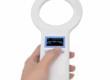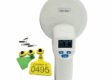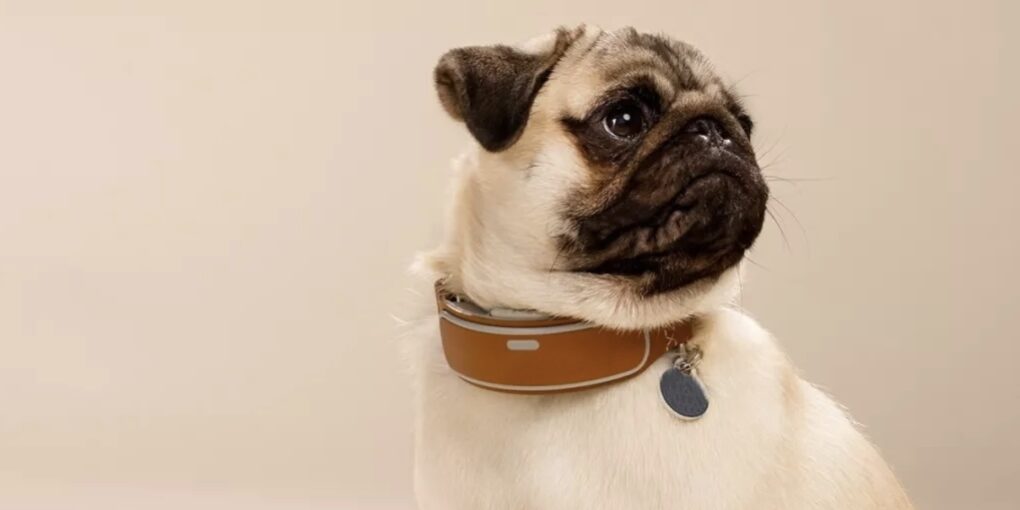
When a stray cat is taken in by a rescue centre, staff members gently place a scanner near its neck, and a string of codes immediately appears on the screen — the cat’s vaccination records, previous owner information, and health records are instantly displayed. This is not a scene from a science fiction film, but the everyday reality of RFID animal microchips unfolding globally. These rice-grain-sized electronic tags, centred on wireless radio frequency technology, are becoming the invisible link connecting animals to the digital world, redefining the efficiency and compassion of animal management.
1. Technical Core: Passive Design for Lasting Protection
The magic of RFID animal microchips lies in their ‘passive, sustainable’ design philosophy. Unlike trackers that require regular battery replacements, mainstream chips use backscatter coupling technology to obtain energy from the radio frequency signals emitted by readers, enabling data transmission. This design aligns the chip’s lifespan with the animal’s life cycle, making it effective for life with a single implantation. Tracking data from a certain animal hospital shows that chips implanted for 10 years still maintain a 98% read success rate, far exceeding the 3-5 year lifespan of traditional electronic collars.
In terms of technical specifications, modern chips now support the 134.2 kHz international standard frequency, ensuring global compatibility. Taking ISO 11784/11785 standard chips as an example, they have a diameter of just 2.12 mm and a length of 12 mm. They are implanted subcutaneously in animals using a specialised syringe (typically between the neck and shoulder blades), with the procedure taking less than 10 saniye. The reading distance can reach 10–30 cm, and when used with a portable scanner, it can quickly identify animals even when they are moving. More advanced UHF-band chips extend the reading distance to 5 metres, making them suitable for bulk identification in large-scale farms.
Safety is a core consideration. The chip is encapsulated in medical-grade polyimide and has passed ISO 10993 biocompatibility certification, with a tissue reaction rate of less than 0.3% after implantation. Long-term monitoring data from the U.S. FDA shows that among over 100 million RFID chips implanted in pets, the incidence of severe adverse reactions is only 0.001%, far lower than the adverse reaction rate of vaccinations.
Ⅱ. Application Landscape: Comprehensive Management from Farms to Homes
Livestock Industry: Transitioning from Free-Range to Precision Farming
In modernised farms in Inner Mongolia, each cow has an RFID microchip implanted behind its ear. When the herd passes through an intelligent entrance guard, readers fixed to the doorframe automatically identify individual animals and synchronously upload data such as feeding times, activity levels, and body temperature to the management platform. Through algorithmic analysis, the system can accurately determine the estrus period of each cow, increasing breeding success rates by 35%. A ranch owner calculated the benefits: after using the chips, feed waste decreased by 20%, labour costs dropped by 40%, and annual income per cow increased by over 800 Yuan.
More critically, food safety traceability is ensured. The EU mandates that beef entering the market from 2025 onwards must be accompanied by RFID chip traceability information. Consumers can scan the QR code on the packaging to view the cow’s place of birth, rearing process, and quarantine records, achieving full transparency from ‘farm to table.’ This traceability enabled rapid identification of the affected batches during the 2024 European beef recall incident, minimising losses.
Pet management: ensuring every lost pet finds its way home
Tokyo’s pet registration system is a model example. Sonra 90% of the city’s pet dogs were implanted with RFID chips, the recovery rate for lost dogs jumped from 30% Hedef 92%. The 15-digit unique code in the chip is linked to the municipal database, which includes the owner’s contact information and the pet’s health records. Even if the pet wanders across city borders, animal shelters in other regions can identify its identity through the national networked system.
Applications in the pet healthcare field are particularly heartwarming. A case from a pet hospital in Shenzhen shows that when a cat implanted with a chip suddenly falls ill, doctors can quickly access its allergy history and past medical records to avoid misdiagnosis risks. The chip can even record daily activity levels, providing data support for the treatment of chronic conditions like obesity. One owner remarked, ‘It’s like a “digital medical record” for pets, which can save lives in critical moments.’
Wildlife Conservation: Technology Empowering Ecological Balance
In Kenya’s elephant reserves, each adult elephant has a specially designed RFID chip implanted in its ear. When elephants approach the reserve fence, underground readers trigger an alarm, alerting patrol teams to guard against poachers. Since the implementation of this technology, elephant poaching rates in the area have decreased by 67%. Daha da önemlisi, the migration patterns recorded by the chips have helped scientists discover new routes that elephants take to and from water sources, providing scientific basis for ecological reserve planning.
For small wildlife, miniaturised chips demonstrate unique advantages. RFID tags installed on hummingbirds weigh only 0.1 Gram, causing no impact on their flying ability. Through readers placed in flower beds, Üzerinde 5,000 feeding behaviours were recorded, revealing for the first time the dietary differences between different hummingbird populations. This ‘non-intrusive monitoring’ allows humans to glimpse the most authentic survival state of wildlife.
ııı. Decoding the Advantages: Why It Outperforms Traditional Management Methods
Compared to traditional identification methods such as collars and ear tags, RFID animal microchips offer overwhelming advantages. In terms of physical security, the chip remains securely implanted under the skin. A comparison trial at a certain ranch showed that the retention rate of the chip reached 99.5%, while the loss rate of ear tags was as high as 15%. The chip also exhibits stronger resistance to environmental interference, maintaining stable readability even in extreme conditions such as mud, rain, kar, and high temperatures.
The expansion of data dimensions is even more revolutionary. Traditional ear tags can only record identity information, while RFID chips can collect multi-dimensional data through external sensors (such as temperature and activity modules). Smart chips used at a horse racing track can transmit real-time heart rate data for horses, automatically alerting trainers when values exceed thresholds to prevent exercise-related injuries.
In terms of cost, the long-term benefits of a single implantation are significant. Although the unit price of the chip is 3-5 times that of traditional ear tags, its lifetime usage cycle reduces the annual cost by 60%. A report by the British Farming Association shows that farms using RFID chips have seen a 28% reduction in overall management costs, with an average return on investment period of 14 ay.
4. Gelecekteki Outlook: Evolution from Identification to Prediction
Technological advancements are unlocking new possibilities for RFID animal microchips. The emergence of hybrid active-passive chips resolves the trade-off between reading distance and power consumption — using passive mode for energy efficiency at close range and switching to active mode for data transmission at long distances, making them particularly suitable for wildlife tracking. Tarafından 2026, the reading distance of such chips is expected to exceed 100 metres.
The integration of AI algorithms will enable ‘predictive management.’ A system developed by a research team at the University of California, Abd, analyses activity data collected from RFID chips in cattle herds to predict the risk of mastitis three days in advance with 89% doğruluk. This ‘preventive healthcare’ model has the potential to redefine the health management system in the livestock industry.
Balancing ethics and safety has become a new challenge. Upgraded encryption technology ensures data privacy, with the latest EU standards requiring chip data to be encrypted via blockchain to prevent information leaks. Research and development of biodegradable chips is also progressing, with samples using silk protein-based materials capable of naturally degrading within six years in animal bodies, offering new options for ecologically sensitive research.
From cattle herds on farms to pets in cities, from the giants of the African savannah to hummingbirds in rainforests, RFID animal microchips are quietly transforming the world. They are not only digital IDs but also guardians of animal health, maintainers of ecological balance, and communicators between humans and animals. As the warmth of technology infuses every data transmission, we may discover that assigning a digital code to life is ultimately about respecting every unique life.
RFID etiketi, Proximity Card of RFIDHY RFID, RFID üretici

RFID Animal Microchips: Giving Life a Digital ID
Buradasınız:
- Ana sayfa
- Şirket haberleri
- RFID Animal Microchips: Giving Life…