
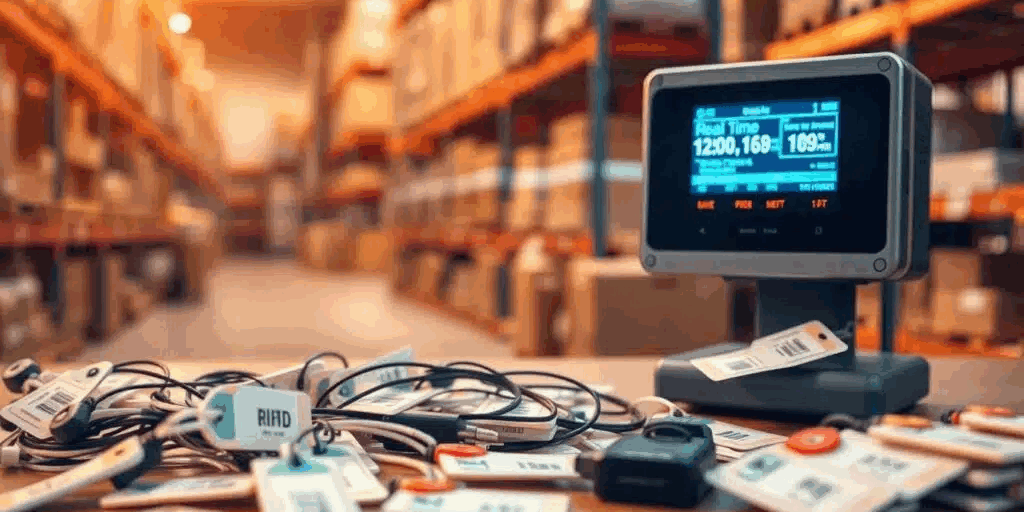
In the dazzling world of luxury goods, qualidade, uniqueness, and brand reputation are highly valued. No entanto, this industry has long been plagued by problems such as counterfeit products and complex supply chain management. Nos últimos anos, a technology known as RFID (Identificação por rádio freqüência) has emerged as a powerful tool to help the luxury goods industry overcome these challenges.
A Powerful Weapon Against Counterfeits
The prosperity of the luxury goods market has also attracted the attention of criminals, leading to a surge in counterfeit products. According to relevant data, the global luxury goods market suffers losses of billions of dollars annually due to counterfeit products. The emergence of RFID tags has brought new hope to anti-counterfeiting efforts in the luxury goods industry. Cada etiqueta RFID tem um código de identificação único, akin to the product’s ‘ID card,’ and the information within the tag is encrypted, making it difficult to replicate or tamper with. Consumers can use a smartphone with NFC (Near Field Communication) functionality or a dedicated RFID reader to simply hold it near the RFID tag on the product, instantly accessing detailed product information and verifying its authenticity by comparing it with the brand’s official database. After a well-known international jewellery brand adopted RFID technology, the counterfeit rate dropped significantly from 15% Para 0.3%.
Optimising supply chain management
The luxury goods supply chain involves numerous complex stages, from raw material procurement, production and processing, armazenagem e logística, to final sales. Traditional management methods, such as manual inventory checks and barcode scanning, are not only inefficient but also prone to errors. RFID technology enables real-time visibility across the entire supply chain. Em armazéns, readers installed at goods entry and exit points automatically identify luxury goods with RFID tags. The system instantly updates inventory lists based on information transmitted by the readers, greatly improving inventory efficiency. From factories to retail counters, the location, temperatura, and even operator information of products at key nodes can be precisely recorded. This not only helps companies accurately track inventory levels to avoid stockouts or overstocking but also effectively prevents unauthorised diversion of goods by distributors. A European luxury luggage brand, por exemplo, improved supply chain inventory efficiency from requiring 18 people over three days to just two people completing the task in two hours using an RFID system, demonstrating significant progress.
Enhancing the consumer experience
In today’s pursuit of exceptional shopping experiences, RFID technology also offers consumers numerous conveniences. When selecting products in-store, if consumers are interested in information such as the origin or manufacturing process of a luxury item, they can simply scan the RFID tag to view the relevant details. Some brands have also leveraged RFID technology to offer value-added services, such as allowing consumers to earn points after scanning the tag to verify authenticity, which can be redeemed for product maintenance, cleaning services, or participation in exclusive member activities. This interactive approach not only enhances consumers’ trust in the brand but also boosts their engagement and loyalty, activating a large number of inactive users.
Although RFID technology demonstrates immense potential in the luxury goods sector, its implementation faces certain challenges. Por um lado, the initial investment costs for RFID tags with reading devices are relatively high, which may pose financial pressures for some brands, especially niche luxury brands; Por outro lado, compatibility issues between systems across different brands and stages require further coordination and resolution. No entanto, as technology continues to advance and become more widespread, the cost of RFID tags is decreasing annually, the performance of UHF RFID readers and other devices is continuously improving, and the experience and methods for system integration are becoming increasingly mature.
Olhando para o futuro, RFID technology is poised to integrate deeply with cutting-edge technologies such as artificial intelligence and blockchain. By leveraging AI to analyse large volumes of RFID data, brands can gain more precise insights into consumer preferences, predict market trends in advance, and optimise product design and marketing strategies. Enquanto isso, the immutable nature of blockchain technology, when combined with RFID tags, will further strengthen product traceability systems, giving consumers greater confidence in the quality and origin of luxury goods. In this collision of technology and fashion, RFID tags will undoubtedly continue to shine, helping the luxury goods industry navigate the digital wave, safeguard brand value, and provide consumers with a better, more reassuring shopping experience, thereby reshaping the future landscape of the luxury goods industry.