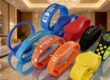
In the luxury goods industry, the value of a product lies not only in the rarity of its materials and the excellence of its craftsmanship, but also in the trust that comes from being able to verify its authenticity. As the core medium connecting the physical form of luxury goods with the digital world, Tag RFID, with their concealability, uniqueness, and data-carrying capacity, have become a key force in solving industry pain points and upgrading the industrial ecosystem.
1. Anti-counterfeiting and Traceability: A Single Tag, Building a Solid Authenticity Defence
The greatest threat to luxury goods is the erosion of brand trust caused by counterfeits. Traditional anti-counterfeiting measures, such as paper labels and laser markings, are easily replicated and difficult to verify, making them ineffective against the technological advancements of counterfeiters. The emergence of RFID tags has created an ‘unforgeable digital identity’ for each luxury item, cutting off the possibility of counterfeit circulation at its source.
These labels are not merely identifiers but ‘micro-databases’ embedded with encrypted chips. During production, the labels are cleverly embedded in hidden locations within the product—such as the stitching gaps of leather goods, the metal edges of jewellery, or the label layers of ready-to-wear garments. This ensures they do not compromise the product’s aesthetics or quality while withstanding daily wear and tear and intentional removal. Ancora più importante, the information stored within the tags is absolutely unique: from raw material origins, through production processes, to factory inspection data, every piece of information is encrypted and cannot be altered or replicated.
Consumers need no special knowledge; simply scan the label using the brand’s official app or a dedicated reader at the store to instantly access complete information: not only can they quickly verify the authenticity of the product, but they can also gain insight into the craftsmanship behind it. For brands, by tracking data through the label, they can precisely identify the channels and stages where counterfeit products circulate, shifting from ‘reactive anti-counterfeiting’ to ‘proactive interception,’ thereby safeguarding the foundation of trust.
Ⅱ. Gestione della catena di approvvigionamento: One Tag, Streamlined Efficient Channels
The luxury goods supply chain is akin to a ‘high-value precision network,’ from sourcing scarce raw materials to global store distribution. Every link in the chain carries significant costs, and any oversight could result in substantial losses. The application of RFID tags has transformed this once ‘ambiguous and uncontrollable’ chain into a fully ‘visualised management’ process.
At the raw material stage, the tag acts as a ‘quality gatekeeper.’ Take the procurement of top-grade leather as an example: each piece of leather is tagged with a unique RFID tag upon acquisition from the farm, recording core information such as origin, grado, and tanning process. During subsequent transportation to the production workshop, the tag continuously synchronises location and temperature/humidity data in real-time, ensuring raw materials remain undamaged and unaltered during transit, laying the foundation for product quality.
In the production and warehousing stages, tags become ‘efficiency accelerators.’ Under traditional manual inventory counting methods, counting hundreds of items in a high-end luxury store would require several employees working an entire day, and errors such as missed or miscounted items were common. però, by scanning tags with RFID handheld devices, the entire inventory can be completed in minutes, with data synchronised in real-time to the cloud system, achieving nearly 100% accuratezza. Brand headquarters can view inventory status across all global stores and warehouses in real time via the cloud platform: if a particular handbag is selling out in North American stores, inventory can be immediately transferred from European bonded warehouses; if certain accessories are underperforming in Asian markets, production plans can be adjusted promptly to avoid capital stagnation.
In the logistics and distribution phase, the tags act as ‘safety guardians.’ During the transportation of luxury goods, the tags continuously monitor the transport environment: if any abnormalities occur, such as temperature fluctuations (ad es., risk of leather goods becoming damp), route deviations, or packaging damage, the system immediately issues an alert to ensure the safe delivery of goods to the destination.
3. Consumer experience: one tag, upgraded exclusive service
The core of luxury consumption is ‘emotional resonance.’ Consumers seek not only the product but also an exclusive experience throughout the entire process from purchase to after-sales service. RFID tags act as an ‘invisible bond,’ making the connection between brands and consumers closer and services more precise.
In physical stores, tags empower sales associates with ‘predictive service’ capabilities. When a consumer picks up a product, the store’s sensing devices automatically identify the product information via the tag and synchronously recommend matching options on the display screen — such as pairing a coat with a matching scarf from the same series, matching a handbag with a custom shoulder strap, or even showcasing the product’s styling scenarios (ad es., business settings, evening parties). If consumers have customisation needs, sales associates can quickly retrieve data via the tags to inform them of customisation timelines, available materials, and costs, eliminating the need for repeated form verification and significantly improving communication efficiency. Even more thoughtfully, the system records consumers’ Preferenze (such as colour, Materiale, and style) via the tags. When consumers return to the store, sales associates can prepare options that align with their preferences in advance.
Tag RFID, Proximity Card of RFIDHY RFID, Il produttore RFID

Tag RFID: The Invisible Guardian of Trust and Experience in the Luxury Items Industry
Tu sei qui:
- Casa
- Novità di prodotto
- Tag RFID: The Invisible Guardian…