Pushing the Limits: RFID Tracking in Extreme Thermal Environments
In specialized industries ranging from superconducting research and cryogenic storage to high-temperature manufacturing, the digital identity of assets is frequently affected by thermophysical factors. Standard RFID tags fail because their internal circuitry, Antenne, or encapsulation materials cannot withstand the mechanical stresses of extreme temperature cycling.
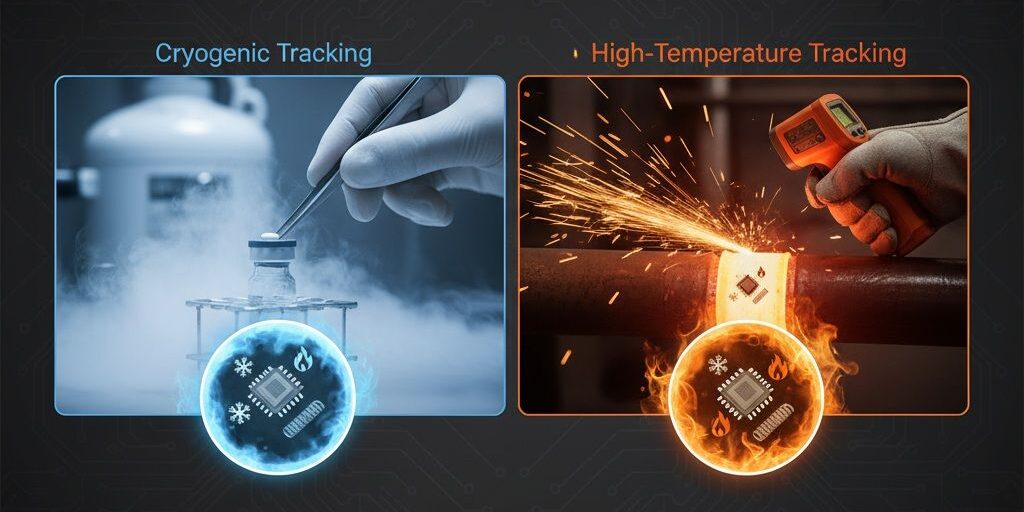
Whether it’s embrittlement caused by liquid nitrogen (-197℃) or thermal expansion from high-temperature molds (230℃), traditional tracking solutions fail. To overcome this challenge, our latest generation of industrial tags uses proprietary epoxy-PCB encapsulation technology to bridge the gap between “extreme” e “trackable.”
Causes of Standard Tag Failure
- Cryogenic Failure: At near-zero temperatures, standard adhesives lose their stickiness, and solder joints in electronic components may fatigue, leading to permanent signal loss.
- High-Temperature Deformation: Prolonged exposure to temperatures above 200°C can cause the plastic casing to deform, potentially damaging the internal antenna and rendering the chip unreachable.
Our Solution: Industrial-Grade Toughness
Our tags are designed for stability. Utilizing advanced PEEK and ceramic materials, combined with thermally stress-buffered internal circuitry, these tags absorb the expansion/contraction forces caused by rapid temperature changes.
Featured Products
- HY-MOΦ5/Φ7/Φ8 Series: These ultra-small, highly durable tags are designed for precise asset tracking. They are IP68 waterproof and specially calibrated for stable operation over a wide temperature range. Their compact size allows them to be embedded in small components or molds without compromising mechanical performance.
- HY-UF1003: This tag features a specially elongated design optimized for energy pipeline monitoring and cable tracking. It provides a stable read range even in environments where standard tags are prone to peeling or delamination.
Practical Applications
- Cryogenic Research: Tracking superconducting magnets and liquefied gas containers in scientific facilities with extremely low internal temperatures.
- Industrial Manufacturing: Real-time tracking of injection molds and casting tools undergoing intense heating and cooling cycles.
- Energy Infrastructure: Monitoring natural gas and oil pipelines in harsh outdoor environments with drastic and continuous temperature fluctuations.
Combining Accuracy and Durability
By integrating these extreme-temperature resistant RFID tags into your existing MES or asset management system, you can obtain “digital twin” data of your most valuable equipment. Because they can withstand extreme temperatures, you no longer need to sacrifice data accuracy for operational durability.
Are you looking to integrate extreme-temperature resistant tracking technology into your production line? Contact our team (rfidhy.com) for a technical assessment of your needs.