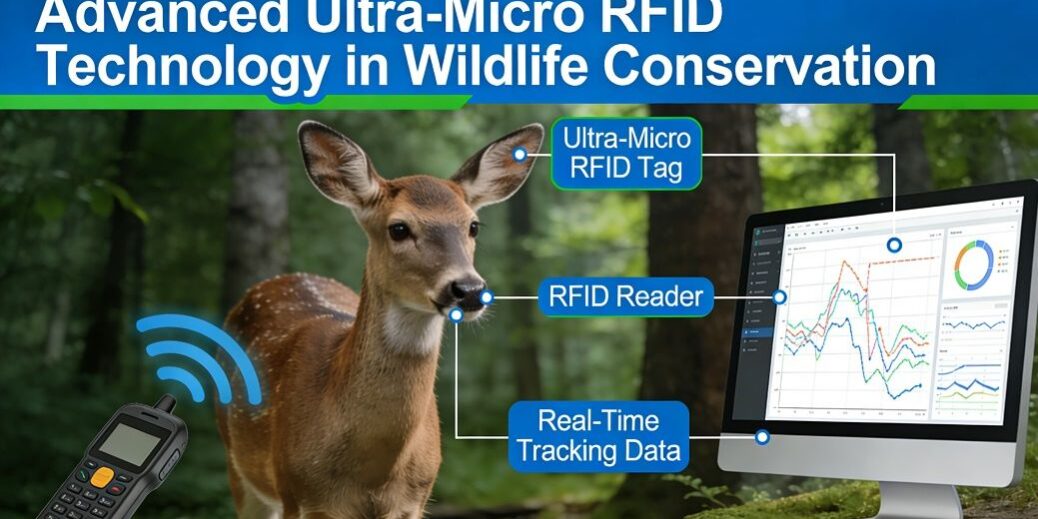
The landscape of wildlife conservation is shifting toward precision data. For researchers tracking rare species—ranging from migratory hummingbirds to elusive desert rodents—the primary barrier has been the physical footprint of tracking hardware. Conventional transponders often exceed the 3%–5% body weight rule, leading to altered behavior or physical distress.
1.Addressing the Critical Pain Points in Small Species Research
Monitoring “micro-fauna” presents three significant challenges:
- Factor de forma: Traditional tags are too bulky for animals weighing under 50 gramos.
- Biocompatibility: Tags must use medical-grade bio-glass to prevent migration or rejection.
- Longevity: Passive systems are required to ensure the tag outlasts the animal’s lifespan without battery failure.
2.Featured Solution: RFIDHY Ultra-Micro Series
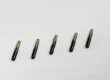
To meet these rigorous standards, RFIDHY provides specialized Ultra-Micro RFID Glass Tags designed for minimally invasive implantation.
- Size Profile: Available in dimensions as small as 1.25mm x 7mm, reducing insertion trauma.
- Technical Synergy: Utilizing high-performance LF (134.2 kHz) and dual-frequency capabilities, these tags ensure high-speed read rates even in aquatic environments.
- Material Integrity: Encapsulated in SCHOTT neutral glass, Asegurar 100% biocompatibility for long-term internal placement.
3.Implementation Scenarios & Global Applications
- Field Research: Tracking dispersal patterns in endangered passerines or small mammals across fragmented habitats.
- Zoological Population Management: Maintaining genetic diversity records within captive breeding programs for high-value rare species.
- Aquatic Monitoring: Sub-dermal placement in juvenile salmonids to track migration through hydroelectric bypass systems.
4.Industry Data & Authority
According to a study published in Methods in Ecology and Evolution, the transition to integrated circuit (IC) miniaturization has increased data recovery rates in small-scale PIT (Passive Integrated Transponder) tagging by over 22% compared to larger, more invasive models [Fuente: Methods in Ecology and Evolution Journal]. Además, the ISO 11784/11785 standards ensure that these ultra-micro tags remain globally interoperable with standard research readers.
5.Conclusión
As global conservation efforts intensify, the demand for ultra-micro RFID tags that prioritize animal welfare is paramount. By integrating advanced biocompatible RFID glass tags, researchers can achieve granular data insights without compromising the natural behavior of the world’s most vulnerable species.