
Leading the Future: The Evolution of Smart Tire Identification
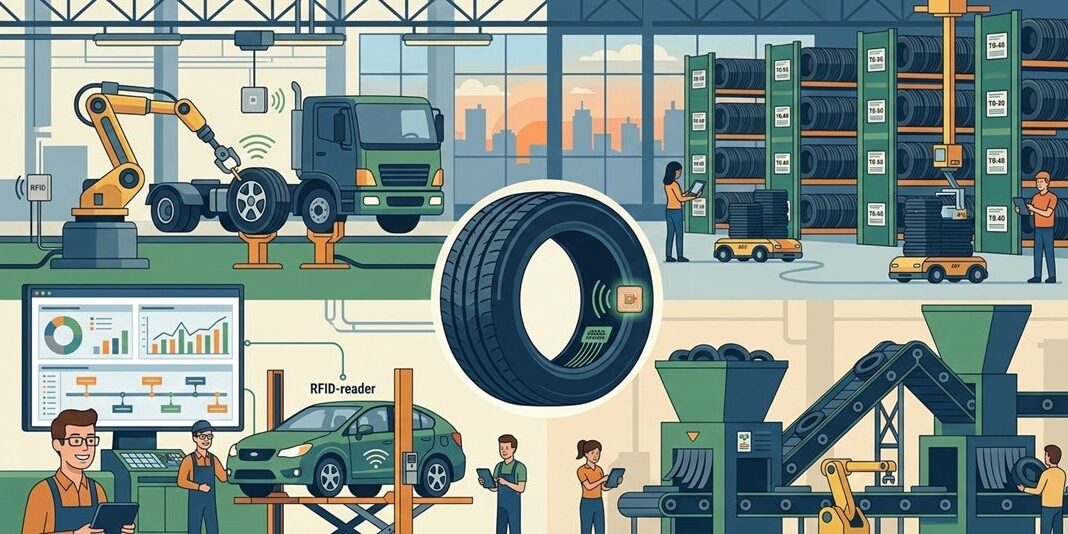
In the global automotive industry, tires are no longer just rubber components; they are becoming data-rich assets. The global RFID tire tag market is projected to reach $1.28 billion by 2026, with a CAGR exceeding 9% (Fuente: Research and Markets, 2026), as the industry transitions to a “connected tire” ecosystem. From the “green tire” stage to thousands of miles of road wear, and ultimately to recycling, full lifecycle management of tires requires a robust and invisible digital identity.
The Necessity of Lifecycle Traceability
Manual tire identification is error-prone and frequently fails under harsh road conditions. For fleet operators and original equipment manufacturers (Fabricantes de equipos originales), tire lifecycle management is critical, offering benefits including:
- Safe Recalls: Instant identification of affected batches in global inventory.
- Operational Efficiency: Inventory audit time can be reduced by up to 80% compared to traditional sidewall inspections (Fuente: GDSO Standards Insights).
- Sostenibilidad: Tracking retreading cycles and ensuring environmentally friendly disposal.
Vulcanization Process Engineering: HY-MOΦ7 and HY-MOΦ8
Tire manufacturing involves extremely high temperatures and pressures. Smart tire RFID system components must be able to withstand the vulcanization process (temperatures up to 200°C). HY-MOΦ7 (7 mm diameter) and HY-MOΦ8 are high-temperature RFID tags designed for seamless embedding:
- Heat and Pressure Resistance: Utilizing advanced PEEK or PPS encapsulation, they withstand the curing process without signal attenuation.
- Tear-Resistant Design: The spring-loaded antenna structure bends with the rubber, preventing the “antenna breakage” common in standard tags under high-speed rotation and heavy loads.
Bridging the Gap: Venta por menor, Mantenimiento, and Beyond
The HY-MO series extends far beyond the factory floor:
- Retail and Logistics: Handheld or gate readers scan entire pallets of tires without line of sight, ensuring the right tires reach the right regional markets.
- Fleet Maintenance: Repair technicians can “read and write” tag data—recording tread depth and pressure history—creating a permanent digital service log.
- Recycling Efficiency: When tires reach the end of their lifespan, automated sorters use HY-MOΦ7 data to classify them for retreading or recycling. This supports material recycling and the mandatory “Circular Economy” initiatives in the EU and North America.
Recommended RFID Solution for the Tire Industry
For manufacturers and fleet managers seeking “Level 1” reliability, we recommend the following products from rfidtaghy.com:
- HY-MOΦ7 / HY-MOΦ8: The industry standard for embedded, high-durability tire tracking.
- HY-HT4129: A high-temperature resistant tag ideal for tracking tire molds and heavy-duty vulcanizing machinery.
- UHF Anti-Metal Patch Series: Optimized for tracking high-value alloy wheels and Tire Pressure Monitoring System (TPMS) Módulos, enabling synchronized tracking with the tires.
Conclusión
As the Global Tire Data Service (GDSO) continues to advance data exchange standardization, smart tire RFID systems will become a cornerstone of automotive safety. Hoy, brands are using ultra-small, robust tags not only to track tire wear but also to ensure the long-term trust of modern drivers.