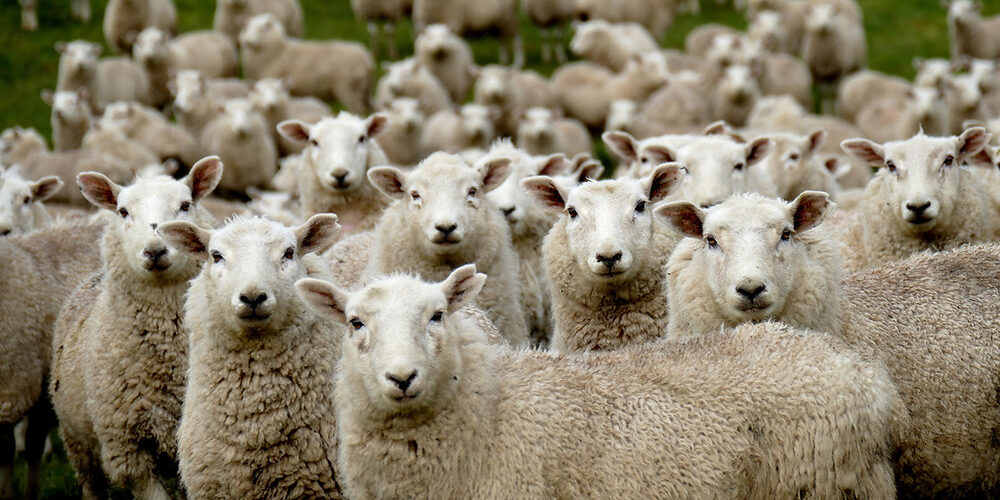
When sheep farmers in Idaho, USA, simply scan their flocks with a handheld scanner, the health data of 200 sheep instantly appears on a tablet. Traditional livestock counting ledgers are quietly being phased out. RFID technology is quietly establishing a new digital identity system for the animal world, from farms to laboratories, from household pets to endangered species. This identification revolution is transforming the way we interact with animals.
1. The technological secrets within the tags
In the field of animal identification, RFID tags are not one-size-fits-all. Engineers have developed customised solutions tailored to the characteristics of different species: soft ear tags for newborn piglets, made from a special material that expands as the pig’s ear grows; glass tube tags implanted in salmon, capable of withstanding water temperatures ranging from -2°C to 30°C; and ankle tags for homing pigeons, weighing just 0.8 grams and designed not to affect flight balance.
Passive tags dominate 70% of the market due to their battery-free advantage, obtaining energy from radio frequency signals emitted by readers to transmit data within a 3-5 metre range. In scenarios requiring long-range identification, active tags demonstrate their advantages — giraffe neck collars on the African savannah can communicate with drone readers from 200 metres away, recording location information during migration. Semi-active tags combine the advantages of both, waking up passively in sleep mode and actively transmitting signals once activated, making them particularly suitable for tracking nocturnal animals like bats.
Ⅱ. A Powerful Tool to Address Industry Pain Points
The most challenging issue for intensive livestock farms is individual animal identification. The practice at Oaklands Farm in the UK provides a solution: after installing UHF ultra-high-frequency ear tags on each cow, the milking machine automatically identifies and records milk production. When the system detects that a cow’s milk production has decreased for three consecutive days, it immediately sends a health check reminder, enabling mastitis detection to be advanced by five days. This precise management has reduced the farm’s veterinary drug usage by 28%.
In wildlife conservation, RFID overcomes the limitations of traditional marking methods. Neck tags fitted to Yunnan golden monkeys in the Bai Ma Xue Shan Nature Reserve record activity trajectories and social interaction data. Researchers found that the daily activity range of monkey groups is 40% larger than previously estimated. Even more ingenious is the sea turtle nesting monitoring system — readers buried in the sand can detect tags on the underside of female turtles’ shells, automatically recording nesting times and locations, thereby avoiding the disturbance caused by manual observation.
Ⅲ. From Identification to Ecological Management
The value of RFID has transcended simple identity recognition. At an organic farm in the Netherlands, readers at the entrance to the chicken coop track the activity frequency of each hen. Individuals with low activity levels are marked for attention, and this精细化 management has increased egg quality to 99.7%. Beekeepers in California have installed RFID tags on beehives, combined with counters at the hive entrance, to monitor bee activity in real time and provide early warnings of colony collapse disorder.
The pet management sector is undergoing intelligent upgrades. Shanghai’s ‘pet electronic ID’ system not only stores owner information but also uses community readers to track pets’ activity ranges. When a dog exceeds the safe zone, the system automatically alerts the owner. This technology has reduced lost pet reports by 52% and increased recovery rates to 83%.
4. Technological innovations that break boundaries
Facing extreme environments, RFID technology continues to push boundaries. The Arctic fox collar developed by the Norwegian Polar Institute can operate normally at -50°C and has a battery life of up to three years, providing critical data for Arctic food chain research. The edible tags developed in Australia, when mixed into fish feed, attach to the fish’s digestive tract, enabling lifecycle tracking without surgical implantation.
Cost reductions are driving technological adoption. Small-scale farmers in India can now purchase RFID ear tags compliant with international standards for 50 Cent, using a mobile app to manage cattle herds, thereby increasing calf survival rates by 15%. Cooperatives in Brazil have reduced per-household usage costs by 60% through shared reader devices, enabling small-scale farmers to also benefit from smart identification technology.
Future animal identification will move toward ‘invisibility.’ Researchers are testing millimeter-wave RFID technology that can penetrate dense animal fur to read tags; flexible electronic tags can be attached to butterfly wings, recording migration data without affecting flight. When these technologies are combined with satellite remote sensing and AI analysis, we will ultimately build an interconnected ecological sensing network — at which point, the digital identity of every animal will become a crucial node in the Earth’s biosphere.
RFID-tag, Proximity Card of RFIDHY RFID, Der RFID-Hersteller

RFID: The Revolution of Giving Every Animal a Digital Ident
Sie befinden sich hier:
- Start
- Produktmeldungen
- RFID: The Revolution of Giving…