Pain points in traditional construction industry fixed asset management:
- The production, النقل, and installation progress of prefabricated components are difficult to coordinate, leading to project delays;
- Counterfeit and substandard building materials (such as waterproof membranes and fireproof insulation boards) enter construction sites, seriously threatening building quality and safety;
- The large number of heavy equipment, circulating materials, and tools on construction sites are managed inefficiently, resulting in high costs due to loss and idleness.
To address these pain points, وتتفاعل (تعريف تردد الراديو) التكنولوجيا, with its automatic identification and data acquisition capabilities, is driving the refinement and visualization of the construction process at three levels: مكونات, المواد, and assets.
How to build core capabilities for a digital construction site?
The value realization of RFID in the construction industry depends on a layered and precise deployment strategy:
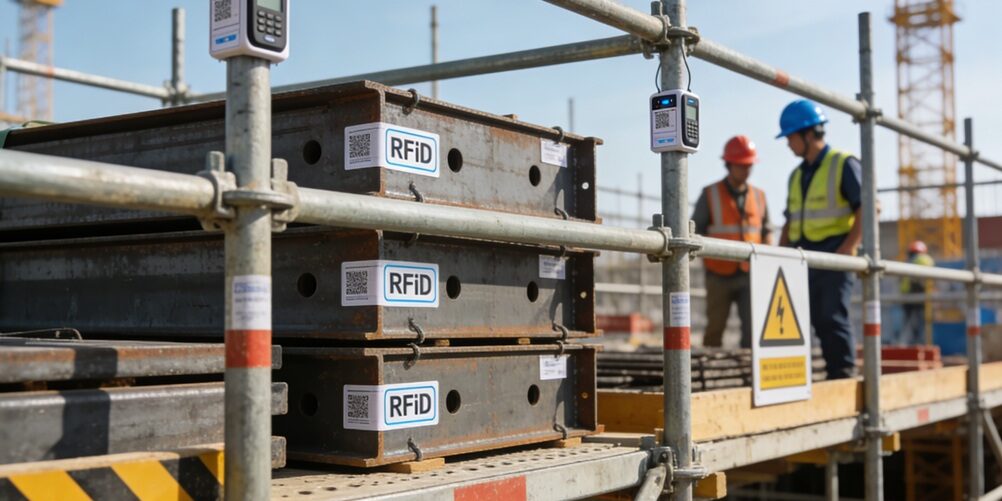
- At the component and building material level: Embed (bundle or attach) anti-metal RFID tags to each prefabricated concrete component, each bundle of rebar, or key building materials (such as tunnel segments) before they leave the factory. This is equivalent to giving them a “digital identity” covering their entire lifecycle, recording key information such as production batch, quality inspection report, and specifications. This is the basis for achieving full-process tracking of prefabricated building components and traceability of building material quality responsibility.
- At the asset and equipment level: أقام durable RFID tags on tower cranes, construction elevators, complete sets of formwork, scaffolding, and valuable handheld tools. Combined with fixed RFID readers at construction site entrances, المستودعات, and work areas, this enables automatic sensing of asset entry and exit, location movement, and usage status, building a smart construction site asset visualization management platform.
Through the above applications, RFID technology brings quantifiable improvements to construction projects:
- Improved construction efficiency and accuracy: By scanning the RFID tags on components, installation information from the BIM model can be automatically retrieved to guide precise lifting and installation, reducing component installation errors. According to some project practices, this can improve on-site construction efficiency by approximately 15-20%.
- Strengthening quality and safety defenses: Using handheld terminals to quickly scan building material tags allows for on-site verification of product authenticity and compliance, eliminating substandard materials at the source. A report from the China Construction Industry Association indicates that rework due to material problems accounts for 5%-10% of total costs, and RFID traceability can effectively curb these losses.
- Achieving lean asset management: Real-time tracking of asset location and usage status can reduce downtime caused by searching and waiting, and reduce equipment and tool loss rates by more than 60%, significantly improving the turnover rate of leased assets.
- Strengthening on-site safety management: By binding RFID tags to personnel safety helmets and work qualifications, access permissions to hazardous areas can be automatically managed, standardizing high-risk work procedures.
Key Considerations for Successful Implementation
Ensuring the stable operation of the RFID system in complex construction site environments requires attention to three key points:
- اولا, it is crucial to select high-performance RFID tags suitable for concrete and metal environments to ensure reliable reading and writing under harsh working conditions;
- ثانيا, the system must have strong integration capabilities, enabling deep integration with the project’s BIM platform, تخطيط موارد المؤسسات, and project management software to break down information silos;
- وأخيراً, for large construction companies, it needs to support cross-site asset transfer management between multiple projects, achieving optimized resource allocation at the group level.
اتصل بنا for a one-stop solution, from specialized tags and industrial-grade reading and writing equipment to customized software platforms, ensuring smooth technology implementation and continuous value creation.