
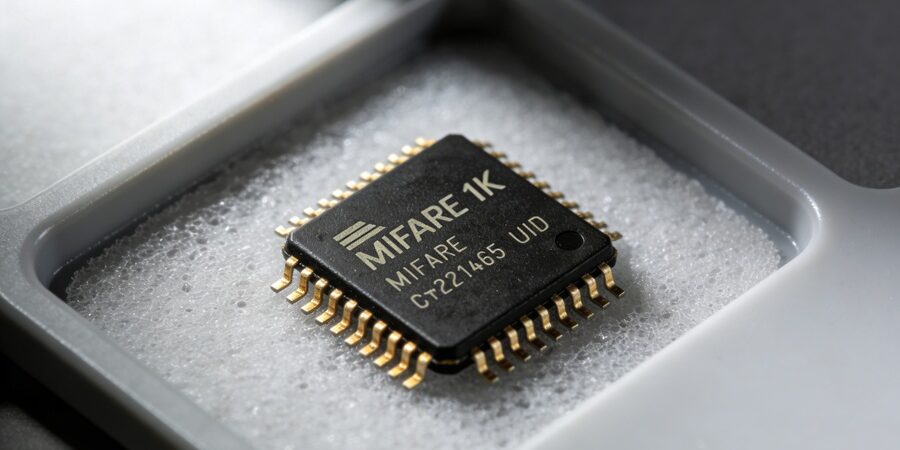
In the competitive and service-driven hospitality industry, الأمن, operational efficiency, and guest experience are paramount. Traditional access control systems, often reliant on static, unchangeable identifiers, can create significant logistical challenges and potential vulnerabilities. Enter the MIFARE 1K chip with a groundbreaking feature:rewritable UID (Unique Identifier). This technological advancement is transforming the landscape of hotel door lock systems and identity management, offering unprecedented flexibility, الأمن, and cost-effectiveness.
Understanding the UID and Its Traditional Limitation
At the heart of each MIFARE 1K(S50) card or key fob is the UID, a unique serial number typically burned into the silicon during manufacturing. In standard MIFARE 1K chips, this 4-byte or 7-byte number is immutable, serving as the card’s permanent “fingerprint.” Hotel door locks are programmed to recognize specific UIDs, granting access accordingly. While secure in its permanence, this static nature presents hurdles:
- Lost or Stolen Cards: A compromised card must be deactivated in the system, ومن new physical card with a different, fixed UID must be issued.
- Guest Check-out/Employee Turnover:Each departure requires reissuing a new card for the next occupant or employee, leading to constant card consumption.
- إدارة المخزون:Hotels must maintain large stocks of pre-encoded cards or manage complex on-site encoding for virgin cards.
The Game-Changer: The Rewritable UID MIFARE 1K
Specialized versions of the MIFARE 1K chip now feature a User-Programmable UID area. This allows authorized system programmers to dynamically overwrite the UID value presented by the card to the reader, effectively allowing a single card to be reused indefinitely with new identities. This is not a cloning operation in the malicious sense but a controlled, authorized reprogramming of the card’s primary identifier.
Technical Mechanism and Security
The rewrite process is strictly controlled and requires specialized, high-level access to the chip’s secure memory blocks. It is performed using dedicated programming hardware and software, often integrated into professional hotel lock management systems. Crucially, this feature is designed for system administrators, not end-users. The original, factory-set UID (often referred to as the Chip ID) remains intact in a protected memory area, providing a root-level serial number for ultimate forensic tracing and anti-cloning measures, while the rewritable Logic ID is used for daily access control. This dual-layer identity ensures both flexibility and a secure audit trail.
Transformative Applications in the Hotel Industry
The impact of UID-rewritable cards on hotel operations is profound:
- المستدامة, Cost-Effective Key Management:Hotels can adopt a “Green Key” policy. Upon guest check-out, the key card is simply reprogrammed with a new UID for the next guest. This drastically reduces plastic waste and eliminates the ongoing cost of purchasing vast quantities of disposable cards. A single card can serve hundreds of guests throughout its lifespan.
- Instantaneous Access Control Updates:Lost a card? Instead of hunting through the system to deactivate a static UID and issuing a new physical card, staff can instantly reprogram a spare card with a new, active UID. The old UID is simply removed from the door lock’s memory. This process takes seconds, enhancing both security and guest service.
- Streamlined Staff Management:For employees, a single card can be repurposed throughout their tenure. Changes in access privileges (e.g., moving from housekeeping to front desk) or card replacement are handled through software reprogramming, not physical card swaps. This simplifies HR and security logistics.
- Advanced Operational Scenarios:
- Multi-Phase Stays:A guest extending their stay can have their key’s validity updated seamlessly without a card swap.
- Tiered Access:Concierge-level guests could be issued cards that are later reprogrammed for spa or lounge access for a limited time.
- Efficient Master Keying:Master keys for housekeeping or management can be more dynamically controlled. If a master key is suspected of being compromised, its UID can be changed system-wide, rendering any unauthorized copies useless.
- Enhanced System Integration:In modern smart hotels, the room key often doubles as an identifier for other services (e.g., charging privileges at the pool bar, gym access, or elevator floor control). A rewritable UID allows for a unified identity token that can be comprehensively managed and updated from a central platform, creating a seamless guest journey.
Identity Recognition and Control: Beyond the Door
The application extends beyond the physical door lock. The MIFARE 1K’s rewritable UID serves as a dynamic digital credential within the hotel’s ecosystem. It enables precise identity recognition for:
- Time-and-Attendance Systems for staff.
- Restricted Area Control(e.g., back office, storage rooms).
- تتبع الأصول for hotel equipment.
- Cashless Payment Vouchers for guests (when linked to a folio).
The ability to change this identifier on demand means the same card media can be securely reassigned across different functional roles and individuals.
الختام: The Future of Hotel Access is Dynamic
The MIFARE 1K chip with rewritable UID functionality is more than an incremental upgrade; it represents a paradigm shift in hotel security and operations management. It replaces a static, disposable key model with a dynamic, sustainable, and intelligent identity management system. By empowering hotels to control and redefine the digital identity of their access media, this technology delivers powerful benefits: significant cost reduction, enhanced operational agility, improved security posture, and a step forward in environmental sustainability. For hoteliers looking to modernize their infrastructure, adopting a system built around this flexible credential is a strategic investment in a more efficient, تامين, and guest-friendly future.